 Follow Us on Google News


 Follow Us on Google Discover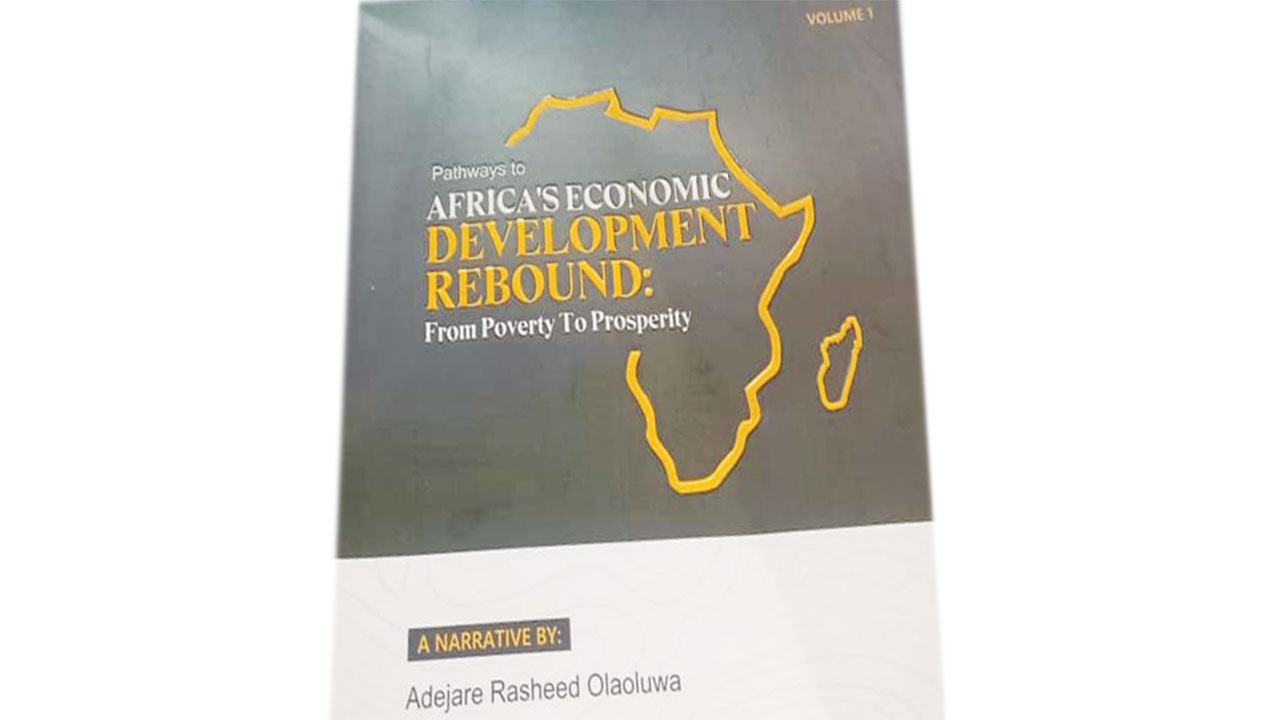
 Author: Adejare Rasheed Olaoluwa
Publisher: Book Spider
Year: 2023
Reviewer: Gregory Austin Nwakunor
One of the most striking trends in post colonial African history is ‘underdevelopment’ study, with Walter Rodney’s How Europe Underdeveloped Africa as the manual or curriculum guide.
[ad]
Written in 1972, Rodney’s book interrogates the role of politics in shaping country differences in economic development. It argues that to fully appreciate and understand the effect of European exploitation on Africa, four distinct issues need to be addressed: a reconstruction of pre-European Africa’s developmental condition, that of pre-expansionist Europe, and their contributions to one another’s present condition, developed or otherwise.
After an introductory chapter in which he definitionally discusses development, underdevelopment, and associated terminologies in their historical and contemporary contexts, he devotes a chapter to each of these four issues.
In fact, one of Rodney’s main arguments throughout the book is that Africa developed Europe at the same rate that Europe underdeveloped Africa.
Rodney argues that a combination of power politics and economic exploitation of Africa by Europeans led to the poor state of African political and economic development evident in the late 20th century.
He concludes the book with a chapter critiquing arguments that promote the “supposed benefit of colonialism”.

In this chapter, he also explains the means through which colonialism is linked to Africa’s present underdevelopment.
Karim Hirji, a retired Professor of Medical Statistics and a Fellow of the Tanzania Academy of Sciences, research, in his The Enduring Relevance of Walter Rodney’s How Europe Underdeveloped Africa (Daraja Press, Montreal, 2017), states that “Walter Rodney wrote about a continent that had been misrepresented, devalued, and denigrated for centuries. Those portrayals had justified the subjugation and exploitation of its people. So, he did not mince words when characterising that reality. If anything, he deserves praise for breaking the silence, and jarring the conscience of his colleagues.”
Before the appearance and appeal of Rodney, The Wretched of the Earth (French: Les Damnés de la Terre), a 1961 book by the philosopher Frantz Fanon, provided the rallying point for the decolonisation of Africa.
In his book, Fanon provides a psychoanalysis of the dehumanising effects of colonisation upon the individual and the nation, and discusses the broader social, cultural, and political implications of establishing a social movement for the decolonisation of a person and of a people.
To avoid falling into the trap of rehashing the obvious Fanon and Rodney treatise of underdevelopment, Adejare Rasheed Olaoluwa, in his Pathways to Africa’s Economic Development Rebound: From Poverty To Prosperity, A Narrative takes a different route while interrogating the problem of poverty in the continent.
The book conjures images that linger in the mind long after the book has closed. There’s no point pretending this is a light read. He makes his chapters snappy and digestible.
[ad]
The central focus of his work is the role of history in tackling poverty. His approach is, however, more than of a historian. He uses economics, a point, which is clearly reflected in the few points he has chosen for illustration. Olaoluwa is a first class engineer, banker and former bank chief with conglomerate experience of over three decades, so, history is not his forte.
The book makes no attempt to use what could be described as a nostrum by Europe and Bretton Wood institutions such as, the Structural Adjustment Programme and the World Trade Organisation, which emerged from the ashes of General Agreement on Tariff and Trade (GATT) in their attempts to help Africa out of its predicament, but the paradox is that they have further sunk the continent to abysmal poverty.
The author starts by saying ‘Africa’s fall is complete.’ In other words, Africa’s underdevelopment has come full circle and the only solution lies in a total construction and deconstruction of the economy.
He asks questions such as, how did we get here? How do we achieve economic development and rebound from extreme poverty to prosperity.
He asks Africans to think again. After six decades of wobbling, slow growth in living standards, amid widespread belief inequality is soaring; Olaoluwa believes this is the time to fix the continent, especially with visionary leadership and time to shun divisive elements that divided Africa in the past.
Deploying both historical and empirical evidences, he opts for a simple, expressive coffee table book as his instrument of war against endemic poverty in Africa.
This book gives policy makers and stakeholders in the mission of moving Africa to the next stage of development opportunity of looking through pictures of glorious, violated past as insights to positive decisions.
With its lavish pictures, gloss print and bold fonts, the reader is left at home with a book that is waiting to be explored. The book is an exploration of Africa, poverty, and paths to prosperity for a continent rich in human and natural resources. It provides a useful guide on how Africans and African leaders can collectively build a better Africa.
It delivers detailed research and insights into the events that shaped the Africa we know today. It also provides solutions to these issues by cross-examining other countries that have become prosperous. It is a must-read for anyone interested in Africa’s coming revolution.
In his foreword to the book, chairman of Africa Export-Import Bank (Afreximbank), Prof. Benedict Okey Oramah highlights research and technological advancement as key issues that have shaped Olaoluwa’s thoughts.
[ad]
He says: “The author observes how technological progress translated to industrial development and economic gains in developed countries that African must strive to achieve the same outcomes and bridge the existing gap.”
Oramah continues, “it details how every technological motivations that triggered the first industrial revolution in Europe and others that followed were transferred to other regions of the world, through the entrepreneurial spices sent to Europe who launched the American industrial revolution and the Asian master stroke of reverse engineering technology having created an attractive environment for technology giants of the West to invest.”
In his own foreword, Chairman of Heir Holdings and United Bank for Africa, Tony Elumelu, “for Africa to be truly experience economic prosperity, there needs to be discipline and practical adjustment on all sides. Our structural reforms need to be accelerated. Unemployment needs to be tackled, we must deliver power to our people, resource — both human and capital — needs to be effectively utilised. We must have our African women economically empowered.”
Elumelu adds, “ leadership is important. We must have the right type of leadership. We must have bold and visionary leadership that seeks to create an enabling environment for the African private sector to thrive, leadership that possesses the capacity to reimagine stakeholders relationship within and outside of the continent. We must focus on the empowerment of our youths to be resolute in promoting sustainable private sector institutions.”
Both Elumelu and Oramah encapsulate the core issue that the book treats in two volumes of 116 pages.
The first volume is divided into two parts, with four chapters each, the first part is described as Africa: A Narrative Through History and the second part is titled, Africa’s Economic Development Struggle, the first volume has 62 pages of well researched issues, 15 pages of appendix, dedication, forewords and introduction.
The first volume traces Africa’s economic history from colonial to modern times and the author carefully curates aspects that provide the contest for his recommendations in the second volume.
In the first volume, which is made up of eight chapters, the book provides a nexus between Africa’s historical experience and the major factors, both internal and external, that produced Africa’s current economic state.
[ad]
The author takes the readers through historical trajectories and their economic implications for today’s quest for economic development. He says, “many Africans are migrating to Europe and America, mostly in pursuit of economic livelihood. However, the irony of all this is that it used to be the other way round.”
Olaoluwa notes the benefits that accrue from their encounter with Africa led to different treaties with African empires and kingdoms for unfettered access to resources in the continent. “Therefore, Europe had to design a plan to enable her to continue to enjoy these benefits while giving the appearance of independence to African countries.”
He reveals that the benefits accruing from “having a colony were immense. The European powers had unhindered access to natural and human resources of their colonies. It was, therefore, going to be very difficult for them to give up these benefits.”
The second volume highlights the economic development paths followed by other developed countries, and what steps African countries must consider to achieve same.
The author, in 54 pages of the second volume, raises need for Africa to embrace agricultural reforms and industrial development, saying both are foundation for growth and development.
From agricultural transformation to the first, second, third and fourth industrial revolutions, the author notes that a successful development path has been made by Europe, which African countries have to take advantage of for their own development.
[ad]
He says, “Africa has a window a window to rebound from poverty to prosperity if only there’s a relentless pursuit of Africa’s economic interest by the right visionary and disciplined leadership.”
You need only flick through the pages to know it is a good account of Europe’s underdevelopment of Africa and Olaoluwa needs five star appreciations for this treatise.
Olaoluwa has extensive experience spanning well over three decades in financial services, investment management, banking and oil and gas sectors. He holds first class honours in civil engineering from the Obafemi Awolowo University, an Associate Membership of the Institute of Chartered Accountants of Nigeria (ICAN) and an Executive MBA from the International Graduate School of Management (IESE), Spain.
He was the pioneer Group CEO of United Capital Plc., a leading financial investment services company and the pioneer CEO of UBA Africa. This experience gave him a wider and deeper view of economic development issues across sub-Saharan Africa. And through tutelage at reputable executive programmes such as Lagos Business School, INSEAD, Harvard Business School, London Business School and many more, he has gotten the insights necessary to transform Africa.
[ad]

