 Follow Us on Google News


 Follow Us on Google Discover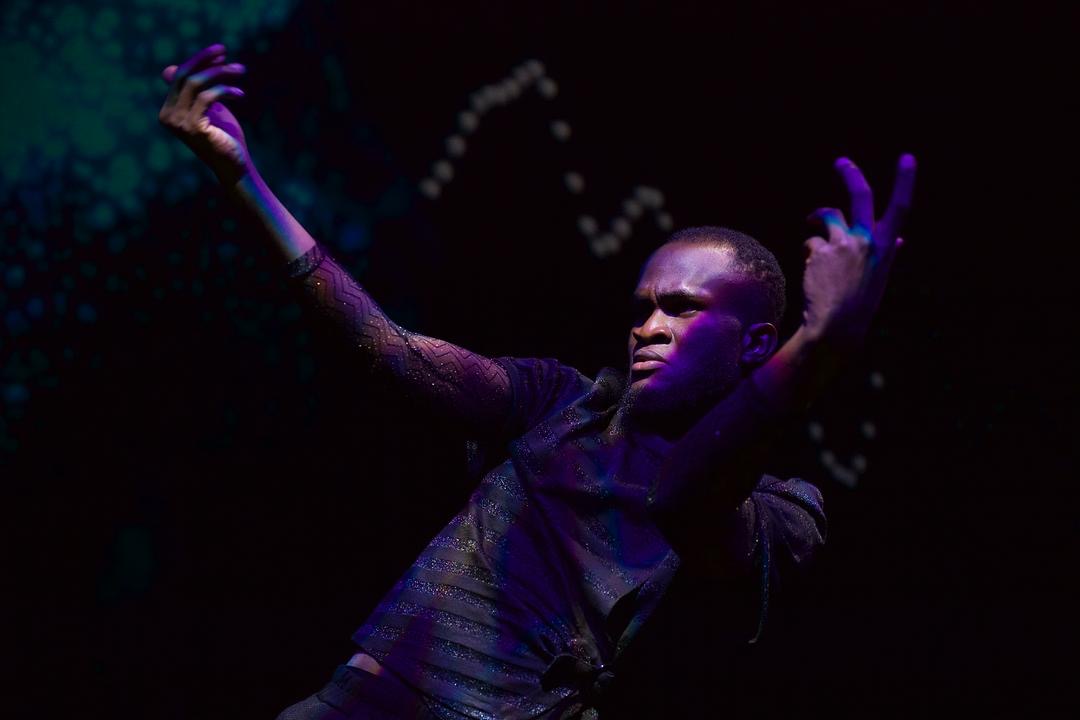
Femi Adebajo is not your typical artist. The Lagos-based experimental and multidisciplinary performer, dancer, choreographer, theater director, and community organizer has traveled a long, winding road to find his voice — one that now echoes across continents. As the Artistic Director and co-founder of Future of Dance Company, Adebajo’s creative fingerprints are increasingly visible on the global stage. Femi, an Ogun-born thespian reflects on his journey so far, his creative process, and what it truly means to use art as a tool for transformation.
“My journey into art started early,” Adebajo recounts. “In 2006, I joined the Footprints of David Art Academy, where I learned the basics of creativity — how to dance, act, sing, and drum. Art was everywhere around me, and somehow, it chose me naturally.” It was at Footprints of David, founded by his uncle Seun Awobajo, that Femi’s passion deepened beyond casual interest. While many in his family attended the academy at one point, he alone stayed on, a decision he says felt inevitable. “Maybe it’s because art was already part of me,” he reflects.
After years of intense training, Adebajo graduated in 2016 — a milestone that signified more than just mastery of his craft. “It was a kind of freedom that allowed me to begin building myself and my own company,” he says. That freedom would fuel years of traveling, creating, and collaborating, both locally and internationally.
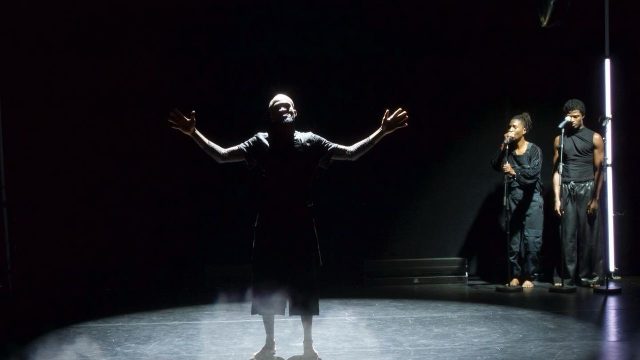 The lessons learned at Footprints of David extended far beyond technical skills. “Training there didn’t just teach me how to perform — it shaped who I am,” he explains. It instilled in him a deep awareness of Nigerian culture and history, a foundation that continues to inform his work. With time, Adebajo gravitated toward Contemporary Dance, captivated by how movement could tell profound stories and evoke real emotion. “It made me realize that my purpose as an artist is bigger than just entertainment,” he says.
Instead of following the polished paths of ballet or Western styles, Adebajo forged his own route, drawing deeply from indigenous and traditional African dance. “I chose to focus on Nigerian and African movements to create a unique voice of my own,” he shares.
Key influences along his path include his first mentor, Seun Awobajo, and Segun Adefila, whom he credits for teaching him the power of consistency. He also trained under Qudus Onikeku of the QDance Centre, participated in workshops with Sunday Israel Akpan, and received guidance from Ijodee. Theater director Williams Benson also opened him up to stagecraft, while international exposure to artists like Akram Khan, Sidi Larbi, and Christoph Winkler broadened his worldview. “Working with Christoph Winkler in Berlin was a major part of my growth,” he acknowledges.

Experimenting across genres became a survival skill as much as a creative philosophy. Whether it’s dance, theater, or film, Adebajo emphasizes connection over form. “The most important thing is connecting with my audience — no matter the medium,” he says. This ethos crystallized during the COVID-19 pandemic when he directed his first theatrical play virtually for a Romanian state theater — an experience he calls a turning point. Selected as one of only 100 international directors, representing Nigeria gave him renewed courage to dream bigger.
This ambition eventually birthed Maren, his play about Professor Wole Soyinka. “The idea for Maren started in 2019, and after years of development, it finally came to life in 2024,” he shares, visibly proud.
As a multidisciplinary artist, Adebajo doesn’t believe in boundaries between art forms. “I follow the idea, and the idea tells me which art forms to use,” he explains. Whether through dance, music, film, or text, storytelling remains at the core of everything he creates. He describes himself as “a vessel carrying stories — from the old days to today’s realities,” rooted in African folklore, indigenous histories, and everyday life.
International success didn’t come easy. “After many years of working and waiting, travel opportunities started coming in 2016. But I had no passport and wasn’t selected either, so I missed out on many chances,” he recalls. It wasn’t until 2022 — just as his passport was close to expiring — that the breakthrough came. Since then, he has performed across Germany, Italy, and France, partnering with prestigious companies like the Christoph Winkler Company and participating in residencies like Frankfurt LAB.
Some of his most notable performances include Obi Ati Orogbo with Footprints of David, The Future is Here directed by Ayo Ajayi, and Emotan directed by Williams Benson. His own creative projects — such as Passage, Echoes, Yin Yang, and The Journey Between Movement and Poetry — further cement his reputation as a boundary-breaking artist.
Despite his rising international profile, challenges persist. “One of the biggest challenges has been funding,” he admits. Contemporary art remains a tough sell in Nigeria, where infrastructure and financial support are scarce. “Many times, my work gets selected, but there’s no funding to realize it. But I don’t let that stop my creativity,” he says firmly.
To sustain himself, Adebajo juggles side businesses while continuing to seek out international collaborations. “Despite it all, I don’t give up. Every ‘no’ only makes me stronger until a ‘yes’ comes,” he says, embodying the resilience that has come to define his career.
In a world hungry for authenticity, Femi Adebajo’s art — steeped in culture, memory, and daring innovation — is a testament to the power of staying true to one’s roots while boldly stepping into the future.

