 Follow Us on Google News


 Follow Us on Google Discover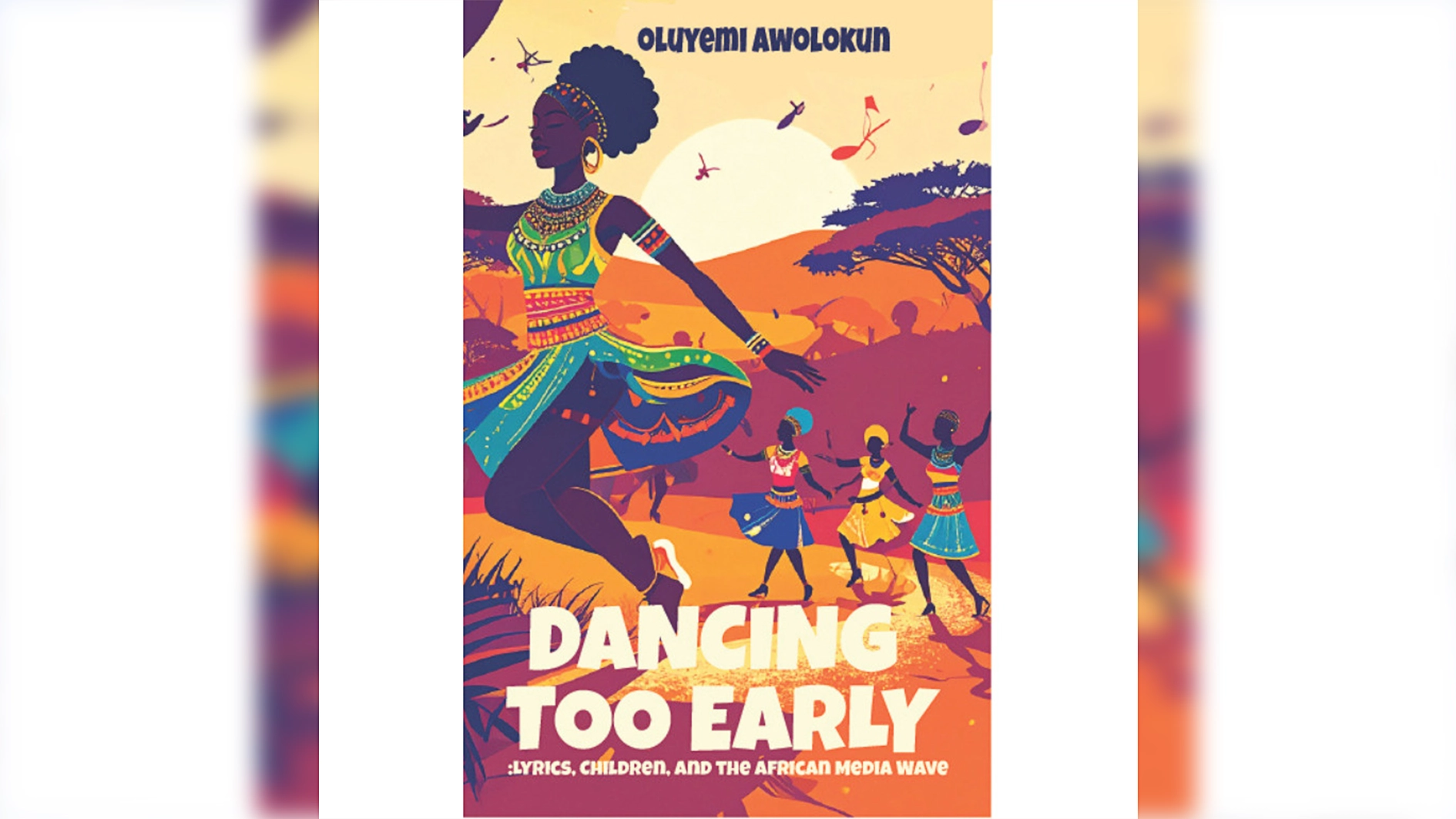
In Dancing Too Early: Lyrics, Children, and the African Media Wave, Oluyemi Awolokun delivers a thoughtful and unsettling examination of childhood in an age shaped by screens, sound, and digital presence. Part cultural critique, part reflective essay and part social warning, the book interrogates a transformation so gradual that it has become almost invisible. African childhood, once defined by physical space and communal rhythm, now unfolds within digital environments governed by algorithm, performance, and constant exposure.
From its opening pages, the book grounds its argument in sensory memory.“The first rhythm of a child’s life is not recorded, not written, not even played. It is felt,” Awolokun writes. In this framing, rhythm is not merely musical. It is developmental. It is the gradual unfolding of awareness shaped by family, environment, and culture. Music itself, he suggests, was once inseparable from existence, “woven into the fabric of existence, inseparable fromthe rhythms of work, rest, prayer, and play.”
Awolokun’s recollection of Nigerian childhood in earlier decades provides one of the book’s most vivid contrasts.“Play meant chasing tyres on dusty streets, climbing mango trees, or playing suwe with chalked grids.” Social life was tactile and immediate.
Children gathered physically, not virtually. Interaction was shaped by presence rather than performance.
Technology arrived slowly at first. Cassette players and early game consoles were shared experiences. Children gathered around them, creating moments of collective engagement. But the arrival of the smartphone marked a decisive rupture.
“By the 2010s, smartphones democratised access to the world. Suddenly, every child with a cheap Android had access to more knowledge, imagery, and temptation than their grandparents encountered in a lifetime.”

He captures the magnitude of this shift in a single, haunting sentence. “Childhood leapt from the street into the screen.”
To illustrate this transformation, Awolokun introduces Seyi, a fictional but representative child in Ibadan. Quiet and reserved offline, Seyi becomes expressive online, curating a digital identity shaped by imitation and performance. “Offline, Seyi struggles with shyness. Online, he is bold.” This dual existence reflects a deeper psychological shift, one in which identity becomes mediated through digital affirmation.
Awolokun observes with particular clarity the emotional economy of digital platforms. “Each like is a currency. His self worth rises and falls with hearts and comments.” In this formulation, childhood becomes entangled in systems designed to measure attention rather than nurture stability. Emotional validation becomes externalised and quantifiable.
Importantly, Awolokun makes clear that Seyi is not an isolated case. “Seyi is no exception. He is an emblem.”His experience reflects a structural transformation affecting millions of children navigating similar environments.
The book expands this analysis by situating African childhood within a global cultural framework. Children across continents now inhabit shared digital spaces, consuming similar content and internalising similar cultural signals. This creates what Awolokun describes as a form of global belonging. “The backpack is not just cloth. It is global belonging. To carry it is to declare, I too am part of the worldwide tribe of children who know Elsa’s song.”
This observation captures the subtle but profound ways media reshapes identity. Cultural affiliation becomes detached from immediate environment and rooted instead in shared consumption.
Awolokun’s critique is not directed at technology itself. He acknowledges its potential to expand access to knowledge and creativity. His concern lies instead with imbalance.
Exposure has accelerated faster than emotional and moral guidance. Children encounter adult themes without the developmental framework needed to interpret them.
This imbalance is particularly visible in music and performance culture. In traditional African contexts, music transmitted values, memory, and communal knowledge. It was instructive as well as expressive. In contrast, contemporary media operates within commercial systems that prioritise visibility and emotional intensity.
Awolokun strengthens his argument through careful attention to psychological formation.
Childhood learning has always involved imitation, but the nature of available models has changed. Where children once imitated parents and community elders, they now imitate distant figures mediated through screens. These figures exist within cultural and economic frameworks detached from the child’s immediate reality.
Yet the book resists simplistic conclusions. Awolokun acknowledges that globalisation does not produce only imitation.“Globalisation provokes not only surrender but counter creativity.” African children are not passive recipients of culture. They are active participants capable of innovation and adaptation.
Its reflective tone, while compelling, sometimes comes at the expense of empirical depth.
Awolokun references global trends and behavioural patterns, but the book relies heavily on symbolic examples and philosophical reflection rather than sustained field research.
The figure of Seyi is effective as metaphor, but readers seeking extensive interviews, statistical analysis, or systematic documentation may find the evidentiary foundation less robust than expected.
There are also moments where nostalgia subtly shapes the narrative frame. The portrayal of earlier African childhoods emphasises communal harmony and cultural continuity, but gives less attention to the material hardships and structural limitations that also defined those environments.
Modern media, while disruptive, has also expanded access to information, education, and creative opportunity. This complexity, though acknowledged, is not explored as fully as the book’s critique of loss.
Similarly, the perspectives of cultural producers themselves remain largely absent. Musicians, filmmakers, and digital creators appear primarily as sources of influence rather than as participants in an ongoing cultural negotiation. Including these voices would have strengthened the analytical balance and provided greater insight into the dynamics of contemporary cultural production.
Yet these limitations do not diminish the book’s importance. If anything, they clarify its purpose. Dancing Too Early is less an academic study than a work of cultural diagnosis.
Awolokun’s central achievement lies in naming a transformation that has become normalised.
He reveals the subtle ways media reshapes identity, emotional development, and cultural belonging. His insight that “childhood leapt from the street into the screen” captures an entire generational shift with remarkable economy.
More importantly, he restores seriousness to childhood as a cultural and social category. In an age defined by speed and exposure, he insists on the value of gradual formation.
The book does not offer rigid prescriptions. Instead, it offers awareness. It invites parents, educators, and society at large to recognise the environments shaping children’s development.
Ultimately, Dancing Too Early is both mirror and warning. It reflects a generation growing up within systems no previous generation has experienced. It warns that childhood, once altered, cannot easily be reconstructed.

