 Follow Us on Google News


 Follow Us on Google Discover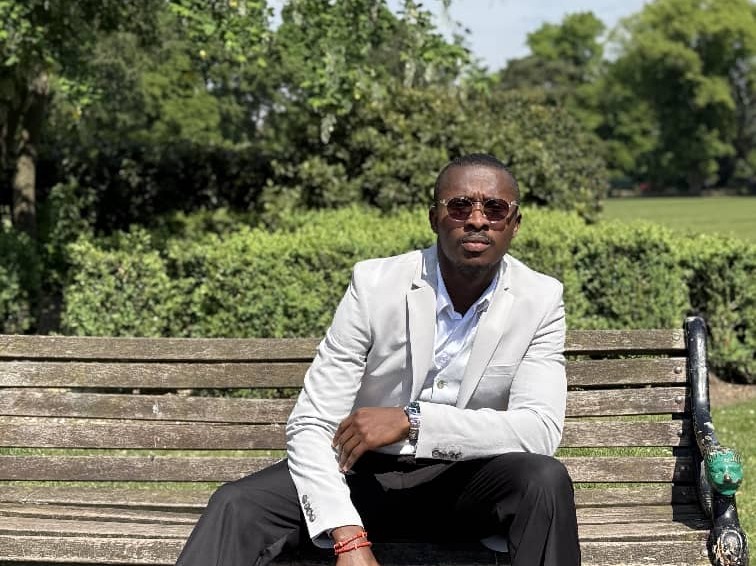
Destiny Osarumwense Osagiede, a Nigerian-born thespian, has taken the bull by the horns in building his career beyond the shores of Nigeria. While he may have left his roots to pursue greater opportunities abroad, the thespian shares his life as an actor in the UK and how he hopes to harness his acquired knowledge, skills, and experience to elevate the Nigerian theatre and entertainment industry to world-class standards with GREGORY AUSTIN NWAKUNOR.
You’re building your acting career in the UK while maintaining your Nigerian roots. How has living in the diaspora shaped your craft and identity as an actor?
There is no doubt that my vision and knowledge have expanded in the UK, but what makes it authentic is the blend of my culture in my practice into the arts space in diaspora. My ability to navigate between two worlds makes my works unique. I am able to adapt to international projects while still infusing them with a depth that comes from my heritage. The diaspora has taught me resilience, versatility, and the importance of representation, and those qualities are now inseparable from both the artist and the person I’ve become.
Many creatives speak about ‘culture shock’ when moving abroad. What was the most surprising adjustment you had to make when you started working in the UK entertainment industry?
The biggest surprise for me was not the art itself but the working culture around it. Back in Nigeria, we are used to moving with instinct, improvising, and making magic even when resources are limited. In the UK, everything is highly structured — schedules are strict, processes are detailed, and people expect you to respect every little system in place. At first, it felt overwhelming because back home, it was different and spontaneous.
But with time, I realised that this discipline actually gave me more room to shine, because once the structure was set, I could focus fully on my craft without distractions. Not to forget climate change, it was more like a 100 percent flip to what I knew back home. All these cultural shifts have affected my craft, positively.
Do you wish to come back to Nigeria someday and contribute you quarter to the theatre/film and entertainment industry?
Absolutely. My vision has always included coming back to contribute meaningfully to our theatre, film, and entertainment industry. I believe Nigeria is a powerhouse of raw talent and creativity that deserves to be nurtured, celebrated, and given international platforms. My dream is to use the knowledge, skills, and networks I am building abroad to create structures that will elevate Nigerian theatre and entertainment to world-class standards—whether through training initiatives, collaborations, productions, or investments in infrastructure. I see myself not just as an artist but as a bridge between Nigeria and the global creative community.
How much of your Nigerian upbringing do you bring into your roles?
I bring a lot of my upbringing into my work, and they have taught me resilience, respect, and creativity. When I’m acting or creating, I always draw from real-life experiences like the way I handle challenges with humor, or how I show respect in the way I speak and carry myself, which is inherent in my cultural background. Our culture is very expressive, full of energy and emotion, and I naturally bring that authenticity into my performances.

Also, being Nigerian means I don’t take opportunities for granted. I carry that hunger and drive into my career, and it helps me stay grounded and determined. So, even when I am working on global projects, I do it like my life depends on it, like it’s my last shot, and that mindset sets me apart from my equals, I believe the UK film and theatre scene is diverse but competitive.
What unique strengths do you think you bring as an actor to the table?
The unique strength I bring is, myself: My voice, my authenticity, and my ability to learn. Learning for me is key, because as an actor you must constantly be learning to grow and impact. Also, one great advantage I uphold is the fact that I am spontaneous and creative. If I need to be Western in my acting or remain African, I can navigate easily and be my best at it. I also have a strong collaborative spirit. In recent times, I have had the opportunity to work with multiple nationals with different ideas about life and even about character interpretation, but I can show adaptability and professionalism on stage, and this has shaped my work across different genres and mediums, from stage to screen, which has given me both adaptability and a creative fearlessness.
There’s an increasing collaboration between Nigeria and the UK theatre scene. Do you see yourself strengthening that growth further in the future?
Yes, I do. I am very passionate about creating bridges between the creative industries, and theatre is a space where collaboration truly thrives. Over the years, I’ve witnessed the immense potential for exchange between the Nigerian and UK theatre scenes, which cuts across co-productions, mentorship programs, and cross-cultural storytelling. I have personally seen the strength of collaboration between these industries in recent times, like the recently concluded Death and the King’s Horseman by Utopia Theatre collaborating with the Crucible Theatre,
Sheffield.
It was more than an experience; it was a union formed for growth. Moving forward, I see myself actively strengthening this growth by developing projects that showcase Nigerian narratives on UK stages while also bringing British theatrical expertise and techniques to Nigerian audiences. I believe there’s so much both Nigeria and the UK can learn from each other through theatre.
I want to help bring our Nigerian stories to the UK stage while also sharing the skills and experiences from the UK with young talents back home. For me, it’s about building bridges, creating opportunities, and making sure our culture and voices are celebrated on a global level.
Your career is as much about representation as it is about performance. How do you balance telling authentic African stories with appealing to a global audience?
For me, representation and performance go hand in hand. I see storytelling as both a mirror for Africans and a window for the world. I approach each project with authenticity first, ensuring that the voices, experiences, and cultural nuances of Africa are truthfully expressed. So every performance carries a bit of me with it while still separating the act from the artist.
What personal milestone or project in your UK career has made you most proud and why?
One of the most significant milestones in my UK career was playing the role of Aldous in Samson, a major stage production by Dion Farrel Productions. While earlier projects such as Laroche, Merlina Pearl (Windrush Musical), amongst others, were valuable in shaping my craft, Samson stands out because of its scale, visibility, and impact.
The production involved a large cast and crew, demanding a high level of professionalism, discipline, and collaboration. As Aldous, I carried a pivotal role in a narrative that reached an audience of approximately 2,000 people in a single performance. Delivering such a performance required not only artistic skill but also the stamina and precision to engage and sustain the attention of a large, diverse audience.
This project represents a milestone in my career because it demonstrated my ability to contribute meaningfully to large-scale, high-profile productions within the UK creative sector. It also highlighted my capacity to adapt to complex artistic environments while maintaining the highest performance standards. The experience is something I will never forget. The production was not just a performance, but a platform that I felt elevated my theatrical participation and growth
Talking about Aldous in the play Samson, what drew you to the role, and how did you prepare to embody such a layered character on stage?
What drew me to the character Aldous in Samson was the complexity of his character. He wasn’t just a one-dimensional villain, but a character whose cunning, betrayal, and thirst for power revealed a deeper meaning on human ambition and weakness. I was fascinated by the challenge of portraying someone who manipulates others from the shadows, while still making him believable and even, at moments, relatable to the audience.
In portraying Aldous, I did a lot of studies for villains and a manipulator, as the character was mostly bent on that behavioral pattern. I worked on voice modulation, sneaky laugh styles, and body language, crafting a performance that made the audience believe that they cannot judge a book by its cover.. I also had a close rapport with the director and fellow cast members, because a character like Aldous only comes alive when his manipulations ripple through the entire ensemble. Bringing Aldous to life wasn’t just about playing a villain; it was about holding up a mirror to the audience so they could reflect on power, trust, and the consequences of betrayal.”
Aldous is a complex figure in the play. What unique perspective or interpretation did you bring to the role that made it stand out to audiences?
As Aldous in Samson, I wanted to bring a depth and vulnerability that might not be immediately visible on the page. Rather than playing him as purely antagonistic, I explored the internal conflicts and motivations that drive his actions. I explored laughter and cunning behavior to achieve his personality. I believe I gave the audience a character they could connect to. My goal was to make the character feel real and relatable with a niche for the audience not to ever forget. I believe this perspective made my performance stand out
Many critics have noted the emotional depth and presence you bring on stage. What techniques or artistic principles guide your performance style?
Performance has always been about more than entertainment; it’s about creating a shared human experience. I draw from my Nigerian heritage, my journey, and the everyday stories I observe to bring authenticity and depth to my work. When I step on stage, I commit fully to the moment, using a mix of emotional recall and improvisation so that every performance feels alive and truthful.
I pay close attention not only to words and movement, but also to rhythm, silence, and presence. If I am true to my performance, the audience will feel it. Many people have told me that they feel understood and touched by my art, and that means a lot to me. Aldous’ character in Samson gave me that feeling too, as the laughing style I adopted in keeping the character alive in the minds of the audience was greatly effective and achieved its purpose
What excites you most about your artistic journey going forward?
What excites me most about my artistic journey going forward is the stage itself—because every performance is alive, every moment is unique, and every audience offers a new opportunity to connect. As an actor, I am constantly drawn to the power of live storytelling, where human emotions, cultures, and experiences collide in real time.
By imagining the future, I am most inspired by the chance to take my craft beyond borders and create collaborations in theatre worldwide. The stage is my canvas, and what excites me is the possibility of embodying diverse characters, collaborating with visionary directors and playwrights, and using performance as a tool to spark dialogue, empathy, and transformation.For me, the future is not just about personal growth, but about creating impact—mentoring emerging artists, shaping cultural narratives, and leaving a legacy of art that continues to inspire long after I am gone.
If you had to describe the legacy you want to leave in the global arts scene, what would it be?
My legacy will be to show how art can connect cultures and inspire courage. Through my work, I want to celebrate African identity while creating a global dialogue that empowers new voices. If future generations can see themselves in my journey and feel their stories deserve a place on the world stage, then my mission is complete.
Do you think the Nigerian movie industry is leveling up with the global movie industry and where do you see them in five years from now?
Yes, I believe Nigerian theatre is rapidly leveling up with the global stage. It has become a powerful training ground where performers and creators refine their craft before moving into Nollywood and even Hollywood. Through my work on stage and in film, I’ve seen how our theatre is embracing technology, innovation, and global collaborations that place us on par with international standards.
In the next five years, I believe Nigerian theatre will be even more exportable, with touring productions, digital adaptations, and global co-productions becoming commonplace. Personally, I’m committed to driving this evolution by creating works that preserve our heritage while speaking a universal language.
If you could give one piece of advice to young Nigerian actors dreaming of a career in the diaspora, what would it be?
One piece of advice would be this: never lose your identity while pursuing global relevance. The world is vast, and the industry is competitive, but what sets you apart is your authenticity. Also be adaptable: study the craft, understand the global standards, collaborate across cultures, and constantly evolve. And do not give up for whatever reason, remember why you started in the first place, and go again and again until you break even

