 Follow Us on Google News
 Follow Us on Google Discover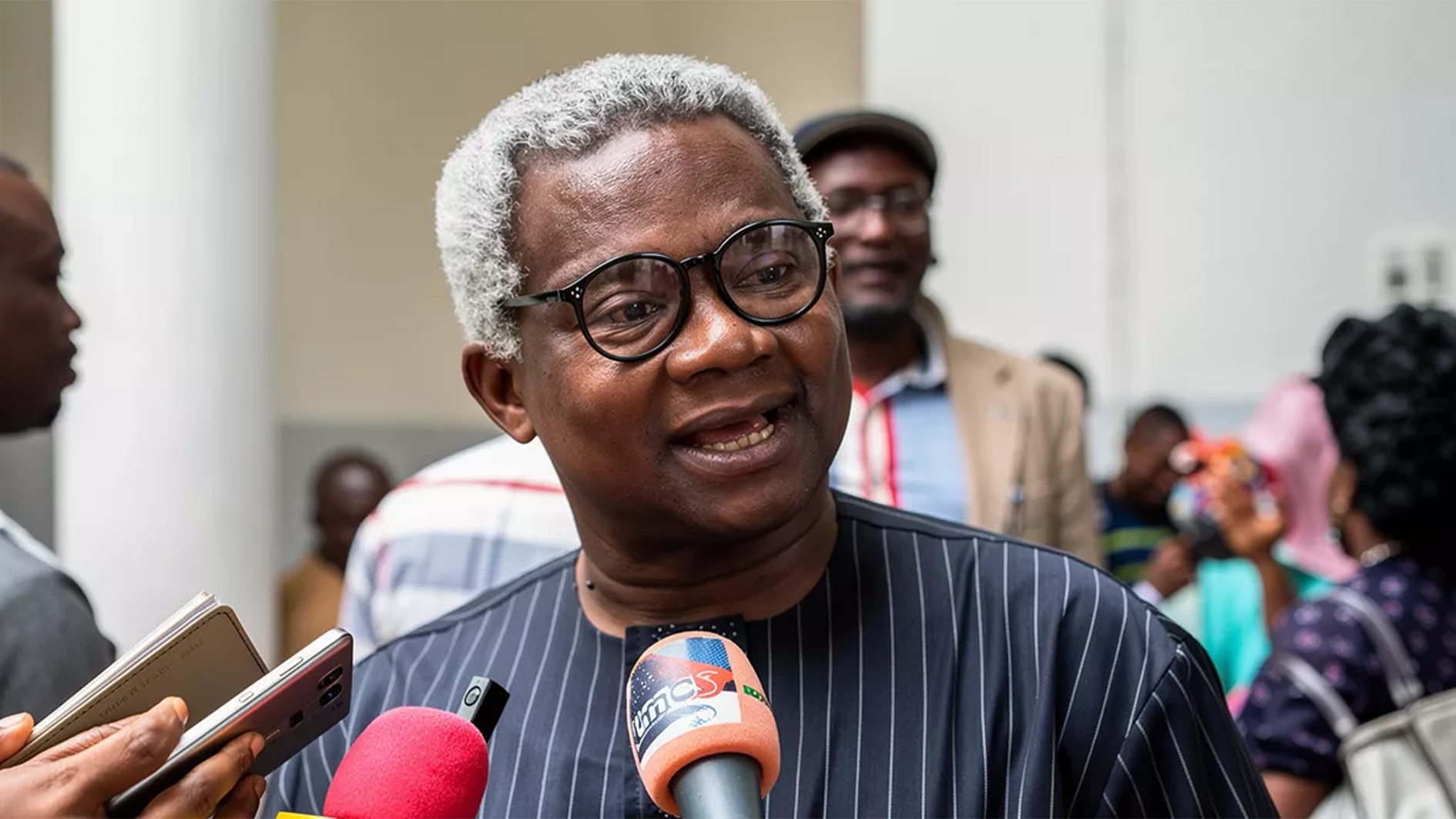
A foundation member of the All Progressives Congress (APC), Osita Okechukwu, has commended President Bola Ahmed Tinubu for approving a substantial salary increase for personnel of the Armed Forces, but urged the Federal Government to complement the welfare package with greater investment in modern military technology.
Okechukwu said improved remuneration was important for boosting the morale and welfare of troops, but cautioned that salary increases and the expansion of the Nigerian Army alone would not guarantee victory over insurgency, terrorism and banditry.
He made the remarks while reacting to the recent review of military salaries and the expansion of the Nigerian Army from eight to 12 divisions.
The former Director-General of the Voice of Nigeria said Nigeria must avoid relying on outdated military doctrines to confront contemporary security threats.
It will be recalled that President Tinubu approved salary increases of 80 per cent for personnel from the rank of Private to Staff Sergeant, 50 per cent for Warrant Officers to Colonels and 30 per cent for Brigadiers to Generals, alongside the creation of four additional Army divisions.
Okechukwu described the salary review as a welcome development, saying it reflected recognition of the sacrifices made by members of the Armed Forces in defending the country.

“Like millions of Nigerians, I wholeheartedly applaud Mr. President for improving the welfare of our gallant Armed Forces, who daily risk their lives in defence of our nation,” he said.
However, he urged the President to consider the broader economic implications of the policy, particularly against the backdrop of Nigeria’s fiscal constraints and debt burden.
“Patriotism compels one to ask a fundamental question: How will our administration, in an era of lean fiscal resources and under budget implementation, sustain such a significant increase in recurrent expenditure while adequately funding critical sectors such as healthcare, education and infrastructure without triggering hyper-inflation?” he asked.
Okechukwu also expressed concern that the salary adjustment could lead to similar demands from the police, paramilitary agencies and other public servants.
He said the government must ensure that improved remuneration does not come at the expense of other critical sectors of the economy.
As an alternative, Okechukwu advocated increased investment in welfare programmes that could benefit a wider section of the population, including members of the Armed Forces and other public servants.
“I believe that 30% budget addition to kitchen table welfare enablers to the greatest number of Nigerians among which are members of the Armed Forces and other public servants, inter alia; comprehensive healthcare, quality educational opportunities and affordable mortgage home schemes, will better spread joy, strengthen purchasing power, encourage productivity and employment,” he said.
He further claimed that a large proportion of military personnel do not own mortgage-backed homes, arguing that housing support should form part of government’s broader welfare strategy.
On the expansion of the Nigerian Army, Okechukwu said increasing the number of military formations must be matched by investments in advanced equipment and intelligence capabilities.
According to him, military superiority in the 21st century is increasingly determined by technological sophistication rather than the size of an army.
“Today’s battlefields are dominated by drones, satellite surveillance, electronic warfare, cyber operations, precision-guided weapons, artificial intelligence and real-time intelligence,” he said.
He argued that Nigeria’s security forces require stronger access to modern intelligence, surveillance and reconnaissance systems to effectively track and respond to terrorists, bandits and other criminal groups.
“Victory no longer belongs to the side with the largest number of boots on the ground, but to the side with superiority of AI-driven intelligence capabilities,” Okechukwu said.
Drawing lessons from the ongoing Russia-Ukraine war, he pointed to the extensive use of drones, satellite-enabled communications and advanced intelligence systems as evidence of the changing nature of warfare.
He said the experience demonstrated that technology could significantly influence military operations and outcomes, stressing that Nigeria must adapt its security strategy to emerging realities.
Okechukwu therefore urged the Tinubu administration to combine the welfare improvement of military personnel with sustained investment in technology, intelligence, logistics and modern weapons systems.
He maintained that the expansion of the Army and improved salaries should be viewed as part of a broader military reform agenda designed to build a more effective, technologically capable and better-motivated fighting force.
According to him, the ultimate objective should be to equip Nigerian troops with the tools required to confront contemporary security threats while ensuring that the welfare of personnel remains a central component of national defence policy.

