 Follow Us on Google News


 Follow Us on Google Discover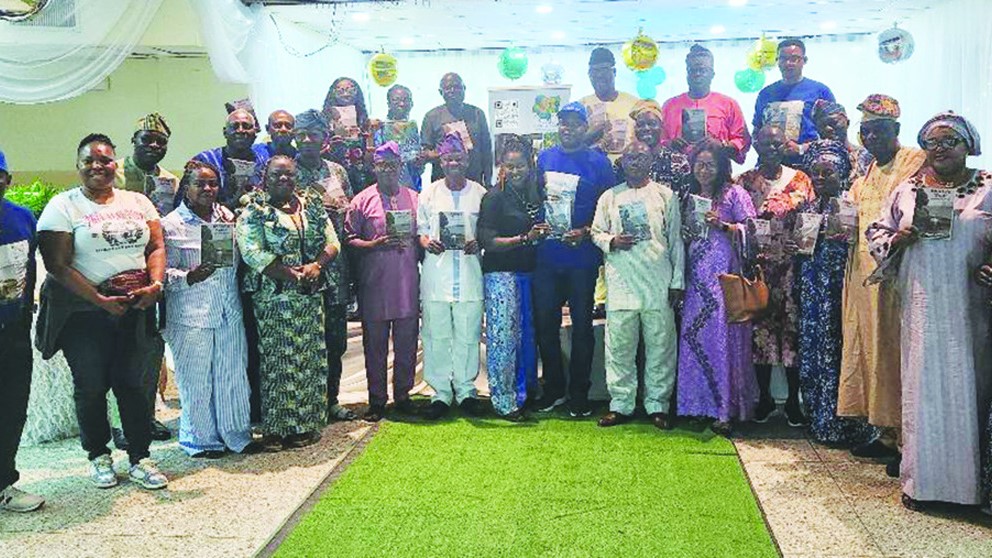
Released at a time when Nigerians are grappling with tax reforms, the book, Moria’s Scar, Agbekoya Uprising, by Bimbo Bakare, tells the story of how tax pressures fueled the Agbekoya farmers’ revolt of the 60s in Western Nigeria, warning that history, if ignored, has a way of repeating itself.
Launched last week in Lagos, the book comprises 216 pages and 21 chapters. It tells the story of Moria, a young woman whose life is dramatically altered during the revolt.
According to Bakare, Moria’s life changed after she was injured, forcing her to leave Nigeria and live abroad.
“She developed hatred towards the country until she met a Swiss man, Eric, who told her some intriguing things the Swiss did to manipulate prices, which led to the fall of cocoa prices, part of which the Agbekoya farmers were revolting against,” Bakare explained.
Bakare, whose ancestry is traced to Ibadan, where the revolt took place, described the story as personal, adding that he was inspired by his desire to explain Nigeria’s history to his children, who were raised partly outside the country.
He said: “Telling that story to my kids was dry because it sounded like any other history. But if you are able to put it in the narrative that they can relate with, like a person that lived outside the shores of Nigeria coming back and facing all the trauma and the issues, then they can relate with it. So that was what led me to Moria’s Scars.”

Bakare said each part of the book communicates deep message that relates with struggles that shaped individual existence. He added that the book was documented to retell Nigeria’s history in a way younger generations, especially those in the diaspora, can relate to.
He urged the government to learn from history, warning that when people are facing economic pressures, that is not the time to levy high taxes on them.
“We are lucky that this year, the Nigerian Tax Act is coming into play. But part of the provisions of the Act is that some people earning below certain threshold do not need to pay tax, which means a lot of individuals that could have fallen into that Agbekoya category are already excluded,” he said.
The book reviewer, Evini Toyin-Asamo, described it as intriguing, with deep research, spotlighting every set of human — the betrayed, the brave, the lost, the wounded, and the triumphant.
Drawing from the book’s themes, Toyin-Asamo urged women not to accept marital rape as a societal norm, noting that it is a crime for a husband to force himself on his wife.
She said: “We see the story of Molaka for instance who was forcefully raped by her husband and forcefully taken to her husband’s house. And we see how she ran away from her husband’s house after a while. And how her life became miserable because we know of course in those days, once you’ve been married before, it’s pretty hard for anybody to want to marry you.
“And it’s easy to say that that’s her story. But even in the present times where we are, you still have people living the same story. And women’s voices are constantly being subdued or silenced.”

