 Follow Us on Google News


 Follow Us on Google Discover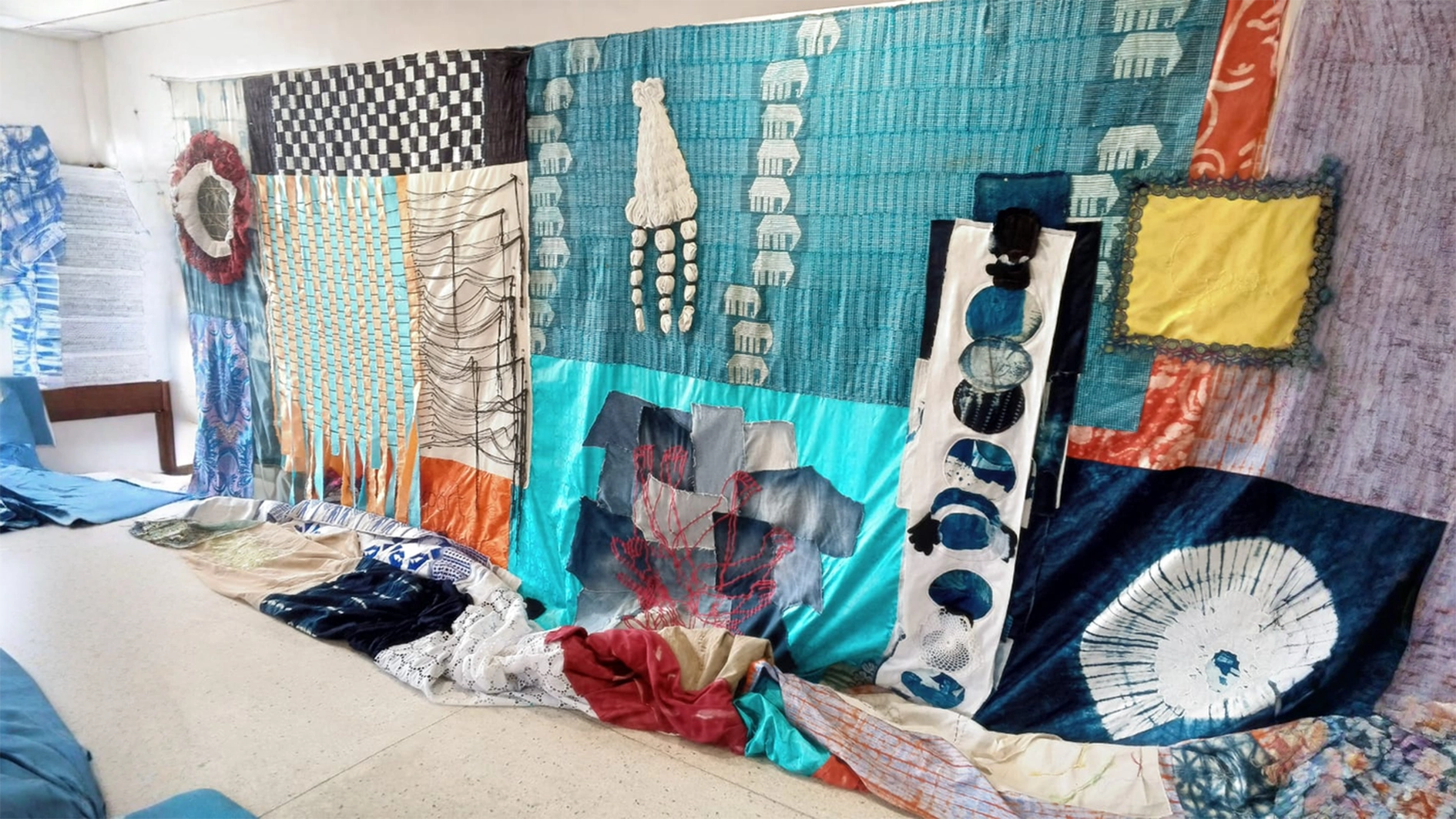
THE city of Lagos has become the latest hub for remarkable cross-cultural collaboration, where indigenous textiles from Europe and Africa converge in a traveling exhibition that celebrates shared histories and the urgency of preservation.
From October 2024 to April 2025, artists in Vorarlberg, Austria; Dakar, Senegal; and Lagos, Nigeria, crafted a collective quilt, now unveiled as “Òwú. Fil. Faden. Thread.”
This vibrant work opened on October 29, 2025, at the Centre for Contemporary Art (CCA) Lagos in Yaba, where it will remain on view through the end of the year, accompanied by workshops and art talks that deepen its narrative.
Displayed across five sections on the gallery’s third floor, the quilt weaves together stories of fabrics that transcend borders, highlighting their cultural significance and evolution. Participating artists Anette Baldauf, Milou Gabriel, Sasha Huber, Janine Jembere, Susanna Delali Nuwordu, Abiona Esther Ojo, Jumoke Sanwo, Mariama Sow, and Katharina Weingartner, have contributed pieces that blend traditions, creating a tapestry rich in heritage.
In the Lagos iteration, lace emerges as a star element, sewn alongside local staples like aso-oke and adire, merging with materials from other cultures. Though not originally indigenous to Nigeria (often imported or produced in foreign-owned factories here) lace holds iconic status in local lore.
During a guided tour, artist Jumoke Sanwo recounted pivotal historical moments that cemented its place in Lagos society, including the infamous case of Babatunde Folorunsho, the first publicly executed armed robber, who requested to face his end clad in lace attire.
Shifting to truly homegrown fabrics, Sanwo emphasized the project’s nod to aso-oke’s epicenter at Oje Market in Ibadan, Oyo State, southwest Nigeria, where these textiles thrive in daily trade.
At its core, she explained, the exhibition aims to safeguard indigenous fabrics worldwide, from Nigeria’s aso-oke to Senegal’s manjak.
This theme of tribute extends to key figures whose lives intersected with Nigeria’s lace narrative, including HRH Abiola Dosunmu Erelu Kuti IV, Shade Thomas-Fahm, Rudi Bösch (1953-2025), Ireti Bakare Yusuf, Adeboye Martins, Alhaja Mutiat Peju Animashaun, Alhaja (Chief) Samiat Abimbola Solebo (d. 2023), Alhaja Adekoya, Emmy Kasbit (Daniel Olurin/Emmanuel Okoro), Ed Keazor, Frances Ore Markus Riedmann, and Alhaja Toyin Shitta.
The fabric’s journey also traces back to the Austrian town of Lustenau in Vorarlberg, renowned for its embroidery, a luxury export that floods West African markets with tons of embroidered damask each year.
Adding a hands-on dimension, about two weeks after the opening, Kaduna-based textile artist Yusuf Sani Said conducted a tie-dye workshop within the exhibition space at CCA.
Drawing enthusiasts and secondary school students, including those from Lagos City College in Sabo, Yaba, Said showcased hand, wooden, and needle techniques in the art of tie-dyeing.
In one demonstration, he folded fabric, threaded a needle through its center, and repeated the process across the material to build aesthetic depth.
For varied designs, he advised placing objects like cowry shells beneath the fabric before tying, not to replicate the shell’s pattern, but to evoke unexpected forms, such as a crab.

Other methods included multi-layer folding with indigo and wooden dividers for precise motifs, or outlining shapes directly on the fabric using pre-formed objects.
The session sparked interactive engagement, fueling participants’ passion for this enduring craft and reinforcing the exhibition’s call to preserve textile traditions amid global influences.

