 Follow Us on Google News


 Follow Us on Google Discover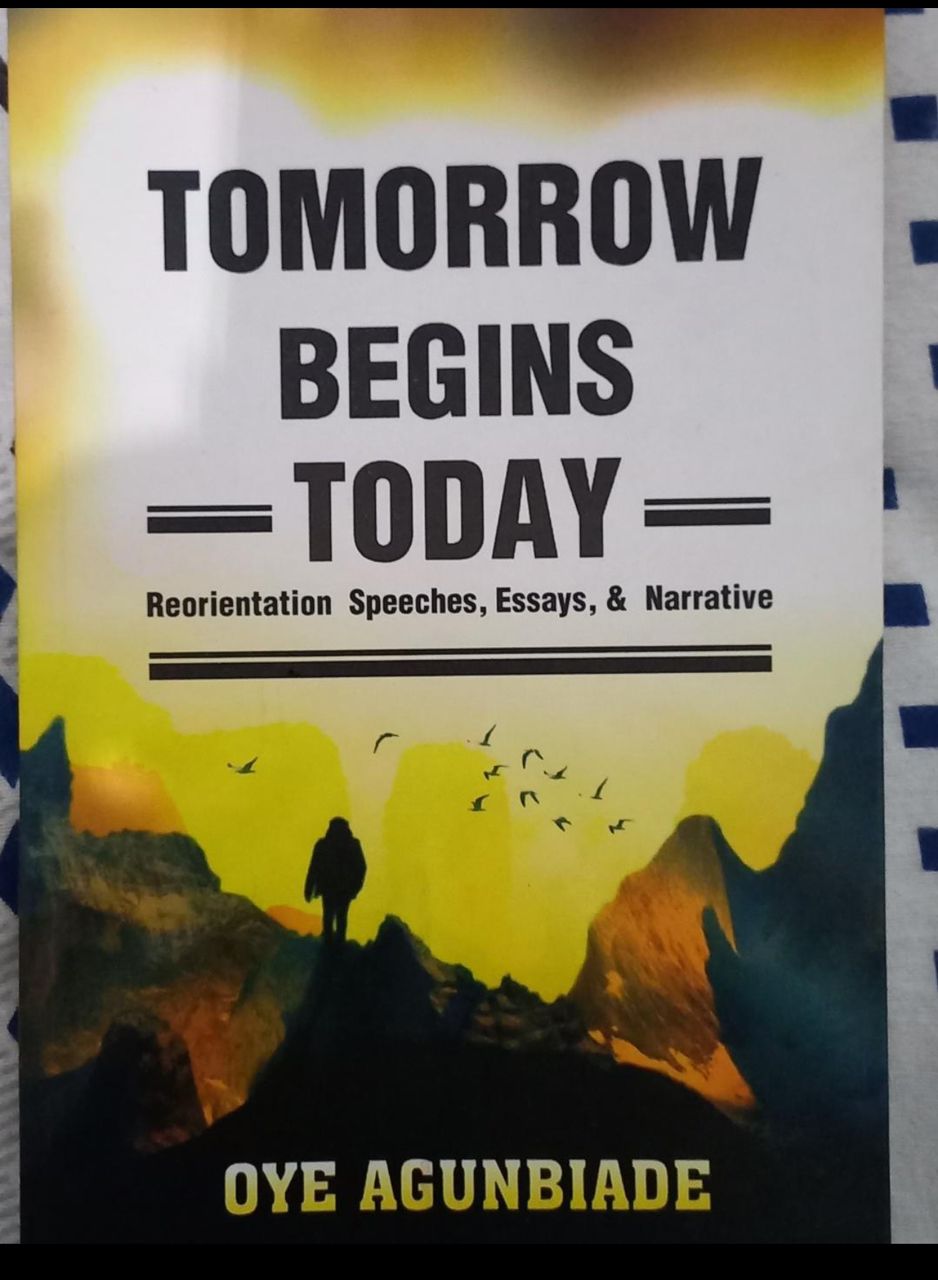
 Oyewumi Agunbiade’s Tomorrow Begins Today is a reorientation speeches, essays and narrative that centres on the blocks and stones that have to be gathered dutifully and turned into the solid foundation on which a great tomorrow may be built for the nation and the individual.
[ad]
A very well-researched book, it is divided into two parts. The book is didactic and conveys its grand theme of self and national development while drawing truths from the synthesis of assertions from the greats. Chinua Achebe, Gbile Akanni, Ben Carson, Niyi Osundare, Frantz Fanon, Myles Munroe, Norman Peale, Charles Soludo and Voltaire are only a few of the names in this collection of insightful essays.
The book is an easy-to-read book that emphasises the importance of today in ensuring a greater tomorrow.
It is often the norm that the future is revered and highly anticipated as the period when everything would fall into place. However, this book discards the illusion that a great tomorrow is a given.
In Agunbiade’s words, “Amazingly, tomorrow shrinks daily because today takes from it for yesterday.”
The first part, entitled “Thoughts on Personal and National Development”, is a collection of three essays that focus on national issues of corruption and development. The first essay entitled “Tomorrow Begins Today” is addressed to a gathering of public servants and meditate on the importance of today and upholds today as more important than yesterday and tomorrow.
Agunbiade maintains that there is a need to stand out. This may only be achieved through vision. Vision on its own may only be established through a clear identification of personal potential.

Agunbiade also lauds creativity, true service, commitment and integrity. The author does not fail to underscore the importance of sensitivity to ideas towards developing a keen vision. He would not wish for anyone to get lured into thinking having a vision is enough to build a great tomorrow. Equally as important as vision are efficiency and effectiveness in the workplace. For him, the litmus test of effectiveness and efficiency is no other thing but productivity.
The second essay, “How to Castrate Corruption in Africa,” dwells on corruption, which is recognised as the bane of Africa, a continent which Agunbiade considers blessed but bedevilled by corruption and greed. Here, he beautifully presents an allegory which reveals the starkness of greed. Greed thrives in the absence of endurance and honesty. It grows fat in an environment of manipulation.
Agunbiade argues that corruption should be made very unattractive. When stories of corruption are told, it should be of bad endings, especially in the civil service. When corruption is taken out of governance, as the writer affirms, the necessary redefinition of African governance will happen. This, he maintains, may only be built on a firm foundation of hard work. For him, the hope of tomorrow lies on the youth. He contends that the youth has to be empowered to head the anti-corruption campaign.
The third essay in the first part, “Africa’s Next Millionaires: A Plea for Media Advocacy and Youth Involvement in Agribusiness”, focuses on the importance of economic empowerment of the youth. He foretells that Nigeria, being blessed with great land mass and human resources, has the potential to become self-sufficient in food production.
Agunbiade suggests that agriculture should be redefined in school curricula. Incentives and aid from the government would also encourage the youth to embrace agriculture.
Part Two, which is targeted at university students, comprises four essays. Comprising orientation lectures delivered to Achievers University, ABUAD, AAUA, FUTA and ACE, it is geared towards encouraging students to imbibe qualities that will make them both excellent students and excellent citizens. It emphasises Nigeria’s leadership problem and the responsibility it places on the shoulders of the Nigerian youth.
Furthermore, it underscores the necessity of self-discovery, which he sees as the antidote to the employment crisis in the country. Above all, he affirms the importance of determination.
Essentially, the grand subject that knits the essays in the collection together is an overwhelming belief in the power of the youth, the individual and the employee to turn his life around and consequently be part of the nation-building process.

