 Follow Us on Google News


 Follow Us on Google Discover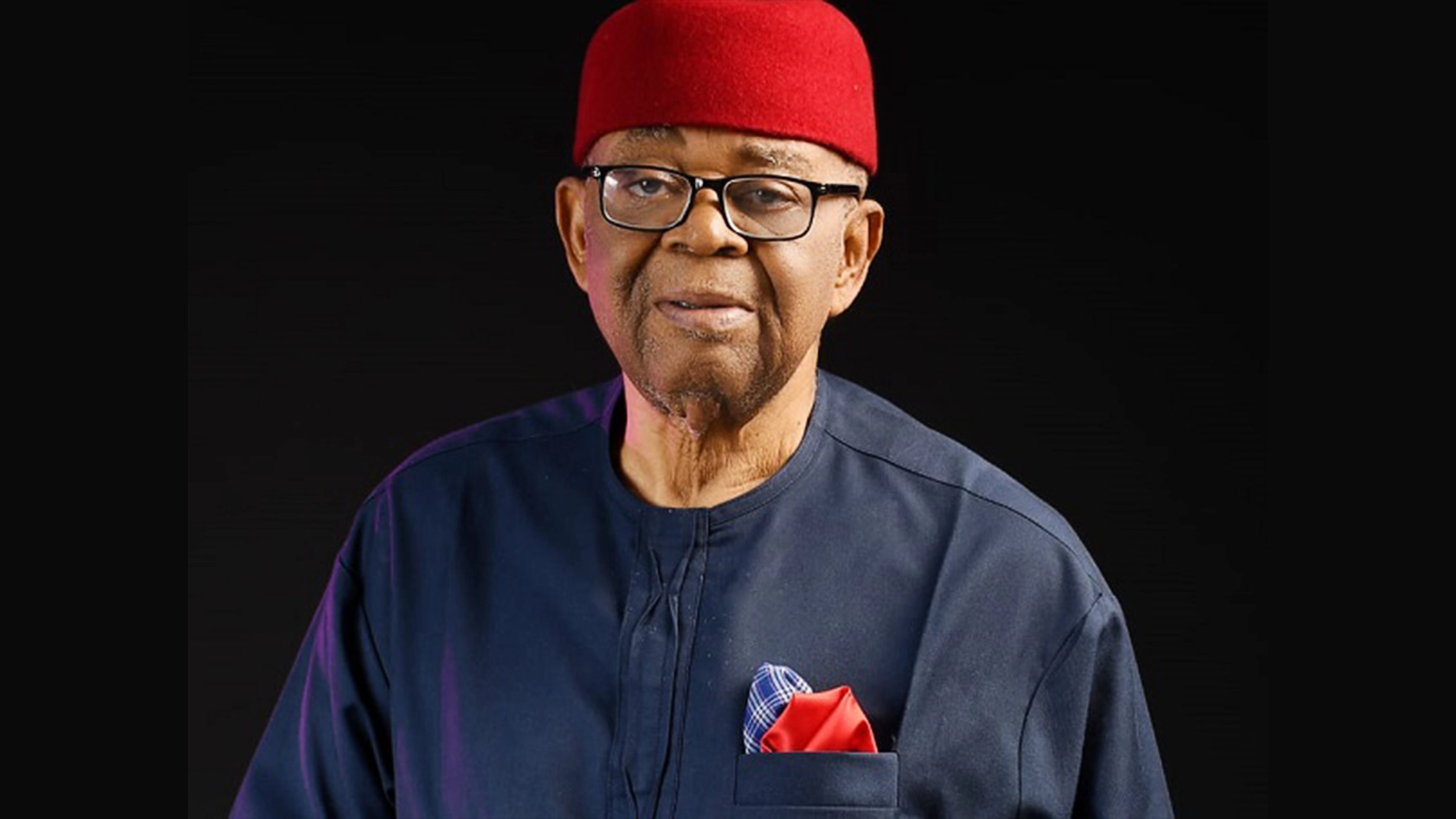
By Simon Odey Ikpakronyi
Dr. Paul Chike Dike, OON, was a colossus whose imprint in the culture sector in general and visual arts sub-sector in particular will be etched in the sands of time. I met him at a turning point of our careers – he had just been appointed the Chief Executive of the newly established National Gallery of Art (NGA) – I was a Visual Art Officer in the National Gallery of Modern Art division of National Council for Arts & Culture (NCAC) located at Entrance B of the National Theatre, Lagos which was now his new office. For reasons I still find difficult to comprehend, the management of NCAC refused to hand over the office space and the keys to him. And the keys were with me.
A great conversationalist, it did not take me time to know that this man had a lot to offer the culture sector. He spoke passionately about his vision and dreams for the parastatal. More importantly, he opened up to me on the efforts he made to ensure that the establishment became a reality including reading different memos from individuals and groups requesting the then Military government led by Gen. Ibrahim Babaginda for the creation of the National Gallery of Art as a parastatal. These included a compelling Open letter by Dele Jegede, then president of Society of Nigerian Artists (SNA) in a document entitled, “Conclusions of the meeting of the committee of experts on the National Cultural Policy”, which recommended the establishment of an Independent National Gallery of Art (NGA) as well as a National Academy for the Art (NAA).
He told me that in spite of the urgency expressed by the stakeholders, the memos were largely ignored by the powers that be. He therefore had to put all the petitions and memos together with an executive summary which he submitted to then Minister of Information & Culture, Comrade Uche Chukwumerije through his Special Adviser, Elochukwu Amacheazi, and Ben Eke, the Ministry’s Public Relations Officer.
It was this final push I dare say, that made the Minister to take action – send Dike’s Memo to the Federal Executive Council – which gave it outright approval. NGA was subsequently established under Decree No. 86 of August 1993. The appointment of Dr. Paul Chike Dike as the first Chief Executive of NGA was later announced on August 20, 1993.
Still, it took four whole months before Dike could get access to his office. Reason? The management of NCAC in spite of all efforts by the new Chief Executive of NGA bluntly refused to hand over the office to him (Dike). It took a directive from the Permanent Secretary of Information, Mr. P.B. Etta, and taking a risk that could have cost me my job as I was at the time a staff of NCAC, before I handed over the place including the keys to Dike on December 15, 1993. It was the hand over from me that actually enabled the full take- off of NGA as a parastatal.

When Dike assumed duty as Chief Executive, he took me as his Personal Assistant (PA) and later from 1993 to 2006 when he left office, I served as his Special Assistant (SA) on professional matters.
At the initial time of NGA, Dike and I would work very late into the night. I would accompany him to many places in respect of NGA after which he would drop me off at my place at Shomolu, Lagos. At the time, he was driving himself. It was later that he got a driver. I continued to work with him until his last day in office…
Significantly, quite early in his tenure, was the establishment of a professional studio which was commissioned in 1999, and named after the late Aina Onabolu, the father of modern Nigerian art for the benefit of Nigerian artists.
Dike actually wanted the Society of Nigerian Artists (SNA) and NGA, to speak with one voice to attract government attention. No doubt, throughout his tenure, he related very well with SNA, supporting some of its programmes as well as assisting artists in various ways. He equally related well with many other art associations, particularly Female Artists Association of Nigeria (FEAAN). It all started in 2001 when NGA brought Nigerian women artists together and exhibited their art works to mark the 41st anniversary of Nigeria’s Independence. The welfare of artists was also paramount to him as chief executive of NGA. Even after his tenure, he continued to relate with many artists till he breathed his last.
Instructively, when he noticed that Universities were no longer giving research grants to lecturers, he initiated a programme called, “Award of Grants to Artists” and a good number of art scholars benefited.
However, he never failed to complain over the present state of NGA. According to him, all the structures he put in place seemed to have collapsed; that after decades of its existence, NGA was not the kind of dream he had. His expectations as well as those of many others were yet to be met.
No doubt, Dike will be greatly missed, and remembered for his great legacies. Nigerian Art Scene will continue to remain Dike’s big constituency. Nigerian artists will forever remember Dr. Paul Chike Dike for the love and interest he had as well as what he did for them. In this regard, he should be treated like other Nigerian master artists, and as with them, adequate documentation on him should be embarked on him. I believe that a standard book should be written on him as has been done on some Nigerian master artists by NGA. And if Aina Onabolu is today the father of modern Nigerian art, Dike should also be taken as the father of modern gallery of art in Nigeria and should be so accorded. His name will forever remain synonymous with the Nigerian art scene.
Adieu, my boss, mentor, art colossus.
• Ikpakronyi PhD, was former Director, Overseeing Office of the Director General (DOODG), National Gallery of Art (March 2019-July, 2020).

