 Follow Us on Google News


 Follow Us on Google Discover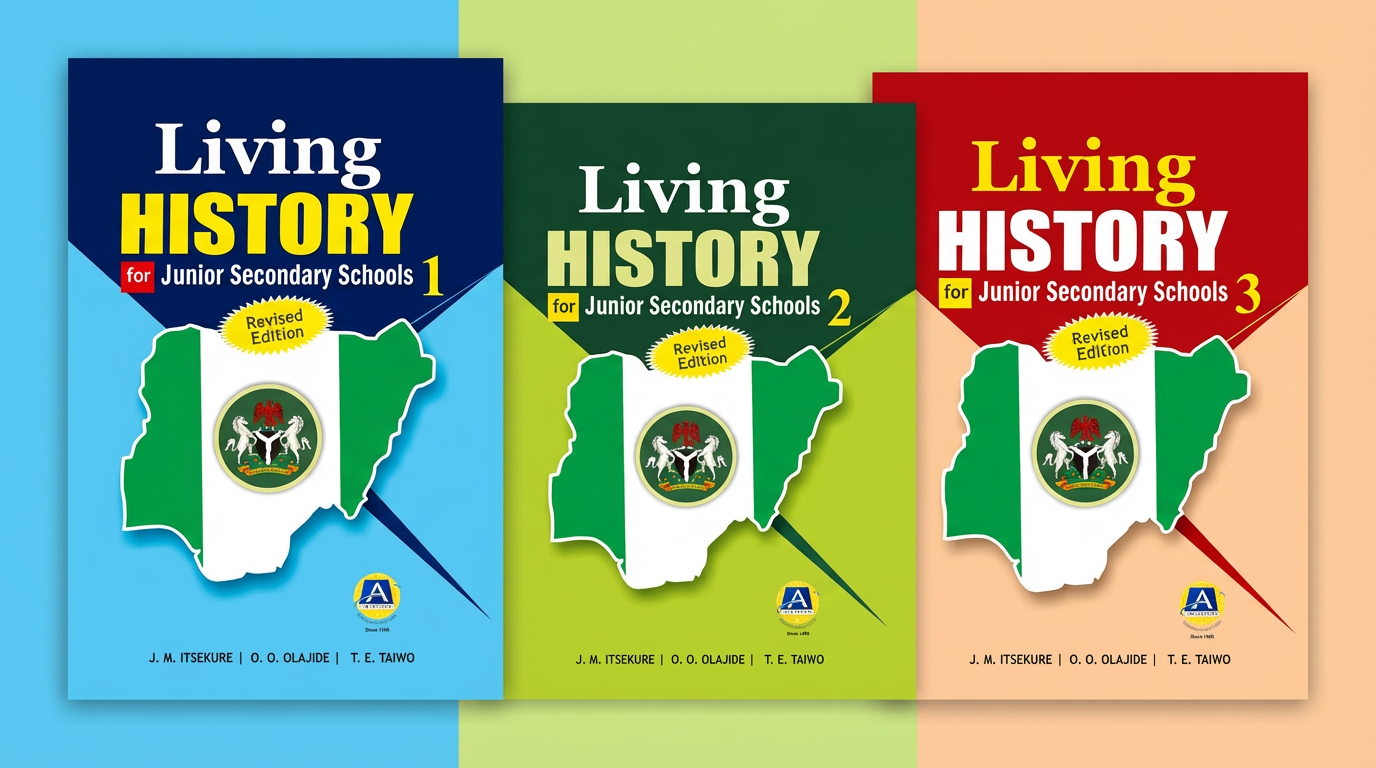
ACCESSIBLE Publishers Ltd and the authors of Living History for Junior Secondary Schools (JSS 1 – 3), J. M. Itsekure, Mr. Olaitan Olukeye Olajide and Mrs. Taiwo Eucharia Taiwo (professional historians, teachers and researchers) have debunked false claimson Facebook video that the Igbo nation is excluded from the book.
They maintain that the claims are not only false, but borne out of mischief as there is enough material on Igbo history appropriate for the junior level learners the books cater for.
In a statement shortly after the video posts, Accessible Publishers Ltd put out a disclaimer that said, “our attention has been drawn to a social media video referencing a section of Living History for Junior Secondary Schools (JSS 1). After an internal review by our seasoned authors and professionals, we observe that page 27 of the book is dedicated to Igbo-Ukwu: Culture and Artefacts, where the history, artistry, and cultural contributions of the Igbo people are explored as part of Nigeria’s shared heritage. This section reflects our long-standing commitment to cultural representation within curriculum-approved educational content.
“Our firm, Accessible Publishers Ltd, wishes to clarify that all its textbooks are developed in strict compliance with the curriculum guidelines issued by the Nigerian Educational Research and Development Council (NERDC), and are authored and reviewed by seasoned subject-matter experts. We therefore invite educators, parents, and the wider community to read the book, explore the content, and form their views based on the complete material. Accessible Publishers Limited remains committed to producing educational resources that inform, inspire, and respect Nigeria’s rich diversity.”
A close reading of the books’ chapters reveals excerpts below that clearly show that Igbo history is not excluded as falsely claimed in the videos but a firmly entrenched part of the book series.
In Land and People of Nigeria in chapter two of book one, the authors generally describe the location and people that constitute the Nigerian entity. And on page 15, they write, “Nigeria is inhabited by a large number of tribal groups with over 550 languages. These language groups had in the past formed their own kingdoms and had instituted political entities in Nigeria. These include the Yoruba, Edo, Igbo, Hausa, Ibibio, Efik, Fulani, Kanuri, Tiv, Angas, Ijaw, Isoko, Urhobo, etc. Some of these groups have peculiar customs, traditions and languages.”
And on page 16, the authors continue, “despite the numerous tribal groups that exist in Nigeria, the Hausa/Fulani, Yoruba and Igbo tribes are dominant and they account for over 60 per cent of the country’s population… the Igbo tribe constitutes about 18 per cent of the population.”

And in Chapter 3, ‘Pre-History: Early Centres of Civilisation’ in pages 27 – 30, the authors focus on ‘Igbo-Ukwu Culture and Artefact’ and describe the excavation work of the archeologist Professor Thurstan Shaw at Igbo-Ukwu as one of the earliest Nigerian civilisations. Book two of Living History 2 has the opening chapter titled ‘The Non-Centralised States in Pre-Colonial Nigeria’, where the authors focus on ‘Igbo and its Origin’ and explore this historical origin to flesh out the founding of the Igbo nation.
With these ample evidence, it’s therefore disingenuous and wicked for anyone to claim that the Igbo nation does not feature in Living History for Junior Secondary Schools (JSS 1) or consigned to a footnote.
One of the authors Mrs. Taiwo, who holds a BA in History from the University of Lagos and an MA degree in History from the University of Ibadan, expressed “shock and disbelief” at the spurious claim, saying the authors followed the curriculum and could not have excluded any part of Nigeria from the history book series.
On why she thought the content makers decided to exhibit ignorance about books they possibly hadn’t read before going public, Taiwo said, “Well, the first thing that came to my mind was that this person had not read the books, because the man was saying if Efik history is in a book, how can Igbo history not be there? The next video post was a woman showing the covers. The first book mentioned Igbo history. In writing about the history of any people, what you consider is the geographical location, climate, their neighbours, and then who are they?
You can’t understand a people without knowing their location; it’s always about space and time. In addressing that, we mentioned the Igbo among other tribes.”

