 Follow Us on Google News
 Follow Us on Google Discover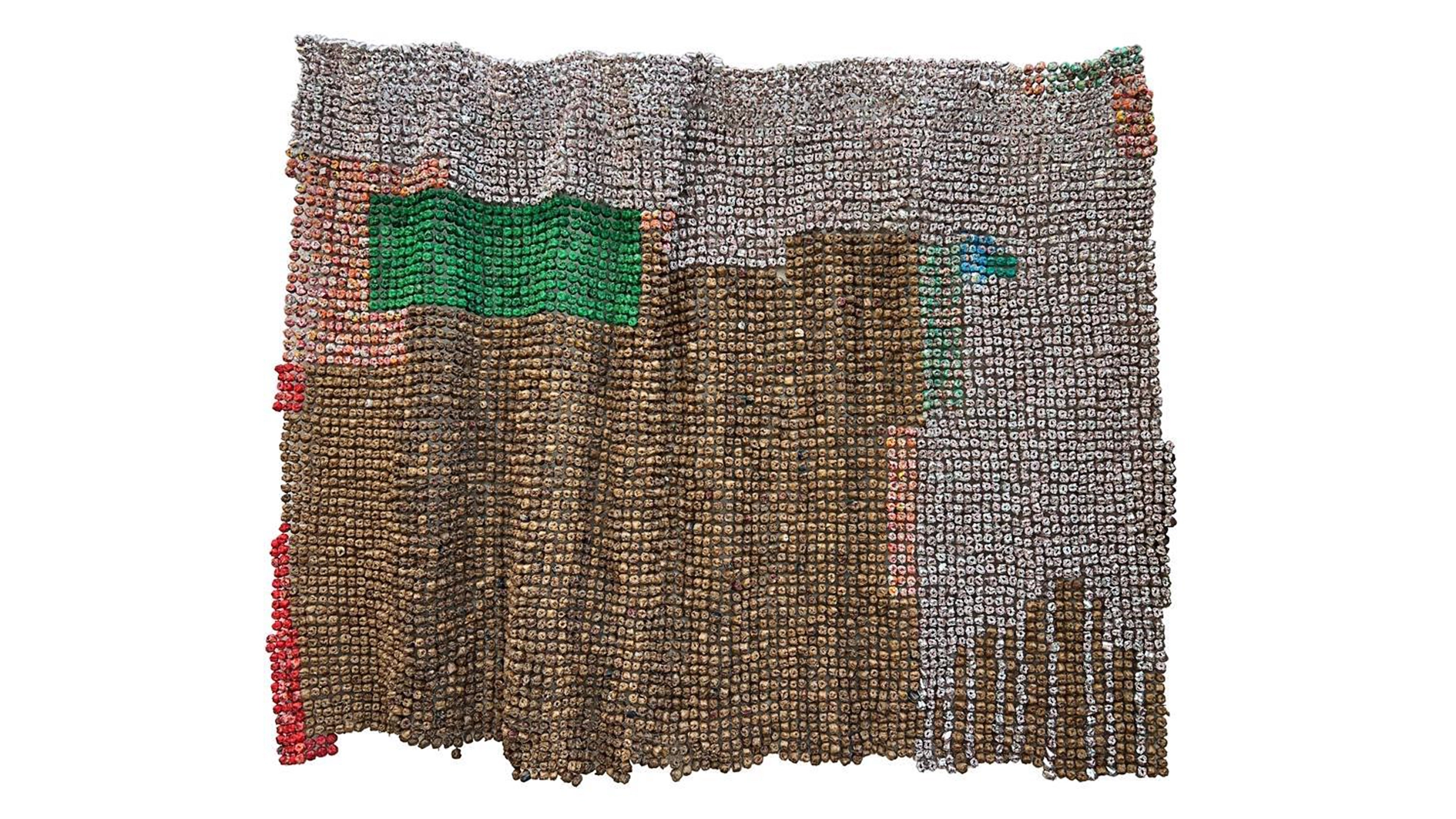
Kicking off with its first exhibition of the year, all roads lead to SOTO Gallery for ‘The Earth Holds Our Names’, a solo show by talented master, Olumide Onadipe.
The show, curated by Uchechukwu Obasi, will start showing on April 19 till May 31, 2026 at the premises grounds in Ikoyi Lagos. Visitors will engage with Onadipe’s meditative exploration of memory, material transformation and cultural continuity.
Drawing from the epic history of the indigenous Yoruba worldview, the exhibition traces the metaphysical movement of time across generations and colonially politicised spaces. Working as both a temporal and material narrator, Onadipe excavates contemporary reality as cyclical and embodied, mapping ancestral patterns, identity and traditions that continue to shape postcolonial existence.
Known for his idiosyncratic sculptural language, Onadipe transforms everyday materials—dyed and rolled newspaper, nylons and drink foils bound with galvanized wire—into textured, evocative forms. These repeated accumulations, oscillate between object and commentary, offering subtle yet profound reflections on Nigerian society.
Founder, Soto Gallery, Tola Akerele, expressed excitement over the works, stressing that as this is the first show of the year, “we are taking it very seriously and took our time to select the artist. Looking at sustainability from his perspective is interesting and we want visitors to experience it through his eyes.”
Speaking, the gallery’s manager, Joanna Oyefeso, hailed the materials, mostly resin, used in the body of works. “The Oba Apase piece really stood out to me. Referencing Yoruba mythology, the artist has shared how he is deeply influenced by these different mythologies. Religion also shapes his worldview as well and it reflects a lot in his work.

His work is connected in the sense of working with materials that are very relatable and has a lot of meanings.”
Onadipe approaches his practice as both a keeper of space and a narrator of time, tracing the continuities between ancestral knowledge and contemporary life. His works resist direct declaration, instead unfolding through texture, form, and suggestive titles that invite layered interpretation.
“The primary reason I do what I do is because the materials communicate with me. If the materials don’t communicate with me, I’m not going to use it, no matter how environmentally friendly it shows itself. The artist has a primary responsibility to his community. So, using different material, for instance, is part of fulfilling that responsibility. The artist, through the use of materials, or using related material like I use in my work, opens the eyes of people to the wonder of everyday materials and what they can do when we push their boundaries,” he said.
Speaking on social responsibility through art, he said people can be educated through the use of materials, showing people the possibilities of what materials can do and the downsides of discarding materials carelessly. “But to be socially responsible, we must first start a conversation. An artist is a vessel through which many minds speak.”
I am like a voice for the unseen, for people to communicate through, and this fundamentally makes me socially responsive.”
Speaking on the theme of the exhibition, which will showcase about 20 works, and the inspiration behind it, he said the exhibition explores how the earth remembers humans. Adding that the materials used in the exhibition are materials with human experience, he describes it further as a conversation between humans and the earth.
“It is also a conversation between people that have lived before and people living now. How the earth hears our names, absorbs our stories, folds us back into itself and into its memory. That is what inspires this exhibition.”
Reflecting on one of his works, Eko Bridge, he said it emphasises the feminine power as sacred and shows that womanhood carries profound generative power. “Another one, the Opa Ase is a symbol of authority that reflects on the modern democratic consciousness, the weight of leadership within this modern democratic consciousness, where power is a dialogue between the ruler and the people.”

