 Follow Us on Google News


 Follow Us on Google Discover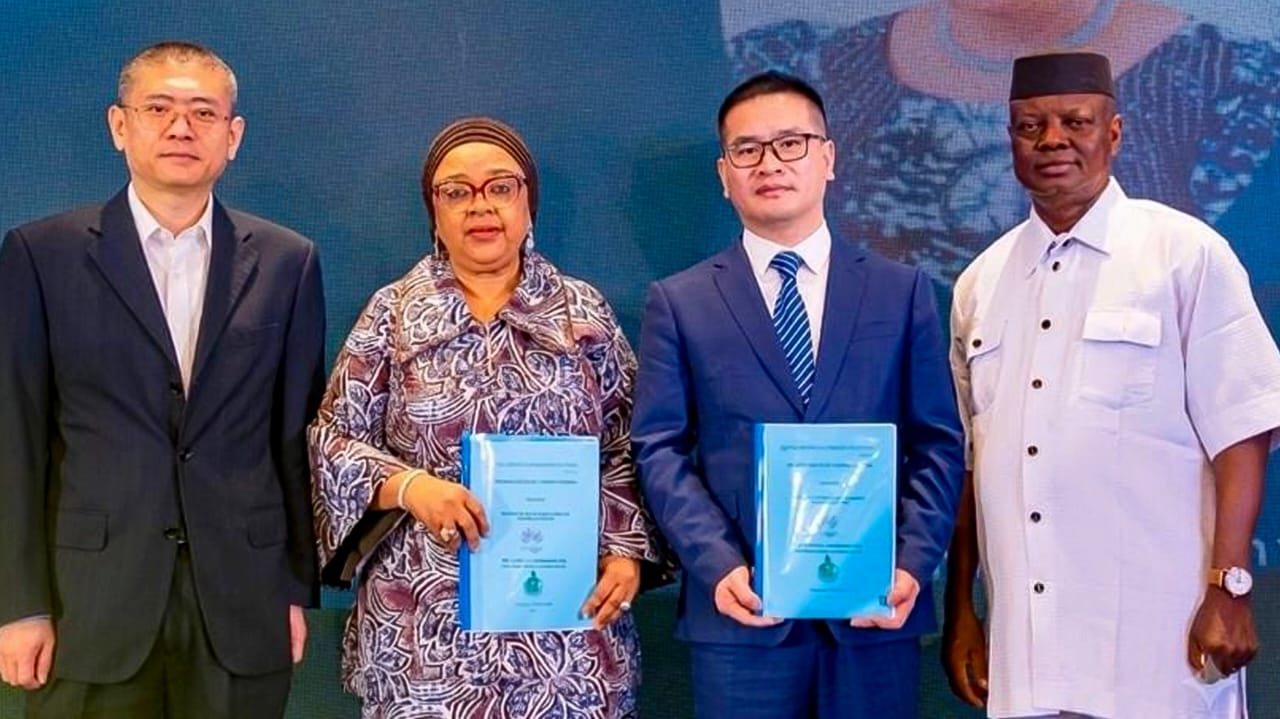
Huawei Technologies Nigeria Limited and the National Commission for Colleges of Education (NCCE) on Thursday strengthened their longstanding collaboration with the signing of a Memorandum of Understanding aimed at advancing artificial intelligence initiatives and accelerating digital education across Nigeria.
The agreement was formalised at the third Huawei Education Summit 2026 in Abuja. The one-day event brought together education regulators, university administrators, state government officials and technology experts to discuss practical steps for preparing Nigerian graduates and institutions for an increasingly digital and AI-driven global economy.
Deputy Managing Director of Huawei Technologies Nigeria, Jim Zhang, reaffirmed the company’s commitment to building digital talent and supporting government and educational institutions with technologies that help close the country’s ICT skills gap. He noted that emerging technologies such as artificial intelligence, cloud computing, cybersecurity and smart learning have reshaped industries, making it essential for educational institutions to adapt.
“Universities and colleges must equip students with practical digital skills and innovative mindsets so they can compete globally,” Zhang said.
He added that Huawei would continue to strengthen partnerships with government, academia and industry to build sustainable ICT ecosystems while promoting inclusive and innovative education.
Executive Secretary of the National Universities Commission (NUC), Prof. Abdullahi Yusuf Ribadu, represented by Prof. Abdullahi Zakari, described Huawei’s education model as one worthy of emulation.

He said the company’s sustained investment in human capital has added significant value to Nigeria’s higher education system through its ICT Academy, which moves students from classroom theory to practical learning in networking, cloud computing and other emerging technologies.
Prof. Ribadu highlighted the Core Curriculum and Minimum Academic Standards (CCMAS) framework, under which the NUC provides 70 per cent of core academic content to maintain national standards while allowing universities 30 per cent institutional flexibility.
He urged vice-chancellors and academic administrators to use this flexibility to introduce cutting-edge 21st-century skills, entrepreneurship and applied technological competencies that respond to both local and global industry needs.
Executive Secretary of the NCCE, Dr Angela Ajala, noted that Huawei has remained a dependable partner since the organisations first signed an MoU several years ago.
She said thousands of lecturers and students have already obtained internationally recognised ICT certifications through the Huawei ICT Academy Programme, contributing to improved employability and innovation across colleges of education.
Dr Ajala announced that the renewed partnership would expand beyond capacity building to include the establishment of a Digital Academy at the Commission. The Academy will provide continuous training for lecturers, students and education stakeholders. She emphasised that artificial intelligence is “the technology of today” and must be deployed responsibly to improve learning outcomes rather than replace teachers.
“Our job is to ensure that no Nigerian child’s future depends on whether their teacher happens to have encountered technology,” she said.
She also disclosed that the Commission has reviewed its curriculum to introduce specialised programmes in Artificial Intelligence and Robotics Education, Networking and Cybersecurity Education, Data Science and Analytics Education, as well as Software and Web Development.
Vice-Chancellor of Covenant University, Prof. Timothy Anake, called on universities to redesign curricula around AI literacy, data analytics, cybersecurity, cloud computing and digital collaboration, while continuing to prioritise critical thinking, creativity and ethical leadership.
He stressed that graduates should be prepared to work alongside intelligent systems and that institutions should strengthen industry partnerships and expand faculty development in emerging technologies.
The Executive Secretary of the National Board for Technical Education, Prof. Idris Bugaje, underscored the need to equip Nigeria’s youthful population with industry-relevant digital skills to boost employability and entrepreneurship.
He acknowledged the contribution of Huawei’s ICT Academy in strengthening digital capacity across tertiary and technical institutions through training in networking, cloud computing, artificial intelligence and cybersecurity.
Building on the morning discussions on talent development and curriculum reform, the summit later focused on the partnerships, technologies and delivery models required to turn digital transformation plans into reality.
The session drew state education and digital economy officials, including Honourable Yusuf Sulaiman Jibia, Katsina State Commissioner for Basic and Secondary Education; Yusuf Ibrahim Sharada, Special Adviser on Digital Economy to the Governor of Kano State; Shamsudeen Hassan, Director of Works, Katsina State Ministry of Basic and Secondary Education; Dr Steve Odey, Cross River State Commissioner for Education; Dr Lawrence Ezeh, Honourable Commissioner for Innovation, Science and Technology, Enugu State; and Hon. Ohimai Ehijimetor, Edo State Commissioner for Communication and Digital Economy.
Michael Zhuang, Vice President of Huawei Enterprise Southern Africa Region, opened the discussions. “We are committed to working with government agencies, customers, schools, and partners to build reliable digital infrastructure, develop the local ICT talent, and deliver solutions that support Nigeria’s development. “Together, we can and we will unlock new opportunities for economic growth, strengthen digital capabilities, and prepare institutions to thrive in an increasingly intelligent world,” he noted that while earlier sessions had centred on the future of education and talent development, attention had now shifted to the practical partnerships and solutions needed to advance digital transformation.
Mr. Joseph Odo, Director of Information and Communication Technology at the Tertiary Education Trust Fund (TETFUND), presented insights on support and funding for ICT projects in Nigerian education. He stated that TETFUND now regards ICT as a strategic priority rather than a support function and has increased funding to ₦150 million for universities and ₦100 million for polytechnics and colleges of education. The resources are intended to equip institutions with tools for modern teaching, learning and research, with continued emphasis on digital systems, specialised centres, capacity building and public-private collaboration.
Shamsudeen Hassan shared Katsina State’s experience in digital transformation, highlighting the smart school project developed in collaboration with Huawei and plans for statewide replication.
Dolly Ding, Industry Manager for the Sub-Saharan Education Sector at Huawei, outlined the company’s Smart Campus solutions, covering campus network, campus safety, smart classroom, digital training laboratory and AI general education offerings.
Mr Ibifuro Asawo, Managing Director and Chief Executive Officer of CINFORES Limited, discussed the transition from traditional teaching tools to smart boards and learning management systems, emphasising their role in meeting global standards for modern campuses.
The summit concluded with the presentation of awards to students and institutions that represented Nigeria at the 2025–2026 Huawei ICT Competition held in Shenzhen, China. Students from Ahmadu Bello University, Igbinedion University Okada, University of Lagos, University of Port Harcourt, Nasarawa State University and Federal University of Technology, Minna, received cash prizes on stage. The Huawei Education Summit 2026 underscored a shared commitment by government agencies, educational institutions and industry partners to build digital capacity, modernise learning environments and prepare Nigerian students and educators for the opportunities of the digital age.

