 Follow Us on Google News


 Follow Us on Google Discover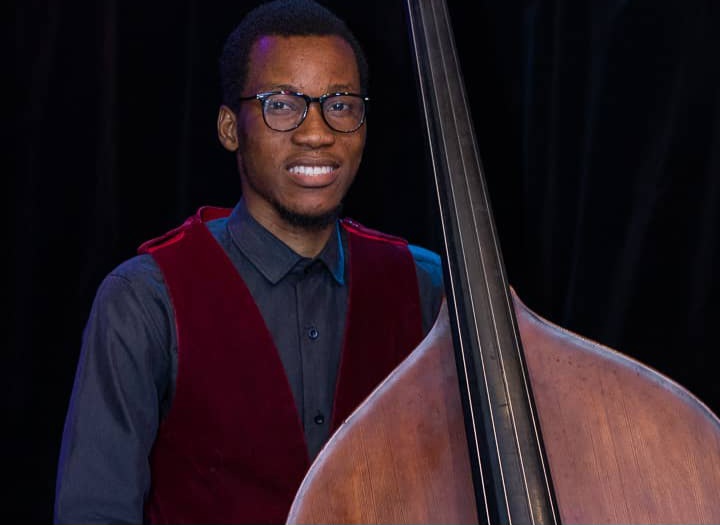
Toluwani Ajayi’s impression at the last performance this writer gleaned from the Akojọpọ Music Foundation’s regular orchestral showcase reminded me why the Double Bass remains a primordial piece of every orchestral masterpiece. Like a puzzle, its foundational sound gives life to every orchestral piece, with Ajayi’s stellar finger-movements aiding two exact performances in this function — Regret Is A Late Born Child by Onusbo and Oko, as well as Nuse by Gabriel Abebi. Both performances, held at The Muson Centre, in Lagos, for several notable reasons, still linger in memory and the beauty of Ajayi’s boisterous Basslines keep the imagery as colourful as a pastel portrait.
On Regret Is A Late Born Child, Ajayi bares his most distinct strength: rhythmic synergy and accuracy. The tension required to keep listeners hooked to the plot of the performance is achieved by Ajayi’s tempered rhythm. His chord progressions strongly connect with the Piano’s, especially, in setting the tone and keeping the rhythm identifiable, throughout the performance. They add suspense, when the ensemble spotlights specific instruments such the Clarinet, Violins, Shekere, and the French Horn. And when the full ensemble is being heard, his rhythm adds texture and pace to the performance, strengthening its overall vibrance.
Still on Regret Is A Late Born Child, Ajayi’s articulation shines through, with a firm use of Pizzicato, which complements the song’s general complexity. The Double Bass’ underlying groove helps Ajayi’s efforts to control the tide, rather than merely hang on a carousel of tempos and tunes.
Ajayi’s notable performance with the Double Bass shines through his musical demeanour and professionalism. He shifts his fingers swiftly, while ensuring his gait supports his frantic trips across the fingerboard as he plucks the strings. As a result, his tone depth and accuracy reignite the performance, after each fermata on the composition. His work on “Atoto Arere,” composed by Nigerian percussionist Abike Ilu, and performed within the same ensemble, shows this skill.
Notably, Ajayi seems to dazzle across Afrocentric orchestras, as Regret Is A Late Born Child, Atoto Arere, and Nuse, all performed the same night, all brim with use of African instruments, lyricism, and indigenous compositional techniques. Across all performances, the Shekere stands out, but is observably radiated by Ajayi’s bass lines which blends seamlessly with the beaded percussion, creating a call-and-response feel. His phrasing feels powerful enough to allow each instrument to breathe, unlocking tension and catharsis on each solo. Even during the intermezzos on Regret Is A Late Born Child and Nuse, Ajayi’s bass lines maintain the respective harmonies, creating a melodic transition that’s easy to connect with. In the Ostinatos that help fade the piece to its end, Ajayi’s bass lines also recreate this same effect, routing the ensemble towards a cinematic finish.
Overall, Ajayi’s mastery of the Double bass lines shows in his performances, one composed to emphasize synergy and played with high levels of musicality that make transitions, tone depth and quality, as well as rhythmic balance appear effortlessly within the orchestral piece. It’s a riveting and soulful exhibition of his skill, one that has helped the musician ascend to the fame of experts in the African operatic scene.

Ajayi Toluwani John is a distinguished Nigerian musician, celebrated for his exceptional artistry as a double bassist, composer, arranger, and performer. A classically trained instrumentalist with a versatile musical ability, Ajayi brings depth, creativity, and emotion to every performance, making him one of the most sought-after double bassists in the Nigerian music scene.
Although a graduate of Mechanical Engineering, Ajayi’s lifelong passion for music led him to pursue professional music studies. He holds certifications in music theory and double bass performance from the Associated Board of the Royal Schools of Music (ABRSM), United Kingdom. He had master classes under world-renowned musicians, including British double bassist Chi-chi Nwanoku and German cellist and conductor Walter-Michael Vollhardt, refining his craft under their tutelage.
Toluwani Ajayi has been a standing double bassist with the Àkójọpọ̀ Music Foundation since 2020. In 2023, he delivered a remarkable performance at a major concert organized by the foundation—a milestone event that underscored his technical excellence and expressive power. His contributions to this concert highlighted his unique musical style, deep interpretative understanding, and unwavering commitment to artistic excellence.
Beyond the concert stage, Ajayi is a passionate advocate for the transformative power of music. Since 2017, he has been an integral member of the Arts in Medicine Fellowship, where he has used his musical talents to support healing in diverse spaces. His performances have touched lives at the Sickle Cell Foundation Nigeria (LUTH), Alima Atta Oncology Ward, Children’s Emergency Ward, and the Nigerian Correctional Service (Ikoyi Custodial Centre), among others.
Ajayi has also played a vital role in national initiatives such as the Arts & Health Week in Nigeria, collaborating with international organizations including the World Health Organization and the United States Consulate in Lagos. In 2023, he co-led the Tunis–Nigeria Music Ensemble, a cross-cultural exchange project that was part of the Global South Arts and Health Week, and is an active member of the Young Leaders for Arts & Health, an initiative supported by the Global Arts in Medicine Fellowship in partnership with the Commonwealth Leadership Institute.

