 Follow Us on Google News


 Follow Us on Google Discover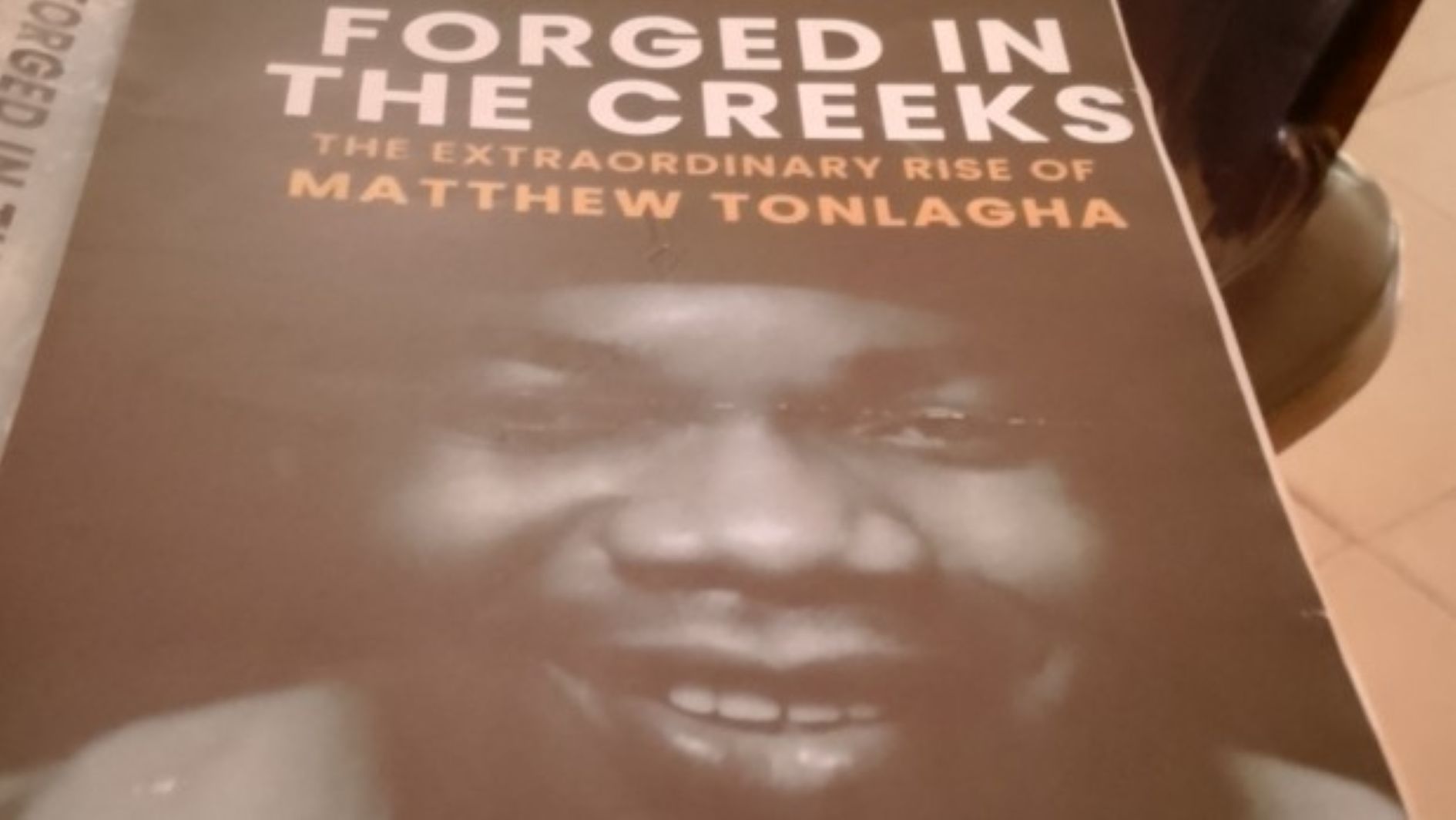
Anybody privilege to be present at the EMTF carnival would have seen that charming and instructive lifestyle of Matthew Tonlagha and wife, Esther. It is always a spectacle, delightful and illustrative of humility and philanthropy.
It unfoils Tonlagha’s legacy.His understated philanthropy. The quiet humanitarian who has been funding scholarships, supporting widows and orphans, empowering youth through vocational training, and sustaining free feeding programmes without fanfare.
His giving is not performative, it is rooted in lived experience and a belief that dignity must accompany assistance. This approach reflects a leader who remembers the pain of exclusion and seeks to build systems that offer opportunity rather than dependence.
Now to the book: In Forged In The Creeks, a magnificentbiography that charts the life of one of the country’s biggest philanthropists, the book takes its readers through his birth in Ilorin , Kwara State, far from his father’s hometown in Gbaramatu Kingdom of Delta State. It traces the remarkable journey of a boy shaped by disability, poverty, and the unforgiving terrain of the Niger Delta, who rose to become one of the region’s most influential entrepreneur and community leader.
Situating him alongside the key historical and social moments that shaped Nigeria’s history, it concludes that the most sustaining property in life is character and virtue, which are both central to the life ofthe philanthropist, Tonghala.
The book is divided into 14 chapters, each dealing with a particular story in the life of Tonlagha. The prologue, titled, The Ride Of a Lifetime, sketches the book’s story: humility and patience.

From Sweets to surgery, Everyone is a family, Blood Brothers and others , the book navigates the spectrum until it comes full circle. That is a portrait of leadership where enterprise meets conscience and personal ambition.
The 188-page book is an inspiring literary milestone celebrating resilience, legacy and impact of the golden jubilee of the man forged in the creeks. The author creates stories of his life, using them as an apt metaphor for the best of humanity.
The first chapter focuses on the prophecy, Handle Him Like An Egg. Born Matthew Tamaratimi-Odimene Tonlagha, his middle name best capture his life, ‘God is watching’. And God is really watching him and he cannot be treated shabbily.
Tonlagha’s story begins not with privilege but with adversity. Born into a disciplined military family in Delta State, his early life was marked by profound physical challenges after complications from an ill-administered polio vaccine impaired his mobility.
For nearly a decade, he depended on his mother’s strength to attend school and navigate daily life. Social stigma, financial hardship and the early loss of his father could have silenced his ambitions. Instead, these experiences forged in him a deep empathy for the vulnerable and an unyielding commitment to service. His eventual recovery and rise stand today as a testament to resilience; a personal struggle transformed into a lifelong mission for collective empowerment.
The second chapter discusses the movement back to Delta. The chapter unveils like reel, as the author reveals his life in the state, as a student, activist and an entrepreneur.
From this chapter, the author places Tonlagha’s story firmly within the cultural, social, and historical context that shaped his life: the liberation struggle of the Niger Delta. He reveals how these influences profoundly impacted Tonlagha’s personal trajectory and shaped the ideas central to his humanity. His cautionary tale warns activist don’t go after lucre, not money succumbing to fascism, ‘seek ye first liberation and everything will be added to you.’
The book takes its readers through the life of Tonlagha. From a defiant helicopter protest,that altered the course of event for him to building indigenous capacity in Nigeria’s oil and gas sector, In a country where activism and national cohesion are at loggerheads, where loud voices frequently overshadow steady hands, this book tells the reader that the most sustaining property of Tonlagha is his character.
From his earliest activism in the Benikrukru community in the Gbaramatu Kingdom of Delta State, Tonlagha distinguished himself not only as a protester but also as an intellectual force behind the Niger Delta emancipation struggle.
He confronted exploitation and neglect with courage, yet consistently advocated peaceful engagement, negotiation and constructive dialogue. Like many iconic leaders who understood that lasting change requires both firmness and foresight, he pursued justice for the Niger Delta without undermining Nigeria’s unity. This duality—fighting for regional equity while championing national stability—has defined his leadership philosophy.
His grassroots activism evolved into entrepreneurship and indigenous industrial growth through MATON Engineering Nigeria Limited, a company that has become a major employer and a driver of local capacity development. But Tonlagha’s influence extends far beyond boardrooms.
As Vice Chairman of Tantita Security Services Nigeria Limited, he emerged as a critical private-sector partner in Nigeria’s oil security architecture. The success of efforts to curb oil theft, protect pipelines and restore production levels has had direct implications for national revenue, economic recovery and investor confidence. In a sector long plagued by instability, his role has been central to fostering sustained economic growth.
The book is written by Dr Olaokun Soyinka, an indigene of Ogun State, who combines writing and editing with his work s public health consultant.

