 Follow Us on Google News


 Follow Us on Google Discover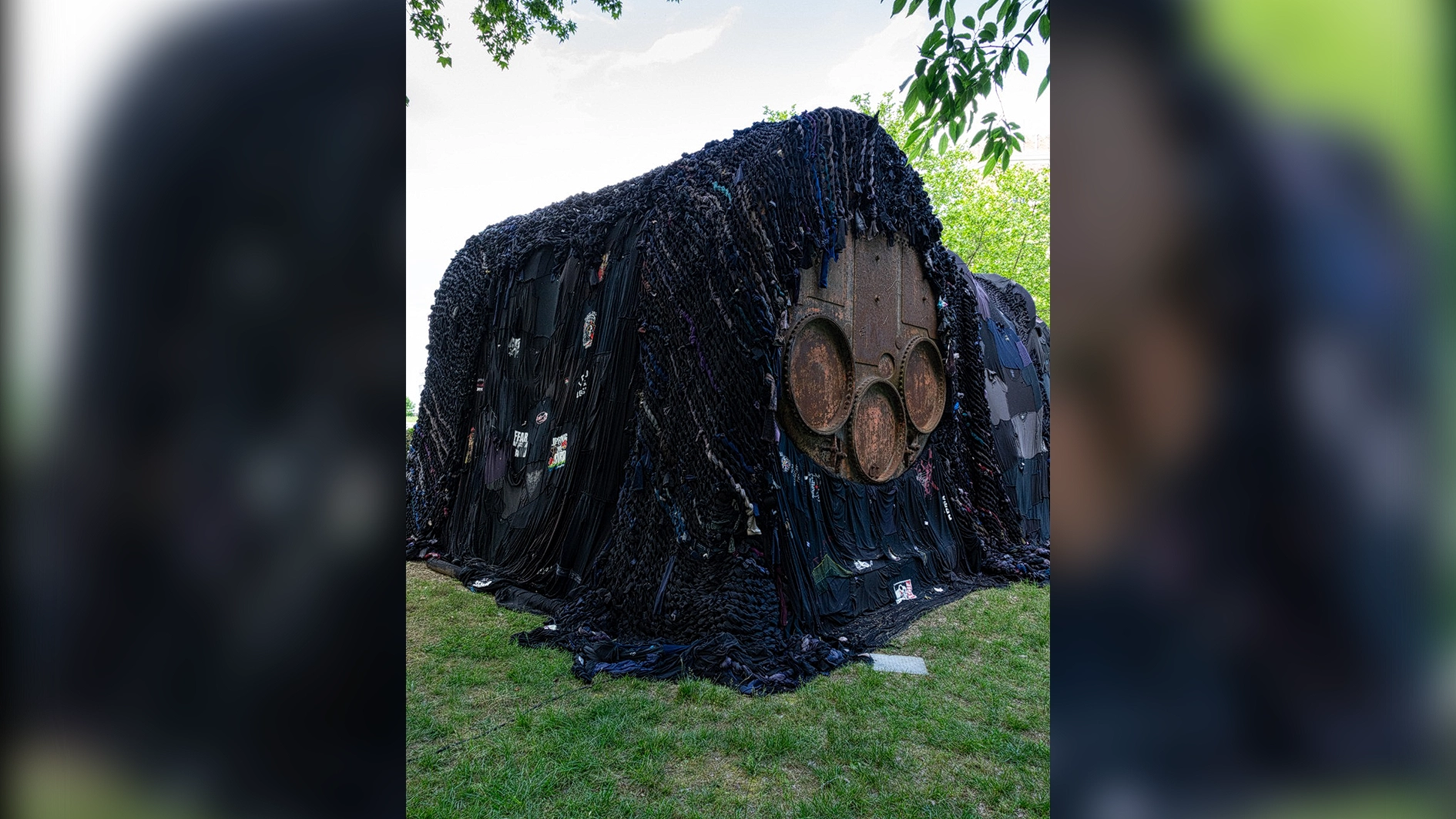
By Ola Alowoloke
When the ongoing 61st International Art Exhibition, Venice Biennale, in Italy, closes on November 22, 2026, Nigerian artist, Victoria-Idongesit Udondian, would have deepened Africa’s presence on the global art stage.
Curated by the late Koyo Kouoh, the main exhibition, titled, In Minor Keys, eatures national pavilions from 99 countries. Nigeria made its first and only official national presentation, till date at Venice Art Exhibition in 2017, but has no pavilion in the 2026 edition. Udondian is showing as an independent participant, based on the invitation of the curator, Kouoh.
Before the Biennale closes, Udondian is also showing her works in other major global gatherings in Europe and America. Her works are currently on display at Medina Triennial’s All that Sustains Us, June 6 to September 7, New York; and FITE Biennale Textile, Clermont Ferrand, France, from July 1, 2026 to January 10, 2027.
“Victoria-Idongesit Udondian confronts the complex dynamics of the second-hand clothing market in Africa in an installation that consolidates two bodies of work,” Prof Sylvester Okwunodu Ogbechie wrote about the artist’s works.
“One, Ofong Ufok, uses second-hand clothing – the residue of consumption – to illuminate the exploited material-labour nexus in the Global North. Made in collaboration with immigrant communities, this work symbolically re-centres their often-invisible labour.”

Ogbechie, a Professor of History of Art and Architecture at University of California, US, added that the other work of Udondian known as Okrika Reclaimed, “focuses on the environmental and cultural trauma inflicted by waste colonialism in Ghana, repositioning the Global South from a passive recipient to an active site of resistance.”
Ogbechie explained that under the combined title Obroni Wawu – “dead white man’s clothes” – the works map the brutal ecological and social costs embedded within Western consumerism.
Ogbechi wrote: “The piece includes of West African used-goods markets with testimonials by both diasporic and migrant collaborators in the project, thus forging an embodied link between the site of disposal and the human agents of its processing. A performance deploys the bodies of seven Black women who labour in Ghana’s markets, revealing the immense burden carried by those disproportionately subjected to the global waste economy. By invoking ritual traditions of communal cleansing, the performance transforms a site of collective suffering into a space for ritualised resilience and conceptual renewal against global forces of systemic dispossession.”
For the Medina Triennial’s ‘All that Sustains Us’, Udondian is exhibitiing four works from her previous body of work she themed ‘How can I be nobody?’ The works include Mme Anam Utom, made from used coats, epoximate resin, of variable dimesions, dated 2022; Ubom Keed, in metal, life-cast hands, used clothes, various country flags, with variable dimensions, and dated 2020 – 2022; and Ubom Iba, in metal, salvaged shipping pallets, used shoes, shoelaces, variable dimensions, and dated 2021.
“For more than a decade, my work has questioned the complex dynamics of the second-hand clothing market, particularly in Africa, where the continent has become a dumping ground for various forms of waste from the West,” Udondian stated. “The influx of used clothing bales, notably in countries like Ghana, Nigeria, and Kenya, has led to environmental challenges, with up to 40 per cent of the clothing deemed unusable and subsequently contributing to clothing mountains that pose significant pollution threats.”
Her work interrogates the second hand clothing industries, which she noted initially operated under the guise of Western humanitarianism towards the global South. What has changed? “However, the consequences have had a profound impact on the cultural identity, economy and mostly the environment in the recipient countries, necessitating the management of unwanted stock at high costs and often without proper infrastructure,” Udondian argued. “Conducted in the New York area, the initial phase of the project collaborated with immigrant communities, examining their role in labor production for capitalist systems and highlighting the adverse conditions prevailing in the global South, where fast fashion is primarily manufactured. This phase culminated in intercepting bales intended for shipment to Africa and using them to create a large-scale community textile sculpture.”
Specifically, Udondian’s Okrika Reclaimed (2024-2025) revisited the issue. At this phase of the project, the artist returns the discourse to Africa as the continent most affected by secondhand clothing waste. The phase centres on collaboration with local communities and industry stakeholders in Kantamanto Market, Ghana.
The market is one of the largest secondhand clothing globally. Udondian disclosed that the location of the Kantamanto market serves as a massive open-air dump for secondhand clothes, impacting the local environment significantly. “This socially engaged project raises awareness of the environmental and social impact of clothing dumping through site-specific interventions. Working experimentally within Kantamanto Market, it treats the space as both site and subject—creating, performing, and exhibiting in real time. The project contributes to the global conversation on sustainable fashion by foregrounding voices and practices from the Global South.”
The indigenous contents of the Okrika Reclaimed, according to the artist, involved the ‘kayayei’ kayayei’ (she who carries the burden) – women head porters, many of whom have migrated from northern Ghana in search of work in the south. She explained that the scale of the secondhand clothing trade bears heavily, literally and figuratively, on their bodies.
The women’s collaboration with Udondian was more practical experience for both the artists and the hosts. “Five of them collaborated with me to weave sculptural headpieces that reflect their role and experience within the market. Beyond this phase, the project gestures toward a broader conversation on how we can imagine and support alternatives to this physically demanding labor.”
Victoria-Idongesit Udondian received her B.A. in Fine Arts (Painting) from the University of Uyo, in 2004, and her MFA in Sculpture and New Genres from Columbia University, New York, in 2016. She is currently a Visiting Associate Professor of Art at the University at Buffalo, SUNY, New York.

