 Follow Us on Google News
 Follow Us on Google Discover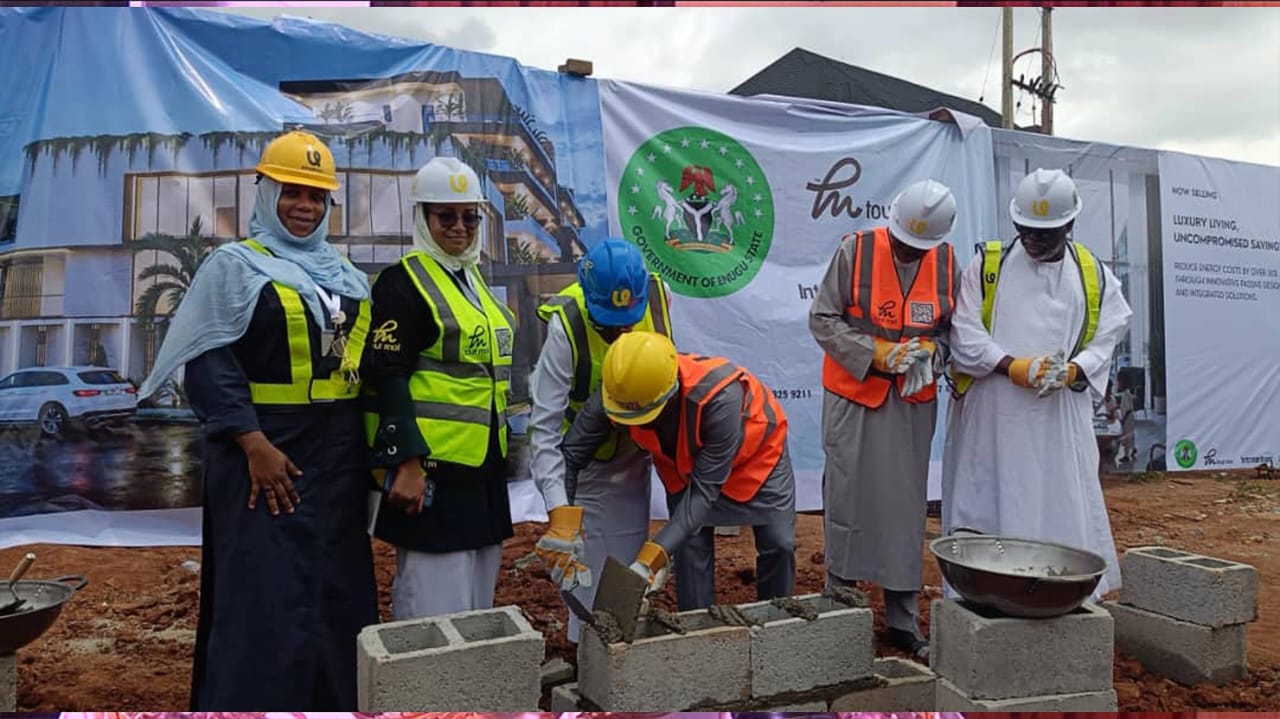
The Enugu State Government has regained control of a 1.4-hectare property in Wuye District, Abuja, after a prolonged dispute with suspected land grabbers, paving the way for the commencement of the Woodlands Estate development.
The property, located at Plot 804, Cadastral Zone B03, Wuye District, is being developed through a partnership between the Enugu State Government and Tout Moi Nigeria Limited.
The development, which was officially flagged off in Abuja, followed what the developers described as a prolonged struggle to secure the property after alleged attempts by land grabbers to take over the site.
Speaking at the ceremony, the Permanent Secretary/Liaison Officer, Enugu State Liaison Office, Abuja, Barrister Chukwuka Ugwu, said the property had originally been allocated to the Enugu State Government by the Federal Capital Development Authority (FCDA).
Ugwu, who represented the Enugu State Government, said the dispute persisted for several years until the state government intervened to reclaim the property.
He said, “For over a while, spanning many years, the so-called land was allocated to Enugu State Government by the FCDA. And along the line, some funny people tried to take over the property.

“But because of the resilience and determination of the current governor, who has insisted that nobody would take that land from Enugu State, we are now fully in control of the said plot of land at Wuye, Abuja.”
The state government representative urged authorities to strengthen land administration and documentation in the FCT to prevent multiple allocations and the disputes that often arise from them.
He said once a parcel of land had been allocated, the administration should ensure that the same property was not subsequently allocated to another individual or entity.
According to him, proper documentation would eliminate confusion over ownership and reduce disputes that expose legitimate property owners to land grabbing.
“If the administration of lands in FCT are properly documented, once a plot of land is issued, it cannot be issued to another person. This will avoid double allocation of lands in FCT,” he said.
Ugwu also said the Enugu State Government expected its partnership with Tout Moi Nigeria Limited to ensure the proper development of the property, provide housing and generate revenue for the state.
On the affordability of housing, he said government must address the rising cost of construction materials, stressing that it would be difficult to provide affordable homes when cement, iron rods, timber and other materials remained expensive.
“You can’t buy all those things at an expensive rate and expect any house to be affordable,” he said.
He urged government to consider subsidies and other incentives, as well as create an enabling environment for local production, to reduce the cost of building materials and make housing more accessible to ordinary Nigerians.
The Principal Architect, Tout Moi Nigeria Limited, Arc. Maryam Bello Barkindo, said the land dispute had delayed the project for about three years, with the developers spending approximately six months battling attempts to take over the site.
Barkindo said the intervention of the Enugu State Government eventually enabled the company to regain access to the property through lawful means.
“It’s been in the blue for about three years now. We’ve had serious hurdles along the line with land grabbers infiltrating the site at the time that we actually already took over the site.
“So, it was a struggle for about six months, but the state intervened with the government to make sure that we got the site back legally,” Barkindo said.
She explained that the recovery of the property was the reason for the formal flag-off of the project, adding that the experience demonstrated the importance of functioning land administration systems and adherence to lawful processes in protecting legitimate investments.
Barkindo said the existing system could work effectively if properly implemented, urging investors facing similar challenges to remain committed to lawful processes.
“The system is already there. It’s there. It’s just for us to perfect it very well,” she said.
She added that people involved in land grabbing often exploit weaknesses in the system, but stressed that legitimate property owners could prevail when they followed due process and pursued their rights through the appropriate channels.
Barkindo said the Woodlands project was conceived as a green housing development and that its vision aligned with the Enugu State Government’s interest in modern infrastructure, innovation and sustainable development.
She said the partnership between the company and the state government was expected to produce a development that incorporated sustainability and forward-looking approaches to housing.
Meanwhile, stakeholders at the event called for reforms in Nigeria’s land administration and housing finance systems to make home ownership more accessible and reduce disputes over property ownership.
The Managing Director/Chief Executive Officer of New Frontier Development Limited, Hassan Usman, said Nigeria’s housing sector could attract significantly more investment if government addressed weaknesses in land titling, development approvals and access to long-term financing.
Usman said the country had a housing deficit estimated at about 40 million units, stressing that bridging the gap would require stronger links between the housing sector and the capital market.
“One should not give up hope on the housing sector in Nigeria. There are problems, clearly there are challenges, but the sector is growing,” he said.
He said government could contribute to reducing housing costs by reforming the process for obtaining titles and Certificates of Occupancy, noting that unnecessary delays in securing development approvals ultimately increase the cost of housing.
“A delay is a cost. That cost will eventually mean that the property developed will be a lot more expensive. That means the buyer who is buying the property will be paying a lot more than he ought to pay for the property,” Usman said.
He also called for reforms that would reduce the impact of inflation and high interest rates on housing construction, arguing that lower financing costs would enable developers to increase the supply of housing.
According to him, the government has a major role to play in creating the conditions required for the sector to expand, particularly through macroeconomic reforms and policies capable of supporting long-term housing finance.
On land grabbing, Usman advocated comprehensive cadastral mapping and computerised land records to enable prospective property owners to independently verify ownership and prevent fraudulent claims.
“It means that we need to identify who has what property, what are the boundaries. We have a proper computerized system, so whenever there’s a change or whenever there’s an addition, it is picked up,” he said.
According to him, a transparent and accessible land information system would increase confidence in the property market and make it more difficult for individuals to manipulate ownership records.
He said government should ensure that property owners were properly mapped and documented, while prospective buyers should be able to independently verify the validity of property titles.
Usman also described housing as a major driver of economic growth because of its strong links with construction, building materials, manufacturing, logistics and other sectors of the economy.
He urged government to place greater emphasis on housing development, saying increased activity in the sector could stimulate broader economic growth.
Also speaking, the Head of Projects, Phase3 Telecom, Engr. Abdullateef Aliyu, stressed the importance of sustainability in housing and infrastructure development.
Aliyu, who is a Fellow of the Nigerian Society of Engineers and a member of the Institute of Electrical and Electronics Engineers (IEEE), said Nigeria could overcome its housing and infrastructure challenges by adapting successful models from other countries to local realities.
He said the Woodlands development offered an opportunity to demonstrate how sustainability principles could be incorporated into Nigeria’s real estate sector.
According to him, the project places emphasis on three key areas, including energy reduction, waste recycling and the use of materials and processes that conserve energy.
He said sustainability should be treated as a central component of modern infrastructure development rather than an optional consideration.
Aliyu also advocated stronger collaboration between government and private developers to expand access to housing, saying Nigeria could adapt successful housing and financing models from other countries while incorporating local content.
He said government could leverage existing resources and work with private developers to create models capable of making housing more accessible and sustainable.
“We are not there yet, but also we are still very lucky because we are still an infant developing country. So we just have to see what works well in other places and replicate,” Aliyu said.
He expressed optimism that Nigeria had the resources and capacity to address its infrastructure and housing challenges if stakeholders focused on implementation, innovation and effective public-private partnerships.
The stakeholders also stressed the need to reduce the cost of building materials, which they identified as one of the major barriers to affordable housing.
Ugwu said government intervention was necessary to make cement, steel, wood and other essential construction materials more affordable.
He added that government could support local production, provide incentives or create an enabling environment that would bring down the cost of building materials.
The Woodlands Estate is planned for the 1.4-hectare property in Wuye and is expected to comprise 43 housing units, including high-rise apartments, terrace buildings and semi-detached houses, alongside a clubhouse and recreational facilities.
The project is being undertaken by Tout Moi Nigeria Limited in partnership with the Enugu State Government.

