 Follow Us on Google News


 Follow Us on Google Discover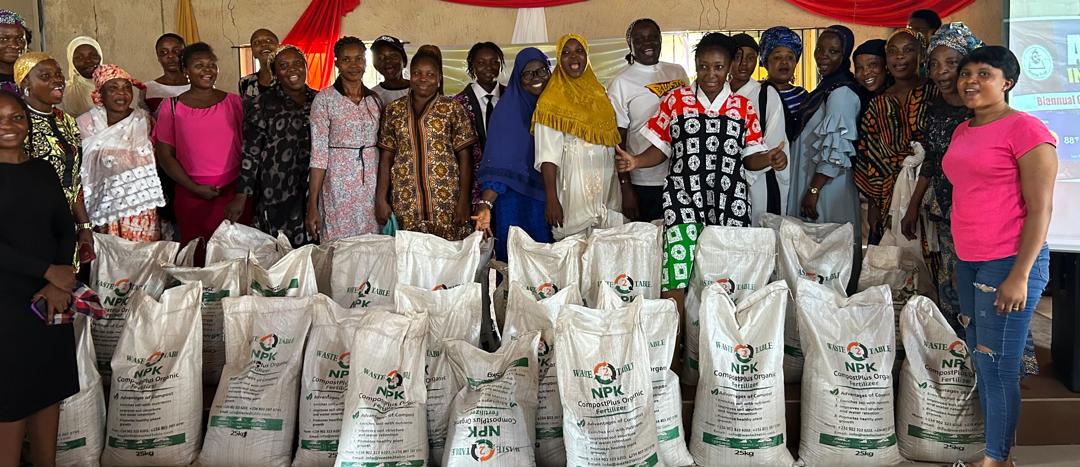
Concerns over the growing impact of climate change on agriculture has prompted stakeholders in Lagos to train rural women farmers on climate-smart agriculture and agro-ecology practices, with the aim of strengthening food production and resilience.
The two-day Climate-Smart Agriculture and Agroecology Training Workshop for Rural Women Farmers, organised by the International Centre for Environmental Health and Development (ICEHD) under the “Grassroots-Driven Climate Action by Rural Women Farmers in Nigeria” project, brought together over 100 women farmers from different communities to learn adaptive farming techniques, soil management practices and sustainable food production strategies.
Permanent Secretary, Lagos State Ministry of Environment and Water Resources, Omobolaji Gaji, represented by ministry official, Johnson Olusola, said the state faces increasing environmental pressures including flooding, heavy rainfall, rising temperatures and coastal erosion, all threatening agricultural production and food systems.
He noted that floods destroy homes and infrastructure, wash away crops and seedlings, contaminate water sources and erode topsoil, while coastal erosion driven by rising sea levels and other human activities continues to threaten livelihoods in coastal communities.
Gaji added that the state government has placed climate resilience at the centre of its development strategy by promoting climate-change mainstreaming across sectors and supporting community-led interventions aimed at protecting livelihoods and strengthening local food production.
He stressed that climate-smart agriculture and agroecology have become necessary approaches for farmers to increase productivity, manage land sustainably and reduce losses caused by climate shocks.
The Permanent Secretary, Ministry of Women Affairs and Poverty Alleviation, Rianat Onigbanjo, represented by Head of Disbursement Link Indicator (DL.1.3), Oluwatoyin Salami, said empowering rural women farmers with climate-responsive agricultural knowledge was critical to strengthening food security and community resilience.
She noted that women form a significant proportion of smallholder farmers and are among those most affected by the impact of climate change on agricultural productivity and household livelihoods.
Agronomist and principal consultant at Greenfield Agro-Allied and Farming Systems Limited, Durojaiye Olusegun, explained that climate-smart agriculture integrates adaptation, productivity and mitigation measures that help farmers respond to changing weather conditions while maintaining food production.
He said the training exposed farmers to agroecological practices, soil and crop management techniques, irrigation systems and farm business strategies designed to improve productivity and income.
“We cannot attain food security without discussing climate-smart agriculture and agroecology. With changing climate conditions and delayed planting seasons, farmers must adopt practices that help them adapt and still achieve sustainable food production,” he said.
Soil expert, Olayiwole Onasanya, urged farmers to adopt climate-smart and sustainable agricultural practices to improve productivity and adapt to the growing impact of climate change.
He noted that tropical soils often contain less organic matter than those in temperate regions, stressing the need for farmers to combine organic inputs with inorganic fertilisers to maintain soil fertility and protect farm yields.
He also called on government to strengthen agricultural extension services, invest in small-scale irrigation and provide targeted subsidies to support farmers facing climate-related challenges, while stressing the importance of empowering rural women farmers who account for a significant share of agricultural activities.
Consulting partner, ICEHD, Dr Ndudi Bowei, said the intervention focused on rural women because they constitute a large proportion of the agricultural workforce and are disproportionately affected by climate change impacts.

She added that the programme trained over 100 women farmers on soil improvement, organic farming and pest management using locally available materials.
“Climate change is drying up the soil and the nutrients. Through this training, women are learning how to use local materials to improve the quality of their soil so they can have better yields and make more money,” she said.
Bowei added that the programme also provides farm tools such as solar-powered irrigation pumps, sprinklers and organic inputs to rural women farmers, while practical sessions would train farmers on compost production and organic pesticide preparation.
She said the aim is to strengthen women’s networks, improve farm productivity and support household food security as farmers adapt to changing rainfall patterns and extreme heat.
Day two of the training commenced with a technical session on best techniques for growing vegetables, pest and disease management, delivered by Durojaiye Olusegun. The session provided practical insights into improving vegetable production, identifying common crop pests and diseases and adopting effective management techniques to enhance yield and reduce crop losses.
Participants also engaged in practical demonstrations facilitated by the head of crop development at the Lagos State Agricultural Development Authority (LSADA), Dr. Bukola Toyin Sadiku.
Her session focused on the production of compost and organic pesticides, equipping women farmers with knowledge on using locally available materials to improve soil fertility and manage pests sustainably.
In preparation for the deployment of irrigation equipment, three representatives from each of the four participating communities, Iju, Epe, Ikorodu and Rose of Sharon Widows, received practical training on how to assemble and operate the solar-powered irrigation pumping machines that will support their farming activities.
The training concluded with a post-training evaluation, followed by the distribution of agricultural tools and equipment to support the women farmers’ activities. Items distributed included solar-powered irrigation pumping machines, garri processing machines, fish kilns, knapsack sprayers, handheld pressure irrigation canes, sprinklers, organic pesticides, bags of compost and organic seeds.
The farmers expressed appreciation for the training and the support materials provided, noting that the tools and equipment will significantly improve their farming practices, increase productivity and strengthen their economic capacity.

