 Follow Us on Google News


 Follow Us on Google Discover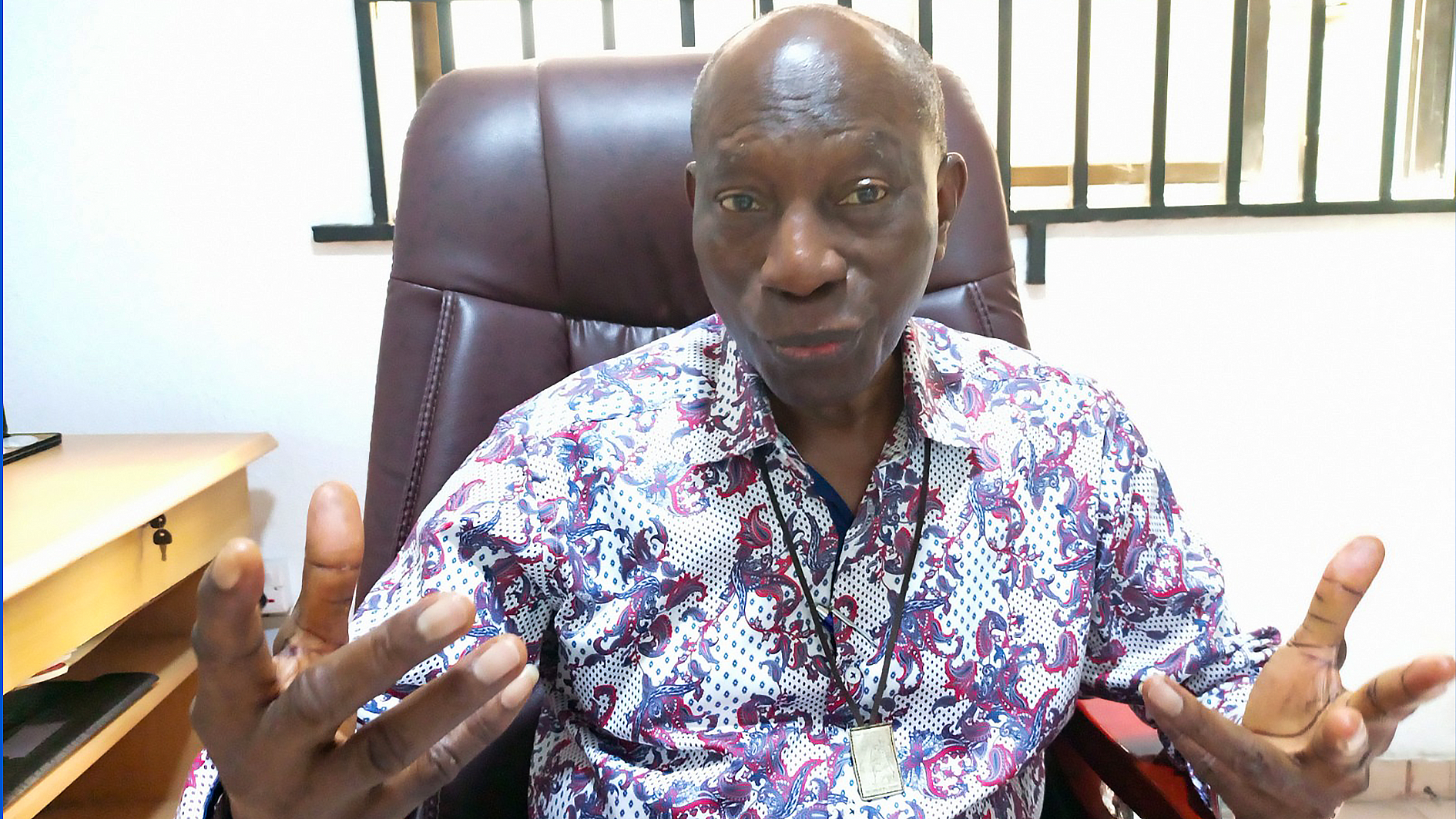
Managing Director of Belujane Konzult, Chris Aligbe, in an interview with OLUSEGUN KOIKI, speaks on the controversy surrounding alleged price-fixing levelled against indigenous carriers by the Federal Competition and Consumer Protection Commission (FCCPC), the involvement of the Nigeria Civil Aviation Authority (NCAA) and the need to apply necessary sanctions to prevent a recurrence.
What is your view on the allegation by the FCCPC against indigenous airlines for engaging in anti-competition?
The spike in airfares last December became a major issue because it disrupted travel plans, especially during the festive period. Naturally, stakeholders and the flying public complained.
It was clear, even within the industry, that the price hike was not justifiable. Airlines cited multiple taxation and high Jet A1 costs, but those reasons were not tenable. There was no increase in Jet A1 prices, and no new taxes were introduced during the period. Even the Nigerian Civil Aviation Authority (NCAA) confirmed this. That is why people saw it as exploitative.
Following complaints, the FCCPC investigated and, in its interim findings, identified evidence of anti-competition, including price collusion. They are also involved with forensic analysts and are expected to release a final report.
However, some people are accusing the FCCPC of entering an area where it lacks the competence and power to intervene. Some say the NCAA is the sole authority in this area and that they should be left to do the job. While a few say the NCAA is not doing what it should be doing, both sides are not addressing the fact of the issue.
First, there is fundamental ignorance. The first is that the NCAA is a sector-specific regulator. The NCAA derives its powers from the NCAA Act, which gave it the right to make laws and regulations for managing the sector. Part of the regulations they made are documented and included in Parts 18 and 19, which came first in 2012. The first NCAA Act was in 2006, but it stopped then at Part 17. By 2012, what happened in the industry, particularly with the British carriers, led them to introduce Parts 18 and 19. 18 for Economic Regulations and 19 for Consumer Protection.

The NCAA is a local organisation, but it refers to the global regulator in the aviation sector, the International Civil Aviation Organisation (ICAO). ICAO has its regulations on anti-competition as well as consumer protection. So, people who say that is an international organisation, I say, look, it is not true that FCCPC is a municipal law and that a municipal law has priority over an international, which is not true because yes, on the face value, but when an international organisation agreement is domesticated, once it is domesticated, it assumes the same level with municipal law.
So, the NCAA Act, even though it is drawing a lot of what it is doing from various annexes in ICAO, is domesticated. So, they acquire the same status as municipal law, which is also the Act of FCCPC. There are about 15 sector-specific regulators in the country. There are the Central Bank of Nigeria (CBN), Nigerian Communication Commission (NCC), National Broadcasting Commission (NBC), Advertising Practitioners Council of Nigeria (APCON) and many others. So, the NCAA has all the authority, all the rights to do what it is supposed to do.
FCCPC is also under an Act of the Parliament – the National Assembly. It has a legal status. In fact, about two weeks ago, they had a meeting where the Chief Justice of the Federation was saying that FCCPC is a game-changer in the Nigerian economy. It has all the powers that it is exercising. That almost put a seal on that issue about their powers.
FCCPC is an omnibus regulator. It covers the entire economy, the entire country, whatever sector of the economy, even in distributive trade. You will remember when they closed Sahad stores in Abuja. It fined DSTV. It fined another communication company about $300 million. It is an omnibus regulator. Irrespective of sector-specific regulators, they cannot go outside their industry because they are sector-specific, but the FCCPC has an overall right to oversee consumer protection-related issues.
For those who have said that the NCAA’s economic regulation and economic protection regulations should be transferred to the FCCPC, that is wrong. For the simple fact that there are things in each sector, the details that FCCPC may not know.
So, to say you take everything, all sectors, and put them under FCCPC, FCCPC will not function. It will be the largest institution in our country because of the size of the economy.
Everything they regulate, even the pharmaceutical sector and the medical sector, they regulate. They come with their hammer when the chips are down.
Does this not suggest over-regulation of the players in the aviation sector?
Not at all. The FCCPC’s intervention is necessary to prevent a recurrence of such practices. If airlines are sanctioned and made to refund passengers they exploited, they will think twice before repeating it. The problem has always been the lack of enforcement.
At the same time, sector regulators like the NCAA must continue to perform their roles.
FCCPC only steps in when necessary, especially in cases of disputes or regulatory gaps.
Critics also say the FCCPC lacks aviation expertise. What do you have to say on this?
That is completely incorrect. The person who drafted Parts 18 and 19 of the aviation regulations, Dr Babatunde Irukera, also drafted the FCCPC Act. He was the Chief Executive Officer of the FCCPC. So, there is strong institutional knowledge.
In addition, Adamu Abdullahi, who once led FCCPC in an acting capacity, previously served as Director of Consumer Protection at the NCAA. The current leadership under Tunji Bello also brings vast administrative and legal experience. FCCPC has invested heavily in staff training across sectors. So, to say it lacks knowledge is a demonstration of ignorance.
Part 18 of the Economic Regulations of the Nigerian Civil Aviation Regulations (NCARs) 2022 says that the NCAA must be informed in case of any price adjustment by the airlines, which the agency has confirmed several times. Will you say the NCAA is culpable in price-fixing or not competent to deliver on its job?
I would not agree straight away that the NCAA is incompetent. I would rather say there is a knowledge gap that still has to be filled by the NCAA in the area of economic regulations. I am saying that because I know the NCAA, I interact with them, as I told you about what happened during the 25th anniversary, when the Director-General said they were already inviting ICAO to organise a workshop for NCAA staff.
It is a recognition by the NCAA that there is a knowledge gap in that area. I have told you why there is a knowledge gap. Parts 18 and 19 came later than the old Parts 1 to 17, and when they came in, the focus was on consumer protection, not much of economic regulation. Economic regulation is not only for passengers. It has to do with travel agencies, tickets and all the ticket salespeople. So much is there. It’s a complex situation.
But I think the NCAA has seen clearly that and must know clearly that they must close the knowledge gap and I think that’s what they are doing. It’s one way to say there’s a knowledge gap and incompetence. I am looking forward to seeing what is likely to happen.
The festive season is coming. Sooner or later, it will be here and then we will know what the airlines will do. The airlines are supposed to file price increases to the NCAA. I do not know whether they did.
I’m making this as a conditional statement. If they did, and the NCAA didn’t react to the increase, then the NCAA will have a question to answer, but I will tell you what happened.
For you to get a very reasonable airfare, you need to book ahead. Many people wanted to book three months ahead, two months before the season, but the portals were closed. They didn’t open the portals.
So, they caused a situation where there’s a surge. What they did was create a situation where there’s a surge of passengers trying to access the portal. And once that happened, they say they now hike up the fare and deny passengers who wanted to book early.
Airlines argue that aircraft unavailability affected their ability to open booking portals early. Do you agree with this position?
No, I do not agree with this. Airlines are expected to plan. They know peak travel periods well in advance and should conclude aircraft leasing arrangements months before.
Delaying bookings and then raising fares when demand surges amount to creating artificial scarcity. That is not a valid excuse.
What is your view on claims of one-way traffic during peak periods by airlines as the reason for the spike in price?
That argument does not hold water. No destination in Nigeria is truly one-way. Passengers who travel will return. If return flights have low patronage, it is likely due to high fares discouraging passengers. So, that claim is simply an attempt to justify exploitative pricing.
What can be done to prevent a recurrence of this situation?
Sanctions are key. Airlines found guilty should refund affected passengers. That is what regulators like the Federal Aviation Administration (FAA) and the Civil Aviation Authority (UK CAA) have done in similar situations. Without sanctions, these practices will continue.
At the same time, there must be cooperation among regulators. The NCAA should handle sector-specific issues, while FCCPC provides oversight where necessary. Ultimately, both institutions must work together to ensure fairness and protect consumers.

