 Follow Us on Google News
 Follow Us on Google Discover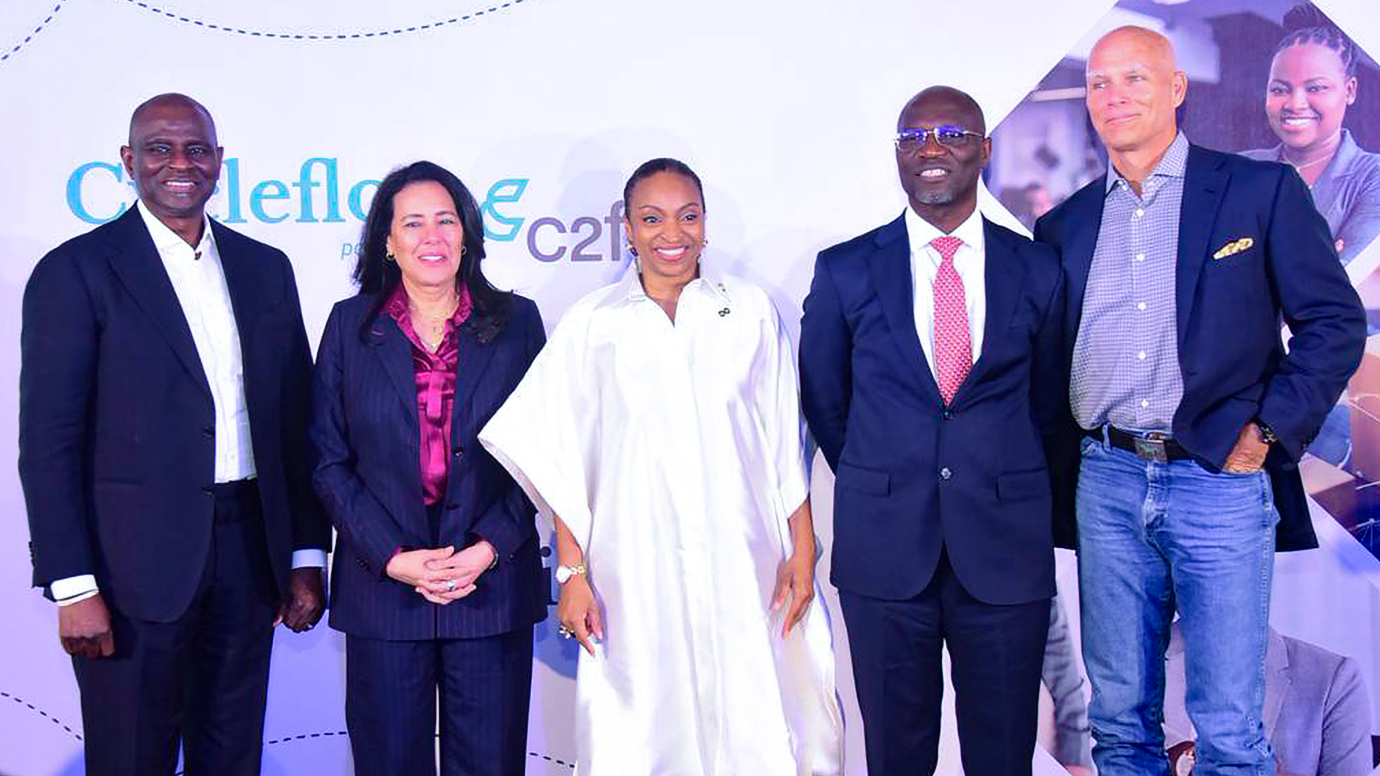
The Minister of Finance and Coordinating Minister of the Economy, Wale Edun, said less than five per cent of Nigeria’s micro, small and medium enterprises (MSMEs) have access to formal credit, noting that the traditional credit model requires collateral that most small businesses do not possess.
This came as he hailed the launch of CycleFlow Nigeria, a nationwide working capital platform, describing it as a decisive solution to the financing constraints facing MSMEs, with the potential to unlock up to $25 billion yearly.
Speaking yesterday at the launch in Lagos, Edun, represented by the Director-General of the Securities and Exchange Commission (SEC), Dr Emomotimi Agama, said the financing gap for MSMEs remained a major structural barrier to the growth of millions of businesses across the country.
He said that although MSMEs account for about 50 per cent of Nigeria’s gross domestic product (GDP) and employ a large share of the workforce, they have continued to face difficulty in accessing the capital needed for growth and expansion.
According to him, billions of naira in legitimate receivables remain locked within the balance sheets of large corporate buyers, while smaller suppliers struggle with cash flow constraints due to delayed payment cycles.
“This is the paradox at the heart of MSME financing in Nigeria. Businesses that have delivered goods and services to large, creditworthy buyers cannot access the cash that is rightfully theirs, while those buyers sit on approved payables that take 30, 60 or 90 days to settle,” Edun said.

He explained that CycleFlow is designed to address this challenge by enabling suppliers to convert approved invoices into immediate cash without collateral, lengthy loan applications or complex documentation processes.
The platform, powered by C2FO and supported by a $30 million funding round from the International Finance Corporation (IFC), allows suppliers to access early payments and bypass traditional credit constraints.
Edun noted that the initiative aligned with the Federal Government’s broader economic agenda of translating macroeconomic stability into inclusive growth, job creation and improved access to finance for small businesses.
He also disclosed that the government plans to integrate 10 million Nigerians into productive economic activity as part of its social development agenda, stressing that MSME empowerment is central to that goal.
Earlier, Regional Director for Central Africa and Nigeria at the International Finance Corporation (IFC), Dahlia Khalifa, said about $25 billion in working capital is currently locked in payment cycles between large enterprises and their smaller suppliers.
She noted that suppliers often wait up to 90 days or more to receive payment for goods and services already delivered – a situation that limits reinvestment, reduces productivity and slows business growth.
“That is capital that cannot be reinvested, jobs that cannot be created or even maintained in some cases, and productivity that is lost,” she said.
Khalifa explained that the platform provides a digital, data-driven solution that connects large corporations, MSME suppliers and financial institutions, allowing businesses to access early payment on approved invoices.
“For MSMEs, this means immediate liquidity to restock, to hire, and to grow,” she added.
She disclosed that Stanbic IBTC is the first Nigerian financial institution to integrate with the platform, enabling naira-denominated financing, with more institutions expected to join.
Chairman of CycleFlow, Segun Ogunsanya, said the initiative directly targets the structural financing gap faced by SMEs, which account for a significant share of businesses and employment across Africa.
He noted that access to affordable working capital remains a major constraint, as traditional lending models often require collateral and credit histories that many small businesses lack.
“Our platform leverages the stronger credit profile of large buyers to unlock financing for suppliers,” he said.
Ogunsanya explained that the system allows MSMEs to receive early payment on invoices within a short period, without the need for collateral or extensive documentation.
“For businesses waiting 60, 90 or even 120 days for payment, this access to liquidity is transformative,” he added.
He also cited projections by the IFC, which indicate that for every $1 million in working capital released, about 16.3 new jobs could be created over two years.
At full scale, he said, the platform could generate more than 480,000 direct jobs, with a broader multiplier effect that could support over 2 million indirect jobs across the economy.
Chief Executive Officer of C2FO, Sandy Kemper, said the platform addresses inefficiencies in traditional financing by directly matching accounts payable with accounts receivable through a marketplace model.
He noted that globally, large volumes of cash remain trapped in receivables due to delayed payment structures, limiting business expansion and job creation.
“Our ability to match those who need capital with those who can provide it, without the intermediation of credit risk, is what makes this model effective,” he said.
Also speaking, Minister of Industry, Trade and Investment, Dr Jumoke Oduwole, described the initiative as timely, noting that access to working capital remains one of the most pressing challenges for Nigerian businesses.
She said the platform would improve liquidity across supply chains, strengthen relationships between large firms and small suppliers, and enhance efficiency within the business environment.

