 Follow Us on Google News
 Follow Us on Google Discover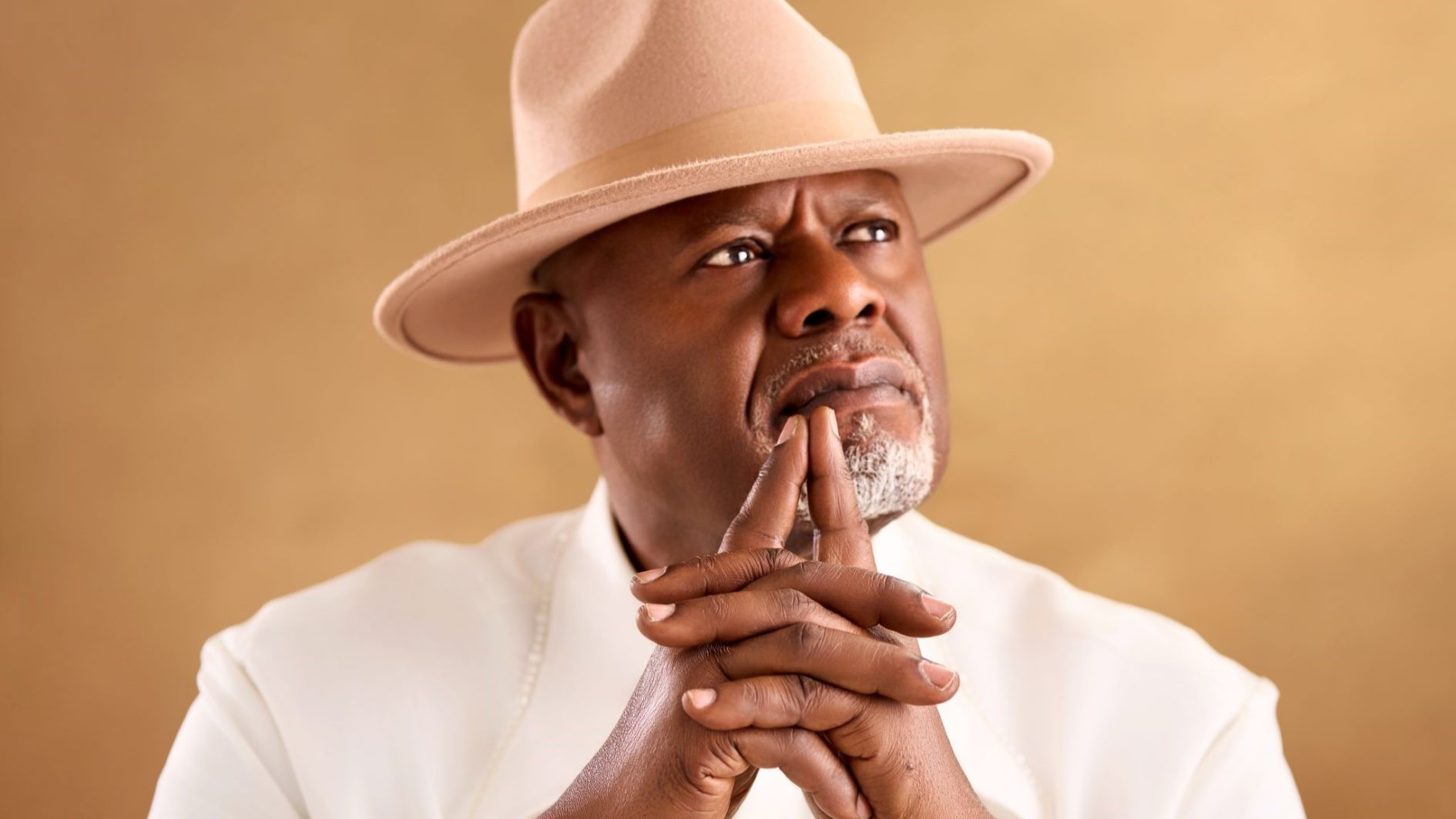
As the clock ticks on Nigeria’s two-year term in the International Maritime Organisation (IMO) Council, there is pressure on the country to prove it deserves to remain at the global shipping table. The Chairman of Maritime Shipping and Ocean International Resources Limited (MSOIR), Greg Ogbeifun, in this interview with ADAKU ONYENUCHEYA, warns that unless the country urgently rebuilds indigenous shipping capacity, flies its own flag in international trade and stops the massive capital flight in freight payments, it risks losing relevance in global maritime.
Nigeria has only a two-year tenure on the International Maritime Organisation (IMO) Council. Can the country retain the seat in the next election, looking at the requirements?
WHAT is important right now is for Nigeria to return to international shipping and trade. The government and the private sector should find a way to let us fly our flag out here.
After two years, IMO will ask us how many ships we are flying. Nigeria is dependent on foreign ships, and we don’t have what makes us an important maritime nation.
I would like to stay focused and push everything. I mentioned to the office of the vice president at the villa in Abuja and to the minister of Marine and Blue Economy that if this shipbuilding were to happen in one year, there would be at least 10 shipping lines in Nigeria. I told them that in five years, 50 per cent of the ships in this country will be owned by Nigerian companies.
If there is no gold in it, why do you think all these white people are coming here every single day and moving things in and out? They will tell you that our waters are pirate-infested, but they are still coming. I just did a small calculation of what we are paying to import containers. You can imagine what 10 per cent of that amount would cost in this country. I get very emotional about it.
What are you doing to help address this shipping gap?
For about 13 months or more, I have been developing a global trading shipping line in the order of the defunct Nigerian National Shipping Line (NNSL), which is a private sector-driven initiative, but the government must do what they have to do to support it.

I made a presentation to the Minister of Marine and Blue Economy and the office of the Vice President at the Presidential Villa in Abuja. I said to them that it is painful that a country of about 230 million population, with the magnitude of import and export we have, none of the vessels that berth at our ports nationwide is owned by a Nigerian company. They are all non-Nigerian. I will use an example. I just brought in a vehicle I bought in the United States (U.S.), and it cost me about $8,000 for a 40-foot container to bring that vehicle here.
How many containers do we handle every day in the Lagos ports? We do between 250 and 300 containers. Let’s take an average of even $6,000 as a loss per vessel. Just calculate it. It means that, daily, the country is losing so much in freight to foreign companies. Every container is important.
That is painful. All the ships you see in our waters are probably manned by about 99.9 per cent foreign seafarers. Those coming out of our maritime institutions have no ship to get their sea time. We send them out of the country in the name of the Nigerian Seafarers Development Programme (NSDP) cadets, and we pay dearly.
I engaged Lloyds of London to carry out a market study. I have spent over $210,000 of my money developing a project on going back to the global trading space. I congratulated the Minister of Marine and Blue Economy for taking the country back to IMO Category C after 14 years. But it is only a two-year period for us to show that we deserve to be there.
We need to get our country back into a global shipping trade, flying the Nigerian flag, registered in Nigeria, owned by Nigeria and carrying Nigerian cargo, using the Nigerian crew. Unfortunately, there is such a huge gap.
Shipowners still take their vessels out of Nigeria for repairs and maintenance, but you have a functional ship repair yard, which has recently received approval of $365 million funding from Afrieximbank for an expansion.
What benefit would it add to the maritime industry?
There are two major projects I am driving aggressively. You are aware that I established the first privately-owned ship repair yard in this country 26 years ago. Also, 15 years ago, I embarked on expanding that facility from 44 metres vessel repair to 120 metres vessel repair and rebuild.
Then we are also scaling from a 500-tonne lifting capacity floating dock to a 10,000-tonne ship lift-ship transfer facility that we are now about to commence building. Thankfully, as we speak, the African Export-Import Bank (Afrieximbank) has approved a facility of $365 million for the expansion of the shipyard.
The facility we redesigned can repair about 10 ships at the same time – different sizes and specifications simultaneously.
The second project is to establish a private-driven national carrier for Nigeria to curb capital flight in freight. The name of the shipping line, which is happening sooner than later, is the Maritime Shipping and Ocean International Resources Limited (MSOIR).
The IMO carbon emission reduction policy for the global maritime sector has impacted new shipbuilding. Will vessels constructed in the shipyards comply with environmental standards to avoid sanctions?
It would be silly of me to build a new ship now and not build an environmentally compliant ship. When you look at our shipyard, you will see that everything is run on renewable energy. The shipyard itself is designed to generate about 5.3 megawatts of power.
Operating at maximum capacity as a shipyard, it is estimated that we will be consuming about 3.8 megawatts. So, we have an extra 1.5 megawatts that we will feed into the grid, providing power for the communities around.
Emission control and monitoring of carbon footprints are the future. There will come a time when certain ships will not come into Nigerian ports because we are not environmentally compliant in our port areas.
As we speak, internationally, ships are now categorised into A, B, C. Category A ships are the ones that are fully compliant to carbon reduction. As we progress, you will find that more ships will be refusing to come to Nigeria until we are genuinely intentional to do something about our carbon emission control.
How many young ones have you reached or brought on board the maritime sector since you started your companies?
We have 10 children from Edo state. When I was the chairman of the Benin Port Project, under the last administration, I invited the Director General of NIMASA, Dr Bashir Jamoh and told him that Edo was working on being open to the sea and should really be designated as a littoral state. He came to Benin and we interacted with the governor. I made a presentation of what the Benin Port was all about. There and then, the NIMASA DG announced Edo as a littoral state.
Soon after he left, I contacted him. I said, now that we are building a port, is there a possibility of adding some individuals to the NSDP? And he said, why not? So he gave me 10 slots. We got the youths from the creeks, villages and all other parts of the state.
They went through a very rigorous process. As we speak, they are in their third year. Six of them are in India and four in Greece, doing marine engineering and nautical studies. Regrettably, the Benin Port project stopped with the last administration.
But if MSOIR is up and running, they will be the first batch of well-trained seafarers to work on the vessel.
How should the country approach challenges in the maritime sector and the shortcomings of proposed solutions?
Failure is not an option. If you are going to fail, then don’t start at all. If I, as an individual with little or no resources, started a company and grew it for 40 years in this environment, the government has no excuse and people also have no excuses. We have to get ready to take some scars. The defunct national shipping line failed because of the government.
The government has no business doing business. Instead, it should empower the private sector and those genuinely interested and create a platform to help them operate at international standards. During COVID-19, most ship owners operating upstream lost their contracts as well as their ships.
It is embarrassing that a country like ours does not have a national shipping line and airline.

