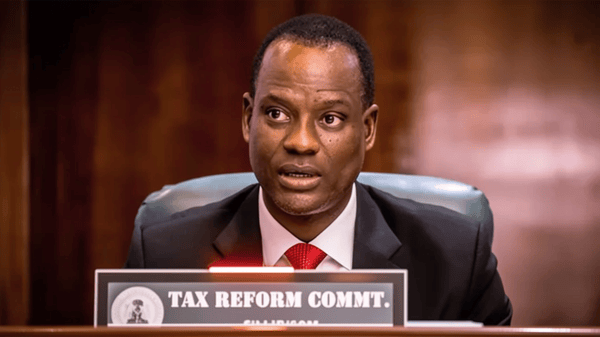
Chairman of the Presidential Committee on Fiscal Policy and Tax Reforms, Taiwo Oyedele, has dismissed claims that Nigeria’s new tax laws were altered after passage by the National Assembly, describing the controversy as misinformation designed to create fear and stall implementation of reforms scheduled to begin on January 1, 2026.
Speaking during an interview, Oyedele said allegations that provisions in the gazetted tax laws differ from what lawmakers passed cannot be authoritatively established because the certified harmonised versions transmitted by the National Assembly to the President have not been made public.
He stressed that only lawmakers, relying on the harmonised copy certified by the Clerk of the National Assembly, can conclusively determine whether discrepancies exist.
“My role was the privilege to lead a team of very patriotic Nigerians from all walks of life to look at our tax system, identify what was wrong with it, and propose how to fix it with one objective, to make Nigeria better for everyone,” Oyedele said, noting that the committee drafted the bills and instituted a rigorous process to protect their integrity.
He explained that after drafting, the bills went through extensive legislative scrutiny by both chambers, followed by harmonisation. According to him, his post-harmonisation role was limited to checking whether the policy direction had been substantially altered in a way that might require the President to withhold assent.
“You want to reduce taxes on businesses, eliminate taxes on low-income, and ensure harmonisation. Those were the areas of my focus,” he said.
Oyedele acknowledged that an unauthorised draft of the gazette containing errors circulated earlier, but said the mistakes were escalated and corrected before the final gazette was issued. He described widely circulated reports alleging major changes as “fake”, adding that some materials being referenced did not originate from the investigative committee set up by the House of Representatives.
“There was a reference to a provision that I know was not in the final gazette but was in the draft. When I reached out, I was told the committee had not even met. Some people decided to write a report before the committee met, and it circulated everywhere,” he said.
On calls to suspend implementation of the reforms, Oyedele said such a decision rests solely with lawmakers and should depend on the outcome of their investigation. However, he warned that delaying the reforms would come at a high cost to Nigerians.
“The cost of delay is that the bottom 98 per cent of workers remain overtaxed, small businesses continue to face multiple taxes, and VAT keeps pushing up the cost of basic consumption like food, healthcare and education,” he said.
He argued that misinformation has driven unfounded fears among businesses and consumers, leading to premature price increases. Recounting an example of a tailor who planned to raise prices in anticipation of the reforms, Oyedele said the narrative was dangerous.
“This tax reform law has been designed to bring down costs for businesses. We expect prices to come down, not to give people excuses to raise them,” he said.
According to him, the reforms would reduce corporate income tax for large firms from 30 per cent to 25 per cent, exempt small businesses with turnover of up to N100 million from corporate tax, VAT and withholding tax, and eliminate or reduce personal income tax for most workers. “Ninety-eight per cent of workers will either no longer pay PAYE or will pay less than before,” he said.
Addressing concerns that middle-income earners would face higher personal income tax, Oyedele described the claims as misleading. He explained the distinction between gross income and taxable income and said individuals earning up to N20 million annually would see their tax burden fall.
“Only the top two per cent of earners will pay more, and even that increase is marginal,” he said.
Oyedele concluded that the reforms aim to simplify taxation, eliminate multiple and nuisance taxes, and create a fairer system for businesses and individuals.
“It is a win-win for the system,” he said, urging Nigerians to rely on facts rather than fear as the country prepares for implementation.