Two recent boat accidents in Lagos and Yobe States have again exposed the safety crisis on Nigeria’s inland waterways. Such accidents are often attributed to overloading, nighttime travel, abandoned wrecks, and substandard life jackets. But the Waterways Transport Code remains fundamental in addressing the crisis and restoring confidence in waterway transport, ADAKU ONYENUCHEYA reports.
The country’s inland waterways recorded two tragic boat accidents on December 30, 2025, in Lagos State and on January 3, 2026, in Yobe State.
The Lagos incident occurred along the Nigerdock axis of the Igbologun water channel, resulting in the deaths of no fewer than six passengers, while four others were rescued.
In Yobe, the accident happened in Nguru Local Government Area, where at least 25 persons lost their lives; 13 were rescued, and 14 others remain missing.
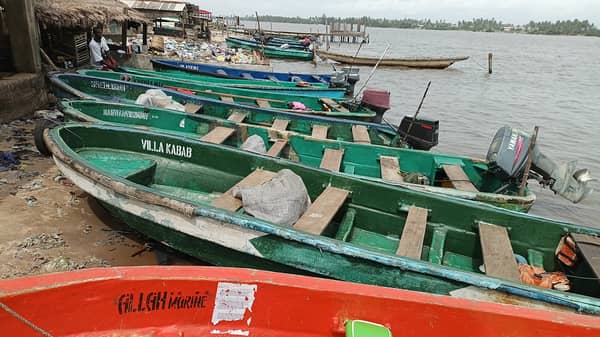
Recurring factors identified in inland waterway accidents include overloading, nighttime travel, abandoned wrecks, and the use of substandard lifejackets.
According to a joint statement by the Lagos State Waterways Authority (LASWA) and the National Inland Waterways Authority (NIWA), the Lagos accident involved a Savvy Marine passenger boat at about 8:35 p.m. on Tuesday. The vessel was en route from the Ilashe Beach House when the incident occurred.
Similarly, the Yobe State Emergency Management Agency (SEMA) reported that the accident occurred at about 7:48 p.m. on Saturday. It involved a canoe conveying 52 passengers from Adiyani town in Guri Local Government Area of Jigawa State.
Preliminary findings by the agencies revealed that the Lagos passengers were returning from Christmas festivities when the boat collided with a submerged object. In the Yobe incident, the passengers were returning from fishing, farming and other commercial activities when the canoe capsized midway through the journey.
Unfortunately, in the aftermath of such tragedies, the federal and state regulatory agencies keep extending condolences to the families and loved ones of the victims and reaffirm their continued commitment to ensuring safety on the nation’s inland waterways.
The agencies also reiterate the need for strict adherence to safety regulations, including compliance with restrictions on night travel, avoidance of overloading, the use of life jackets and proper navigation practices, rules that are often disregarded by both boat operators and waterway users.
To address these persistent challenges, the Federal Government launched the National Waterways Transport Code in June 2024 to standardise inland waterways regulations, reduce accidents and create a structured environment for potential investors.
The Code contains an extensive framework of sanctions and penalties designed to curb recurring violations and mishaps on the nation’s inland waterways.
These measures are designed to protect lives, safeguard property and preserve the waterways’ environment and infrastructure from hazards associated with maritime infractions.
NIWA, in collaboration with state authorities, security agencies and leaders of various boat operators’ associations, commenced nationwide sensitisation campaigns on the Code and its enforcement mechanisms.
As part of the initiative, NIWA deployed river marshals across jetties in Lagos, supported by personnel from the Nigerian Navy and the Marine Police, to ensure continuous compliance with safety regulations.
Over the years, Nigeria’s inland waterways have recorded a disturbing number of fatal boat mishaps across Lagos, Niger, Kebbi, Anambra, Rivers, and several other states.
These accidents often result in the tragic loss of lives, destruction of property, and an erosion of public confidence in water transport as a viable alternative to congested road networks.
The Head of Research at the Sea Empowerment and Research Centre (SEREC), Dr Eugene Nweke, attributed the frequent boat accidents largely to poor enforcement of safety regulations, noting that many vessels operate unregistered, overloaded and without standard life-saving equipment.
Other causes Nweke identified are the prevalence of untrained and unlicensed operators, explaining that many boat pilots lack professional training in navigation, weather assessment, and emergency response.
He further pointed to the absence or inadequacy of navigational aids and infrastructure, including a lack of buoys, signal lights, and properly dredged channels, which he said makes navigation particularly hazardous at night.
According to Nweke, institutional overlap and weak coordination among the National Inland Waterways Authority (NIWA), the Marine Police, and State Waterways Authorities also contribute significantly to the problem, as the agencies often operate in silos.
Other challenges he listed include environmental neglect, such as blocked and silted waterways, abandoned wrecks and a poor maintenance culture, as well as socio-economic factors.
He noted that poverty and the lack of affordable transport alternatives often force commuters to rely on unsafe vessels.
The penalties contained in the National Waterways Transport Code reflect the government’s efforts to preserve inland water ecosystems and ensure that maritime operators take responsibility for vessel safety, passenger welfare and environmental protection.
Under the Code, violations relating to waterway use attract a fine of N30,000, while overloading of vessels up to 50 gross registered tonnage (GRT) attracts a penalty of N20,000 and vessels above 50 GRT face a fine of N50,000.
Violations of vigilance and proper navigational practices attract a N50,000 penalty, while failure to equip vessels with approved life-saving appliances attracts a N10,000 fine.
However, many of the life jackets found on boats are substandard, as some of the passengers in the Lagos accident died despite reportedly wearing them.
This is despite the Federal Ministry of Marine and Blue Economy having distributed life jackets to boat operators nationwide.
The Code also prescribes fines for environmental violations, including N20,000 for individuals and N200,000 for vessels or corporate bodies found dumping refuse, solid waste, or other materials in or along waterways.
Despite the existence of these penalties, violations persist, as sanctions are rarely enforced.
Boat operators and passengers continue their daily activities with little regard for safety rules, often ignoring the risks associated with non-compliance and the small chance of fines.
Nweke warned that the situation exposes deep institutional weaknesses within Nigeria’s regulatory and enforcement systems.
While NIWA and some State Waterways Authorities have initiated sensitisation and regulatory measures, Nweke said enforcement remains weak.
“Most interventions are reactive and implemented only after major accidents. There is limited community engagement, poor data collection, and the absence of a coordinated national water safety strategy,” he said.
Addressing the issues
While the Managing Director of the National Inland Waterways Authority (NIWA), Bola Oyebamiji, has resigned to pursue political ambitions, inland waterways transport stakeholders are still awaiting the appointment of new leadership to address the authority’s mounting challenges.
Maritime safety experts have stressed that improved inter-agency collaboration and coordination are critical to achieving a cohesive and effective inland waterways safety and security framework.
Nweke recommended a range of policy interventions, including strengthening safety regulations and enforcement, ensuring compulsory registration and licensing of all watercraft, mandating safety compliance audits and imposing stiffer penalties for violations.
He also called for the establishment of an independent Marine Accident Investigation Board, the introduction of mandatory certification and periodic retraining for boat operators, and the integration of water transport safety studies into maritime academies and local training centres.
On infrastructure development, Nweke advocated regular dredging and clearance of waterways, as well as the installation of solar-powered buoys, navigational lights, and tracking systems for all commercial boats.
Regarding institutional reform and coordination, Nweke urged stronger collaboration between NIWA, the LASWA, the Marine Police, the National Emergency Management Agency (NEMA) and local councils.
He also proposed the creation of an Inter-Agency Water Transport Safety Task Force to ensure unified command, effective data sharing, and coordinated enforcement.
Other recommendations include empowering local boat operators’ unions and riverine communities as safety compliance partners, alongside continuous nationwide awareness campaigns on water safety and the proper use of life jackets.
The maritime safety experts further advised that both federal and state governments must collaborate more closely in implementing safety measures and enforcing regulations, noting that shared resources and expertise would significantly improve outcomes.
In line with this position, the Federal Ministry of Marine and Blue Economy last year issued an advisory highlighting the need for federal–state collaboration to address recurring boat mishaps on inland waterways.
The ministry also resolved that assistance for commercial water transportation would only be extended to states that support, cooperate with and comply with federal safety initiatives.
A government official, who spoke on condition of anonymity, emphasised the need for the full implementation of existing recommendations aimed at strengthening current institutions, alongside continuous monitoring and evaluation of safety measures to identify gaps and areas requiring improvement.
The source called for genuine collaboration, institutional strengthening and openness to public–private partnerships to enhance safety and security on the nation’s waterways.
Drawing from his experience within the maritime sector, the official revealed that several competent private maritime firms had proposed partnership schemes with NIWA to operationalise waterway safety measures.
According to him, the proposals were designed around daily operational support, active engagement with boat operators and riverine communities and the integration of commercial activities that would make the initiatives self-sustaining.
However, the source alleged that NIWA’s management showed little interest in the proposals, a situation that reportedly discouraged the firms and forced them to abandon their efforts.
The official further stressed the importance of capacity-building programmes for state officials, particularly in riverine states, to improve the enforcement of safety regulations and reduce the recurring incidence of inland waterways accidents.
Meanwhile, the Director of International Trade at the Maritime Researchers and Authors Association of Nigeria (MARASSON), Sunday Ademuyiwa, described the situation as dire, disclosing that an estimated 2,500 deaths have been recorded outside Lagos State in inland waterways transportation over the years.
Ademuyiwa said that as Nigeria grapples with the scourge of boat accidents, state governors must take decisive action, backed by adequate budgetary provisions.
“The time is ripe for governors to allocate resources towards improving safety standards, infrastructure, and regulatory frameworks in their states.
“As custodians of public resources, state governors must prioritise inland waterways safety. The call to action is clear: governors must act now to safeguard Nigeria’s waterways and protect human lives. The budget is available; it is time to allocate resources towards a safer and more sustainable future,” he said.