 Follow Us on Google News


 Follow Us on Google Discover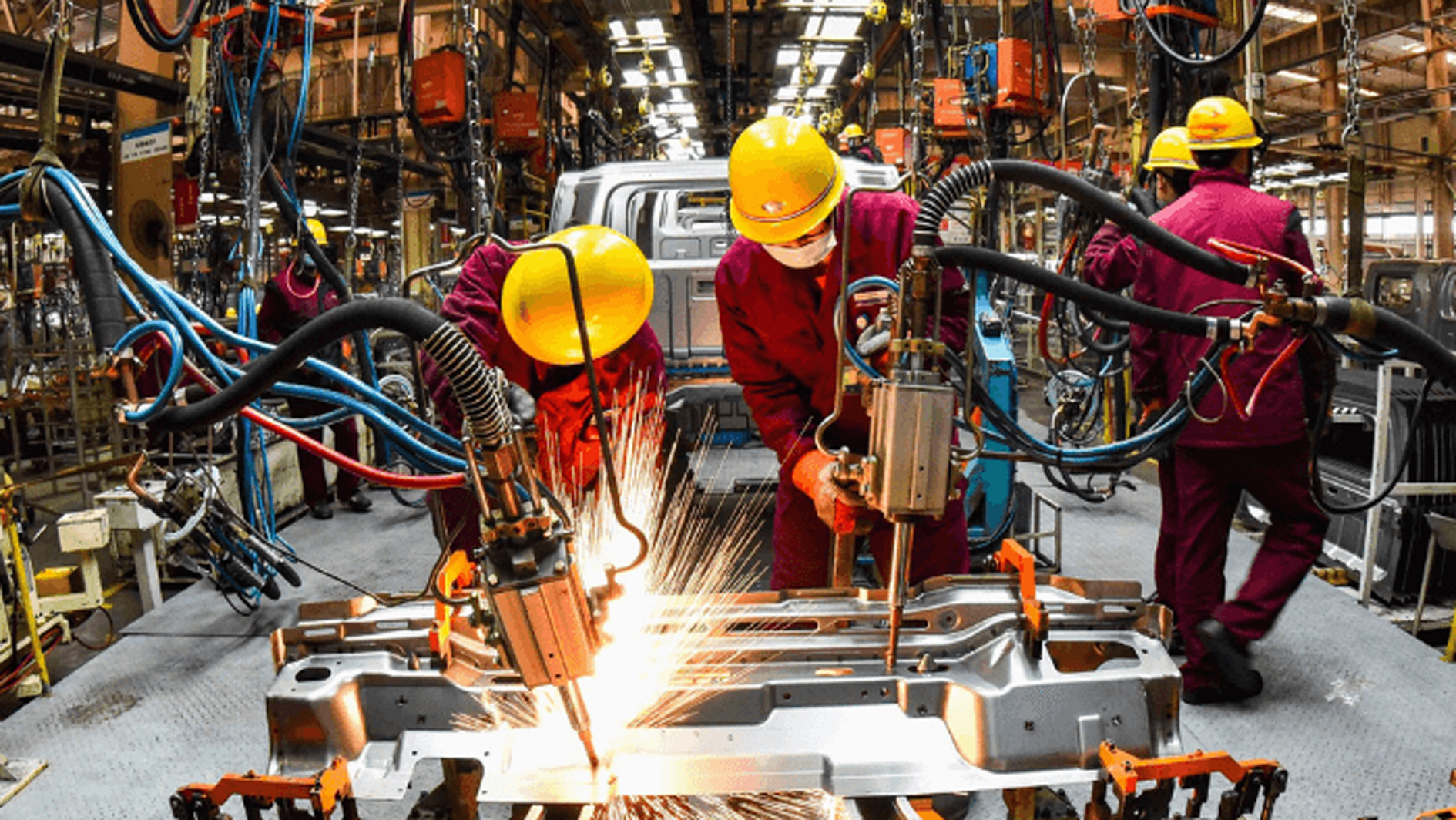
No progress in tackling structural challenges, Muda insists
Nigeria’s construction and trade sectors recorded positive growth in the second quarter of 2026, contributing to the country’s overall 4.43 per cent real gross domestic product (RGDP) growth.
The National Bureau of Statistics (NBS), in its recent Q2 report, found that the non-oil sector grew by 4.31 per cent. Construction, trade and other sectors were among the main drivers of non-oil growth during the quarter.
The construction sector emerged as one of the stronger performers, recording a real year-on-year growth of 6.75 per cent.
Its growth rate was 1.48 percentage points higher than the previous year’s level and 0.37 percentage points higher than the Q1 rate.
Construction contributed 4.29 per cent to nominal GDP during the quarter, up from 3.99 per cent in the corresponding period of 2025, although lower than the 5.41 per cent recorded in Q1.

In real terms, the sector accounted for 3.68 per cent of total GDP, compared with 3.60 per cent in the corresponding quarter of the previous year.
Trade, one of the largest contributors to the economy, grew by 2.4 per cent in real terms year-on-year, up from 1.29 per cent in Q2 2025.
The sector also improved, with growth of 2.08 per cent in Q1 2026, while quarter-on-quarter growth stood at 4.51 per cent.
The sector contributed 17.93 per cent to real GDP during the quarter, making it one of the biggest components of economic activity. However, its contribution was slightly below the 18.28 per cent recorded in the corresponding period of 2025.
Its contribution to nominal GDP stood at 22.95 per cent, lower than the 25.93 per cent recorded a year earlier but higher than the 18.20 per cent posted in the first quarter.
While manufacturing’s performance was higher than in the corresponding quarter of 2025, it remains marginally lower than the growth recorded in Q1 2026.
According to the NBS, the manufacturing sector comprises 13 activities, including oil refining, cement, food, beverages and tobacco, textiles, apparel and footwear, wood products, chemical and pharmaceutical products, plastics and rubber, electrical and electronics, iron and steel, motor vehicle assembly and other manufacturing activities.
On a quarter-on-quarter basis, the sector contracted by 15.85 per cent in real terms, contributing 7.72 per cent to real GDP in the quarter under review. This performance falls below the 7.81 per cent recorded in the corresponding period of 2025 and is significantly lower than the 9.57 per cent contribution in Q1.
The sector still accounted for 7.86 per cent of nominal GDP, up from 6.87 per cent a year earlier.
The industry sector, however, grew by 3.96 per cent, lower than the 7.46 per cent recorded a year earlier, while the services sector expanded by 4.60 per cent and agriculture grew by 4.39 per cent.
Reacting to the contraction in manufacturing, Chief Executive Officer (CEO) of the Centre for the Promotion of Private Enterprise (CPPE), Dr Muda Yusuf, noted that little progress has been made in fixing structural problems, hence the continued contraction in the sector.
“There is a bit of progress on the macroeconomic front, but zero progress on the structural front.
Unfortunately, the situation is being compounded by many geopolitical issues. Manufacturing is energy-intensive, and any energy-heavy sector in Nigeria today, given current energy prices, will find it almost impossible to thrive.
“The poor electricity situation is worsening the situation. Manufacturers cannot even depend on the grid for power supply and are forced to generate energy through costly alternatives.
Adding that energy costs are not limited to production but also affect logistics, he said that because manufacturing is logistics-heavy, logistics, production, and operational challenges are hitting operators.

