 Follow Us on Google News
 Follow Us on Google Discover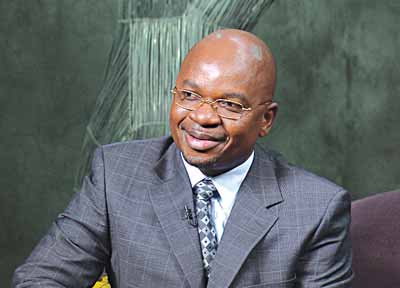

The Democratic Republic of Congo will be conducting their presidential Elections on the 27th of November. CNBC Africa’s Godfrey Mutizwa caught up with Bernard Katompa, President of the Génération Déterminée Movement in the Democratic Republic of Congo (DRC) on his prospects for the forthcoming elections.
MUTIZWA: Looking at your profile, I see you have spent time with companies such as BHP Billiton, previously the biggest mining company in the world, Liberty group in South Africa, Gecamines in the DRC and now you are talking politics, why are you going dirty?
KATOMPA: I have realised that Africa is a continent of provision. In history, the continent has provided labour to other continents through slavery and today, Africa is still continuing to provide resources to other countries and it is considered inferior to others. Wherever you go, because Africa is poor, you don’t see the dignity and respect which you deserve being given to you. What I believe today is that together, we can make Africa a better continent, the world a beautiful and better place for everybody and try to create and unlock the maximum value we have for all our stakeholders that is why I decided to leave the corporate life and get involved in politics because politics is part of the wheel of development which can make a country move forward. The wheel of development has three blocks, the political, the economic and the social- So when the political block works perfectly, it will create an attractive economic environment which will attract foreign direct investments (FDIs) and many investors in the economy, job creation and that will impact positively on the social side.
MUTIZWA: You are taking on an incumbent that has been there for many years, what are your chances as you come in to contest for the presidency?
KATOMPA: Mahatma Ghandi said; ‘if I am sure, I can do it, I will go out to find the resources to do it. The resources can be human, financial or of any kind and if I can get the resources to do it, I will come and do it’. When we look at people, they are just individuals. Madiba also said, ‘our choices must reflect our hopes and not our failures’ and with that in mind, we don’t see Africa as a continent which belongs to a group of individuals, It belongs to Africans, neither do we see the Democratic Republic of Congo (DRC) as a country which belongs to Kabila, the DRC belongs to the Congolese people and the people of the world. We have rules, regulations and constitutions which must be respected. Kabila has been in power for now fifteen years, the first five years was through co-optation when Laurent Kabila was assassinated which for me was totally incorrect because it is not a power which has to come from father to son. During his first five years, we had a lot of conflicts, negotiations, agreements which led the DRC to be managed by one president and for the president.
MUTIZWA: Do you think he will step down?

KATOMPA: He will step down. With determination, even the impossible becomes possible and the people of the DRC are determined today to make sure that the constitution is respected and that by November of this year, Kabila steps down.
MUTIZWA: Will you make sure he steps down?
KATOMPA: Not as an individual but together as the people of the DRC we will make him step down. My organisation is not a political party; it is a movement of people which I believe will make a difference. In the DRC, we have about 500 political parties and most of them are being created by Kabila himself or by other people that go into politics to make money; whereas in politics, you should first become the servant of the people. African Presidents need to understand that managing a country is like managing a complex organisation where your shareholders are your population and while you work to maximise the wealth of your shareholders, you have to keep your stakeholders happy because you need to guarantee them the return on their investments and by working with your stakeholders in win-win solutions, you will start to maximise the value of your population.
MUTIZWA: There have been concerns that the elections could potentially be violent especially given the history of the DRC. The Secretary-General of the United Nations, Ban Ki-Moon has said “The possibility of violence during upcoming elections in a number of countries of the Great Lakes region in the next few years, and the potential impact this violence can have on the region, should not be downplayed. As electoral processes commence, we must do everything possible to prevent election-related violence. I urge all governments to ensure there is ample space for free and open political discourse. At the same time, I urge all concerned governments, opposition parties, civil society groups, and the international community to work towards promoting credible, timely, transparent, and peaceful elections throughout the region.” What are your chances given this context?
KATOMPA: The chances of us winning the elections in the DRC are extremely high. As at today, almost 99.9% of the Congolese people want a change in the DRC. They want the constitution to be respected. Violence is created when elections are not free, fair, transparent, democratic and peaceful and what we are requesting from the international community and from the AU is to make sure that when elections are organised, they are free, fair, transparent, democratic and peaceful and that is what will allow a lot of people to accept the result but if we don’t make sure that the elections have all these characteristics which are standard in the developed world and leave them in the African context as they are, that is when violence will occur, they should not be focusing on the consequences whereas they should target the causes.
MUTIZWA: What are your chances of being among the front runners?
KATOMPA: I am not going to be among; I am going to be the person. Most African countries are still where they are because most of the people are divided and division is a strategy which has been developed many years ago- divide to rule-In a Country you have people being separated through their political aspirations, religious beliefs and others. We are coming with a different philosophy, which is why we are not a political party, we don’t want to be compared to the rest, we want to be original and we believe that unity will make a huge difference in the project of saving the country which is in the drain. We are a movement which will accept and which has accepted every single person despite all these separating factors. We have structures throughout the country; we launched one in Kinshasa last August, we have launched other structures in other provinces and what we are sending as a message to the population is that the time has come for us to avoid all these feelings which have weakened us like fear, division and separation; we need to understand that it is only by being one we can win this war of rebuilding our country.
MUTIZWA: Some will say you have no history against the incumbent and there is nothing to support you in terms of actual work on ground.
KATOMPA: The people of DRC do not want anyone who has been associated with politics and the misery of the DRC coming back. We have people working on ground, we have conducted polls and we know exactly what people expect. We are not counting the number of people who are behind individuals, we are counting the number of people who are behind the ideology and the vision, and those people consider all the politicians in the DRC as a problem to the Congolese solution.
MUTIZWA: What happens if President Kabila runs again?
KATOMPA: President Kabila came in January 2015 to put census as a prerequisite to elections and a number of people came out to request for a dialogue, they protested and some lost their lives, they requested for a change. The people know what they want. We will make him respect the constitution and leave and if he doesn’t leave, the constitution gives us the right to push him out.
MUTIZWA: If you get into power, what do we call your government? Socialist? Right -wing? Left -wing?
KATOMPA: Capitalism was one individual exploiting others; socialism says the government owns everything. In the current economy, all the countries which have developed themselves have stock exchanges, fund managers, pension funds, and insurances. We have moved from being a capitalist or socialist, we need to understand what will make the country grow and for the country to grow, we have to start with stable politics, create an environment which is attractive to investors, create a peaceful environment, give people security and safety, put in place mechanisms which would make sure that all your stakeholders have some sort of certainties. I see Africa as a continent which needs the contribution of all Africans to make sure that democracy is established because through the establishment of democracy, we will start creating value.
MUTIZWA: Thank you very much.

