 Follow Us on Google News
 Follow Us on Google Discover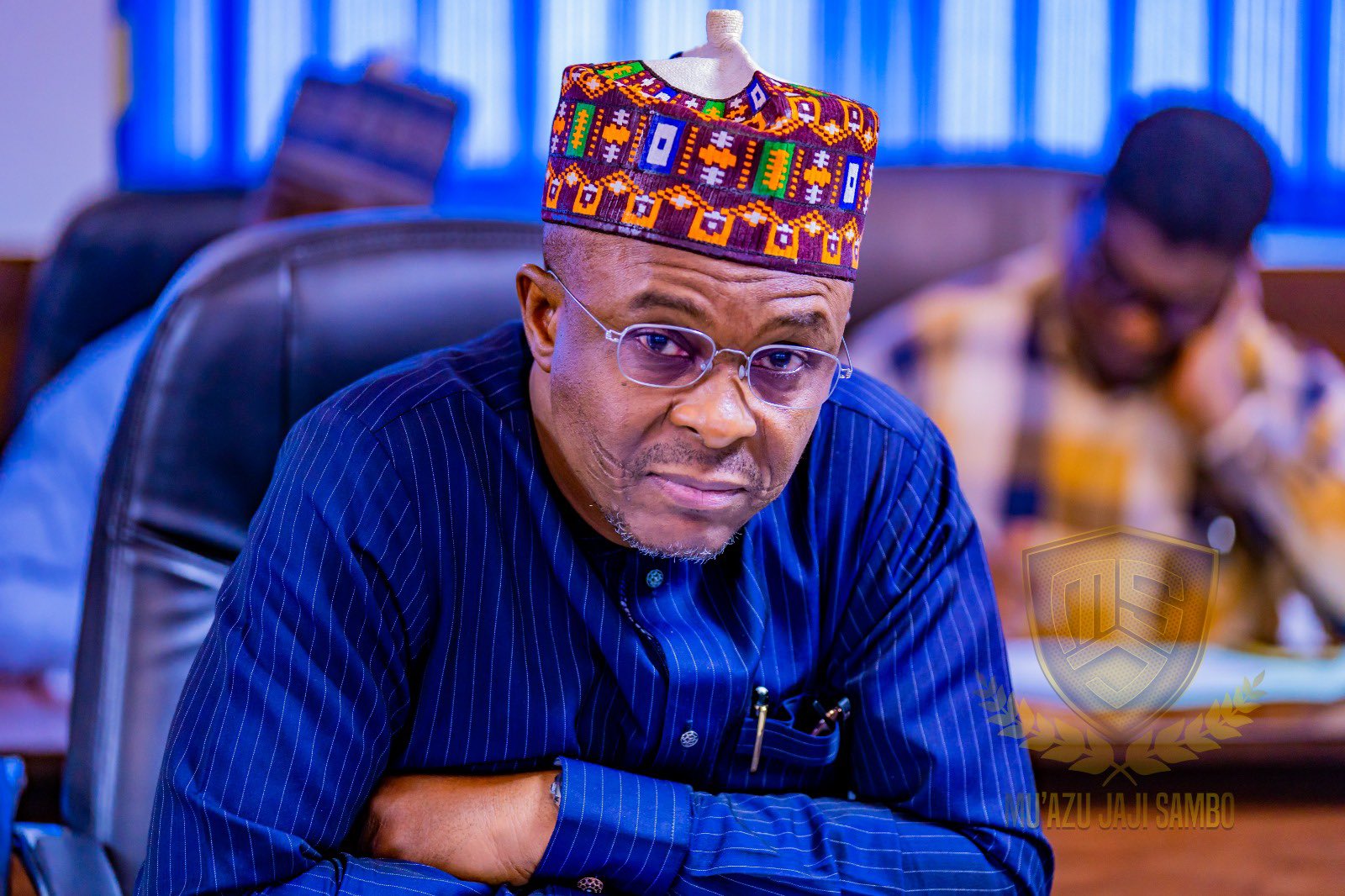
Dr Abubakar Dantsoho is the Managing Director of the Nigerian Ports Authority (NPA) and was recently appointed the Regional Vice President for Africa at the International Association of Ports and Harbours (IAPH). In this interview with journalists, including ADAKU ONYENUCHEYA, he highlights the challenges facing the Nigerian port system and plans to leverage foreign investments to modernise port infrastructure.
How would you assess Nigeria’s port infrastructure today?
With regards to port infrastructure, what we did not do early was to construct brand new ports, which we have aggressively commenced with the operationalisation of the Lekki Deep Seaport, which is fully automated and has a natural draught of 17 metres. We are ramping up investment to build more deep-sea ports.
Our major ports, like Apapa and Tin Can, are outdated. The Port of Apapa was built 100 years ago. Even though it has 24 berths, most of them are old. Limited expansion and modernisation make it difficult to accommodate larger, modern vessels. Our second-biggest port, Tin Can, was built almost 50 years ago. But the size of vessels, their speed, and the technology that drives them have changed so much that it has become difficult for them to come to Nigeria. Also, these two ports are river ports, so they are a bit shallow.
By contrast, neighbouring countries, like Ghana (Tema), the Ivory Coast (Abidjan), Togo (Lome), Benin (Cotonou) have acted faster, so they are now ahead of us. Their ports are deeper, more modernised. But the fact remains, we are more populated than all of these countries. We are stronger economically, but the boxes have to be dropped there because they have strategically positioned their ports to be more efficient than ours in terms of infrastructure, equipment and technology. These are all the things we see as a challenge, but as an opportunity for growth, which we are poised to maximise.
What are the priorities of NPA in creating an efficient port system?
In Nigeria, the port authority is owned by the government, and it manages navigation, safety and maintenance of the channels, while cargo operations have been privatised to multinational and local terminal operators, such as MSC and APMT. With a large, growing population of over 230 million and the status of Africa’s leading economy, we require a more efficient port system than what we inherited.
Fortunately, we now have a forward-looking leadership in President Bola Tinubu, who created the Federal Ministry of Marine and Blue Economy to supervise the NPA and appointed a result-oriented professional in the person of the Minister of Marine and Blue Economy, Adegboyega Oyetola, who is poised to do a lot in terms of expansion, upgrading and rehabilitation to meet our projected capacity. This has motivated us to deploy our experience into transforming the ports.

How is IAPH working with Nigeria and other developing countries to address these challenges?
This links to our ‘closing the gaps’ exercise we did a few years ago, towards the end of the pandemic, to identify regional investment priorities for ports when it comes to infrastructure, technology and port community systems. Since then, we have been working with regional institutions, development banks and the World Bank to see how investment support can be provided so that, ultimately, we have competitive ports across all regions.
The NPA is a very interesting port administration because it is closely linked to the government and the maritime administration, creating stronger coordination with the International Maritime Organisation (IMO) than in many other countries, which is a great strength.
Our challenges are many, but it’s important to understand some of the history and context of Nigeria and its ports. So if you want to be accurate in assessing us, this historical background is essential; you can’t just jump to saying Nigeria is not doing as well as Belgium or the Netherlands, for example.
We have modelled the reform of our port system on recommendations from an international consulting firm and, to a large extent, on the Antwerp system. The execution of a master plan like that takes a lot of time, but that is the course we’ve chosen to take.
How can Africa leverage port modernisation to help its economic growth?
Africa is unique because it is the only continent in the world where the most populous country and the strongest economy do not have the biggest seaport. Africa’s total population is around 1.5 billion, so our potential is huge, but the growth opportunities are still very much intact.
In terms of mining capacity, we have the resources still in the ground. But lack of technology, economic strategy, support and organisation, compared to say, China, has denied us. For instance, the Port of Shanghai handled about 41 million twenty-foot equivalent units (TEUs) last year, but Africa as a whole handled just 34 million TEUs. And, of course, China is now investing heavily in Africa because of this, for example, in Guinea Conakry with the $16 billion Simandou iron ore project.
What about Nigeria and the port sector’s overall contribution?
We are going to adopt a multi-dimensional approach and encourage more mining and agriculture, so our seaports will grow to have the capacity, not only to receive imports, but also to export. We are also going to pursue a relationship that will lead to the establishment of a new deep-sea port in Nigeria. We have licences or permits for six. I certainly hope that we can do one of them.
We are going to emulate a project like Tanger-Med in Morocco, for example, with a brand-new terminal equipped with the latest technology, in collaboration with the best partners in the world. With these things in place, foreign investors will naturally come because they have seen that the government is also committed and on board.
How can IAPH leadership help in this transformation?
I appreciate the leadership of Patrick and IAPH. His leadership style and the quality of the decisions he makes are very important, especially in developing economies like those in Africa. I recall a recent board meeting and the discussions and directions that were taken.
To me, those decisions were focused on supporting developing systems, not just Africa, but also smaller regions and mid-level economies such as Indonesia, Malaysia, South Africa, and Nigeria. I believe it is important for IAPH to spend more time understanding the ecosystems of developing economies, given their strong potential. We are certainly not looking for sympathy; we are just looking for collaboration and support.
What should the international group expect from Nigeria’s port system going forward?
I was fortunate to have the opportunity to listen to what all the experts said at the World Ports Conference in Kobe last October, so I took home a lot of ideas from that. But basically, we are looking at a more modernised port system in Nigeria, one that is able to accommodate most of the crucial elements governing maritime in the present age. We are also going to strengthen our capacity to relate better and to cooperate more fully with international groups, such as IAPH, and other industry bodies.

