 Follow Us on Google News
 Follow Us on Google Discover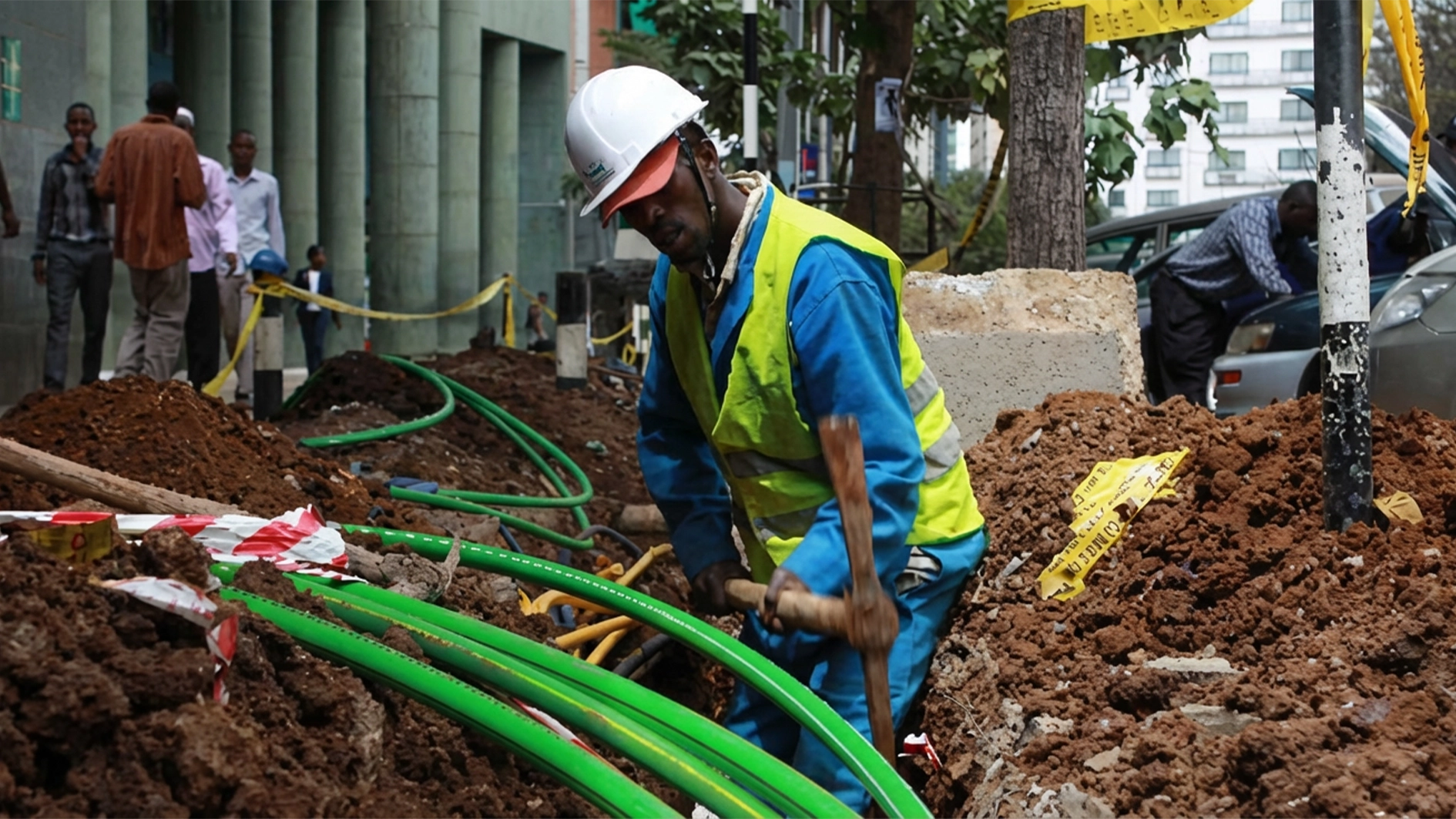
•Banks completed N300b USSD debt payment
From now on, it will no longer be business as usual for firms, especially for construction companies that damage fibre optic infrastructure in the country.
This comes as the Nigerian Communications Commission (NCC) said the impact of persistent fibre cuts has reached a worrying state, warning that “he who cuts must fix” henceforth.
The warning was handed down yesterday in Lagos by the Chairman of the NCC Board, Idris Olorunnimbe, during a visit by members of the Association of Licensed Telecom Operators of Nigeria (ALTON).
The visitors stressed the damage fibre cuts cause to the quality of telephone services in the country.
ALTON, led by its Chairman, Gbenga Adebayo, said fibre cuts often caused by federal and state road construction contractors are creating enormous economic losses, nationwide service disruptions, destruction of critical digital infrastructure, loss of assets without compensation and banking, education, and security interruptions.
ALTON, which said there is currently insufficient institutional recourse for operators when these damages occur, noted that a structured pre-construction fibre mapping and mandatory coordination framework is urgently required.

Responding, Olorunnimbe, who said the NCC is aware of the crises, assured that the message will be taken to the Nigeria Governors Forum (NGF): “They will be told that if their contractors damage our fibre again, they will pay for it. A work-stop order will be issued. I think we will start with Lagos. We will meet LASIMRA and find a way around this.”
Indeed, last year, the sector recorded over 19,000 fibre cuts. As of now, the incidents have risen by about 900 per cent compared to the previous month, according to analysis of Nigerian Communications Commission (NCC) data.
The incident reports by the NCC showed that fibre cuts increased from just four cases in December 2025 to 40 incidents in January 2026, marking one of the steepest month-on-month spikes in recent years.
In his submission, ALTON chairman emphasised the need to take the matter to the National Economic Council (NEC), so that telecom infrastructure can be integrated into state planning.
According to him, there is an urgent need for fibre mapping and damage compensation protocols, especially by federal and state ministries of works.
He also tapped the office of the National Security Adviser (ONSA) on the enforcement framework for the CNII.
MEANWHILE, at the meeting, it was disclosed that the Deposit Money Banks (DMBs) have completed the entire stretch of the protracted Unstructured Supplementary Service Data (USSD) debts they owed telecom operators.
ALTON said as of today, no banks owed them any debt, put at about N300 billion.
Adebayo, who appreciated the efforts of the Executive Vice Chairman of NCC, Dr Aminu Maida, for his immense support in seeing the debt fully paid, said the sector has migrated to the End-User-Billing system to ensure subscribers are billed accordingly and charges are directed to the appropriate channels.
Recall that for about five years, the telecom operators battled to recover the about N300 billion USSD debts from the banks, until 2024/2025 when the Central Bank of Nigeria (CBN) and NCC reigned in with new directives that ensured the payments were made.
In the first quarter of 2025, the telcos had concluded plans to withdraw the USSD service from the affected banks, about 18 of them. But the intervention of both NCC and CBN saved the system.
The operators introduced the End-User Billing system on June 18, 2025.
Last year, the ALTON boss said the billing model would allow mobile network operators to charge customers directly for USSD sessions, with charges deducted from airtime balance at N6.98 per 120 seconds.
He noted that customers would receive a prompt to opt in and approve the charge before deduction, and billing would only occur for successful sessions.
Adebayo assured that the change would not affect USSD banking services’ availability or functionality, and customers could continue using bank USSD codes with sufficient airtime.
“USSD services play a vital role in expanding access to financial services, particularly for unbanked and underbanked populations.
“However, the previous corporate billing model, where banks were billed by telecom operators, led to prolonged disputes over unpaid charges, service interruptions and uncertainty for customers.
“To address these challenges, the NCC’s 2025 determination introduced the End-User Billing (EUB) model, which allows mobile network operators to charge customers directly for USSD sessions.

