 Follow Us on Google News


 Follow Us on Google Discover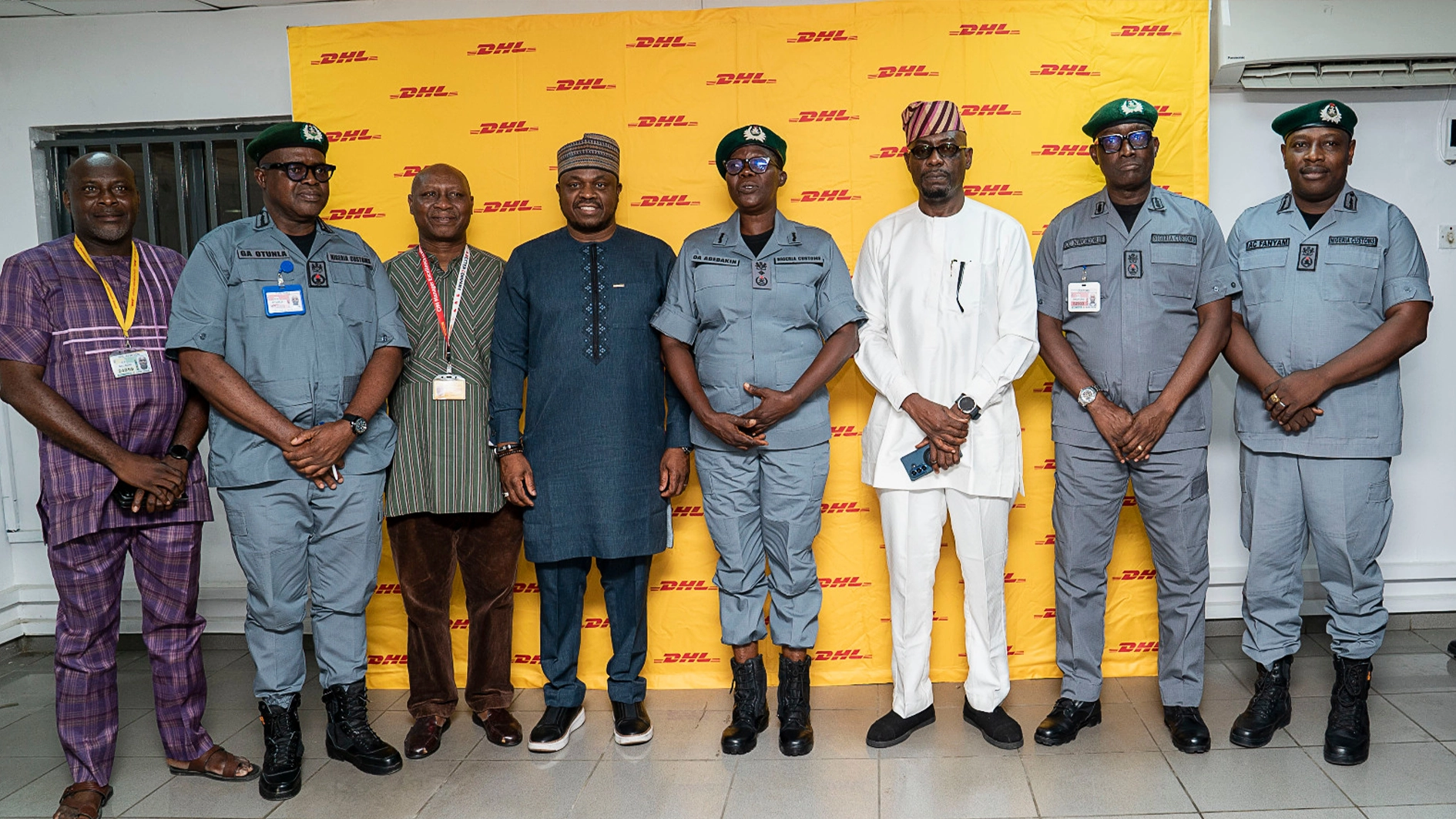
In a defining moment for Nigeria’s trade modernisation journey, global logistics giant, DHL, alongside the Standard Organisation of Nigeria, Nigeria Agricultural Quarantine Service and the National Environmental Standards and Regulations Enforcement Agency (NRSREA) has successfully commenced the electronic submission and transmission of cargo manifests on the National Single Window (NSW) platform.
The milestone marks a bold step forward in Nigeria’s ambition to digitize its trade ecosystem, following the official go-live of the platform on March 27, 2026, as promised and delivered by President Bola Ahmed Tinubu.
At coordinated live demonstrations held at DHL’s Lagos Airport facility and the NSW operations hub in Apapa, stakeholders across government and the private sector witnessed the system in action, processing cargo documentation in real time, transmitting data seamlessly across border systems and generating rotation numbers with precision.
Despite minor initial technical hitches at DHL and temporary network latency in Apapa, the system recorded a successful launch, reinforcing confidence in its resilience and readiness in the NSW Go-live.
The Director of the NSW Project, Tola Fakolade, declared that the initiative has now moved decisively from development into full-scale operations.
“This is no longer a concept, it is live, active, and delivering results,” Fakolade stated, noting that the demonstration underscored the platform’s core capabilities: “electronic submission, transmission to border systems, and the generation of rotation numbers”.

He described the DHL activation as a critical proof point in demonstrating how logistics operators and regulatory agencies can leverage the platform to simplify cargo clearance, eliminate delays and deepen transparency across Nigeria’s trade value chain.
Fakolade further emphasized the strength of collaboration driving the project, saying: “In the beginning, we could have some issues here and there, but what is important is that the technical teams are there to resolve them. We saw clear evidence of collaboration among stakeholders, and that collaboration is what has brought us to this point.”
He urged stakeholders nationwide to remain patient and committed as the system scales, noting that such teething challenges are typical of major digital transformations globally.
The Deputy Comptroller-General of the Nigeria Customs Service in charge of ICT and Modernisation, Oluyomi Adebakin, reinforced this position, describing the Go-live as a landmark success of the President Bola Ahmed Tinubu administration that seeks to empower the trade community in a way yet to be experienced.
She assured stakeholders that integrated technical teams, including the Customs Single Window unit, NSW engineers, and Trade Modernisation Project personnel, are working round the clock to ensure seamless functionality.
Adebakin highlighted the broader economic implications, noting that the NSW, alongside the B’Odogwu system, will significantly improve efficiency for traders and unlock measurable gains for the Nigerian economy. She added that the platform positions Nigeria to fully capitalize on opportunities under the African Continental Free Trade Area, enhancing its competitiveness across the continent.
Also lending institutional backing, the Managing Director of the Nigerian Ports Authority, Abubakar Dantsoho, described the initiative as a transformational leap for port operations.
Represented by General Manager Oladapo Fatai, Dantsoho noted that the NSW will drastically reduce bureaucratic bottlenecks and eliminate the need for port users to shuttle between multiple offices for documentation.
“With multiple agencies now integrated into a single digital ecosystem, documentation and responses can be processed in a coordinated and efficient manner,” he said.
At the aviation end, the Director of Cargo Development and Services at the Federal Airports Authority of Nigeria, Lekan Thomas, projected significant gains in cargo efficiency, security, and data-driven planning.
He emphasized that the platform will tackle longstanding inefficiencies in cargo handling while reducing dwell time; a critical factor in improving Nigeria’s logistics competitiveness.
Thomas further highlighted one of the system’s most transformative features: unified data integration across agencies.
“For years, inconsistencies in cargo and revenue data have limited effective planning. With the NSW, we now have a single source of truth that will empower better decision-making, boost revenue, and strengthen national economic performance,” he said.
On the private sector front, the Managing Director of DHL, Muyiwa Adejeyoju, expressed pride in the company’s early adoption of the platform.
He noted that the initiative aligns with DHL’s global mission of connecting people and improving lives, while reaffirming the company’s commitment to regulatory compliance and trade facilitation.
“We are proud to be part of this accreditation process and the rollout of a system that will redefine trade in Nigeria. DHL remains committed to supporting government’s vision for a more efficient and modern trade environment,” Adejeyoju stated.
With its successful first transactions now completed, the National Single Window signals the dawn of a new era, one defined by speed, transparency, coordination, and global competitiveness.
As Nigeria accelerates toward a fully digitized trade ecosystem, the message is clear: the future of trade is here, and it is unified.

