 Follow Us on Google News


 Follow Us on Google Discover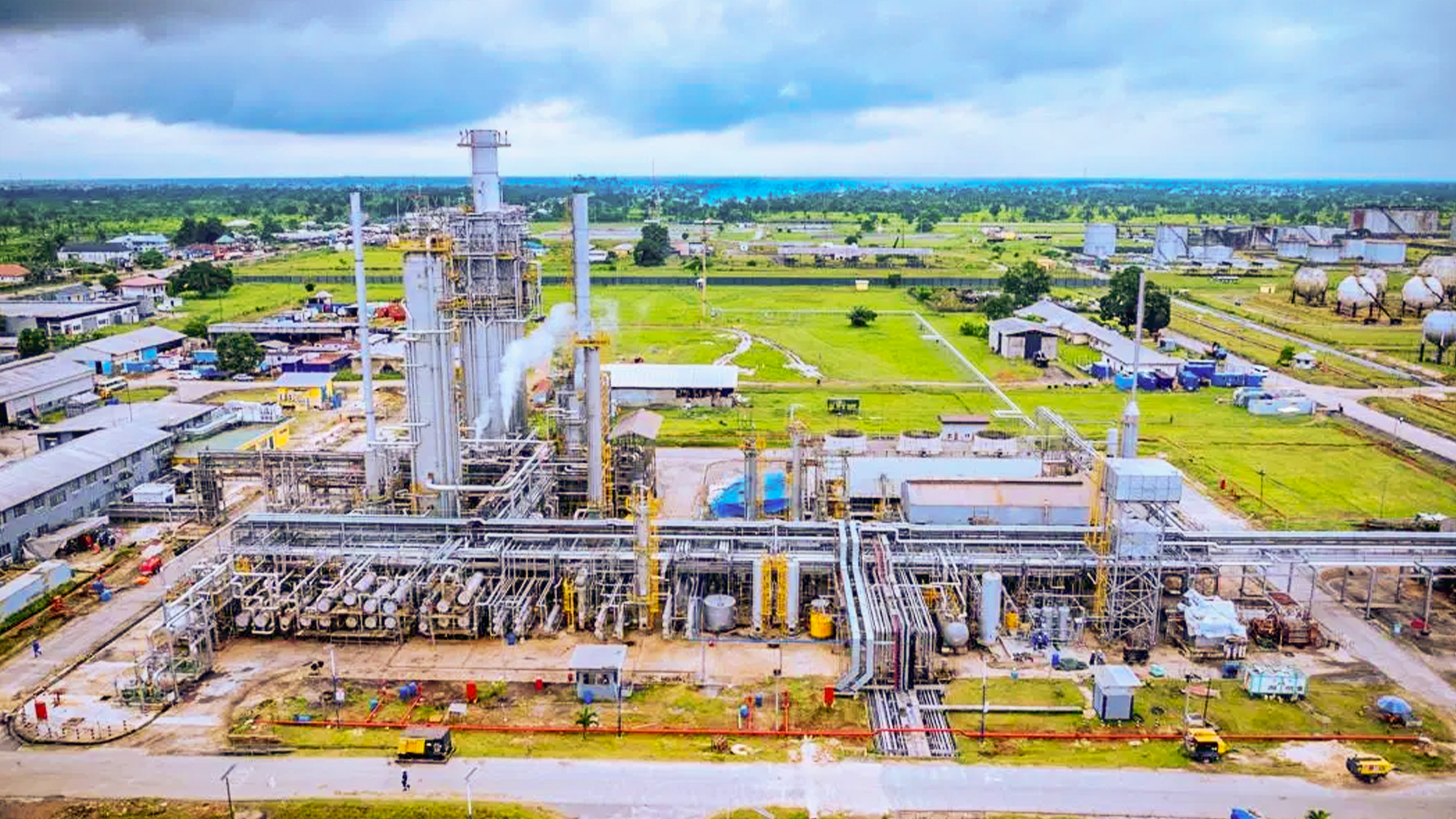
•Omorogbe, Fawibe worried over regulatory failure
•Regulatory credibility critical to confidence building, Saibu insists
Stakeholders across Nigeria’s energy sector have called for the establishment of additional refineries, affordable electricity, stronger regulatory institutions and closer collaboration among government, academia and industry, warning that weak implementation and policy inconsistency would continue to undermine the country’s energy security and industrial ambitions.
They stated this at the fourth edition of the Dr Diran Fawibe Annual Lecture Series organised by the International Energy Services Limited in collaboration with the Centre for Petroleum, Energy Economics and Law (CPEEL) at the University of Ibadan, under the theme, ‘Private-Public Energy Shift: Innovation, Investment and Implementation’.
The stakeholders decried electricity shortages and investment deficits, while lauding the efforts of the honouree, Dr Diran Fawibe, in giving back. They argued that Nigeria’s biggest energy challenge is no longer lack of resources or policy documents but inability to translate abundant natural endowments into reliable power, industrial growth and broad-based economic development.
Delivering a lecture, Founder of Etinpower Limited, Prof. Yinka Omorogbe (SAN), described Dangote Petroleum Refinery as a significant milestone, but cautioned against relying on a single refinery to guarantee energy security.
She called for multiple operational refineries to improve affordability, attract investment, stimulate petrochemical industries and deepen manufacturing.

Omorogbe said universities must move beyond their traditional teaching role to become strategic partners in national development by producing evidence-based research, shaping public policy and developing professionals capable of driving industrial transformation.
She observed that while Nigeria possesses enormous intellectual capacity, the country continues to suffer from disconnect across research, industry and implementation.
“Nigeria has no shortage of brilliant minds or innovative ideas, but there remains a wide gap between research, industry and implementation,” she said.
Omorogbe said that the country’s energy transition should not merely mirror global decarbonisation trends but must remain developmental by creating jobs, supporting farmers, expanding value chains and reducing poverty.
She urged Nigeria to prioritise domestic utilisation of its abundant gas resources instead of exporting raw energy while industries and households continue to struggle with inadequate energy infrastructure.
She also advocated a balanced energy mix, stressing that hydrocarbons would remain indispensable for electricity generation, cooking gas, fertiliser production, petrochemicals and manufacturing, while renewable energy would play a complementary role in expanding electricity access, supporting decentralised mini-grids and reducing dependence on costly diesel generation.
According to her, a successful energy transition should be measured by improvements in energy access, employment, manufacturing output and poverty reduction rather than by policy announcements alone.
She identified the downstream petroleum sector as a critical driver of industrialisation, insisting that Nigeria must move beyond crude oil exports to value addition.
“The downstream sector is where crude oil is transformed into products, products into industries and industries into jobs,” she noted, saying government’s responsibility should centre on providing clear policies, credible regulation, reliable geological data, strategic infrastructure and an enabling investment climate while allowing the private sector to drive innovation and execution.
The keynote echoed concerns raised by many operators that although Nigeria has embarked on sweeping reforms in the petroleum and electricity sectors, implementation remains the weakest link.
Chairman of International Energy Services Limited, Dr Diran Fawibe, said Nigeria’s industrialisation, employment generation, healthcare delivery and economic competitiveness depend on reliable and affordable energy.
According to him, the country’s future will increasingly be determined not by the volume of hydrocarbon beneath its soil but by its ability to transform those resources into accessible, sustainable and affordable energy through innovation, investment and implementation.
He described collaboration among government, industry and academia as the defining philosophy of the annual lecture series, arguing that innovation without investment remains an idea, investment without implementation remains a promise, while implementation without partnership rarely delivers lasting impact.
For a professor of economics at the University of Lagos, Olufemi Saibu, financing and regulatory credibility remain the principal obstacles.
He noted that investors are discouraged by Nigeria’s high borrowing costs, regulatory uncertainty and perceived risks.
Saibu warned that investor confidence weakens when regulators are perceived to have operational interests in the industries they supervise, insisting that truly independent regulatory institutions are essential for attracting both domestic and foreign investments.
Chairman of Renaissance Africa Energy Company Limited, Dr Layi Fatona, observed that the sector has entered a period of profound transformation driven by technological innovation, energy security concerns and changing environmental expectations.
He argued that innovation, investment and implementation are inseparable, warning that regulatory uncertainty continues to discourage long-term capital required to modernise Nigeria’s energy infrastructure.
Fatona noted that although Nigeria generates between 3,500 megawatts and 5,000 megawatts of electricity, experts estimate that the country requires between 150,000MW and 200,000MW to guarantee reliable supply for its estimated 250 million people.
He stressed that Nigeria’s energy sectors — including electricity, oil and gas, renewables, mining and manufacturing—must no longer operate in silos if the country hopes to maximise opportunities presented by the African Continental Free Trade Area.
Vice-Chancellor of Edwin Clark University and Professor of Power and Energy Systems, Prof. Samuel Tita Wara, also identified weak collaboration between academia, government and industry as a major impediment.
He observed that most Nigerians have effectively become independent electricity producers through generators and alternative energy systems, describing the situation as evidence of severe energy poverty rather than resilience.
Similarly, Regional Director for Grid Technologies Business, West and Central Africa at Siemens Energy, Oladayo Orolu, said modern technologies already exist to transform Nigeria’s electricity network, but commercial viability and policy consistency remain inadequate.
He recommended fixed tenures for regulators to insulate energy institutions from political interference and improve investor confidence.
Speaking at the event, Managing Director of IESL, Adebayo Ige, called on the oil industry to support a new energy centre being constructed at the university by Fawibe, stressing that industry players could turn the centre into a hub of innovation for the energy sector.

