 Follow Us on Google News
 Follow Us on Google Discover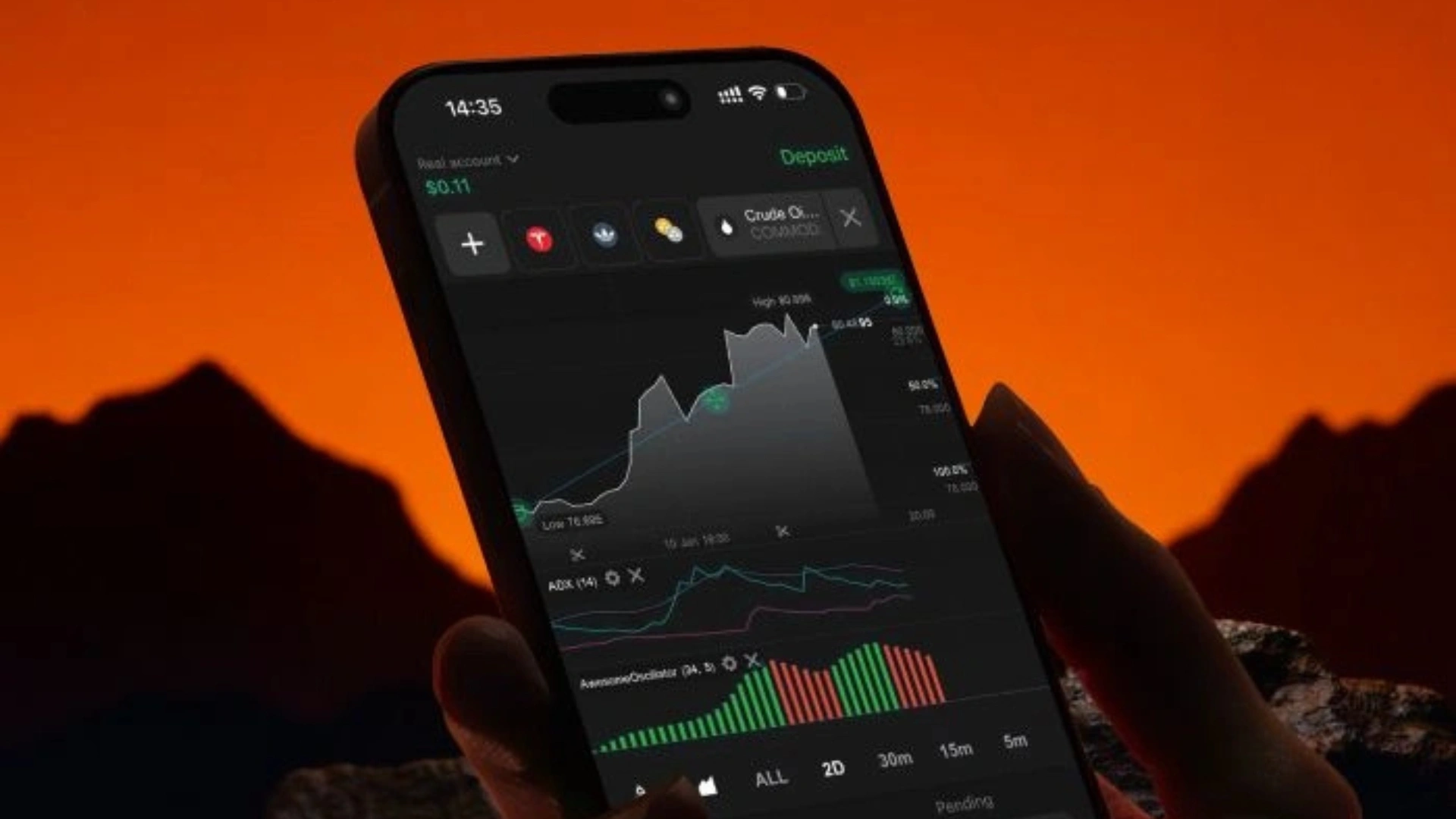
Nigeria’s stock exchange is having a record year. A growing number of Nigerians are ignoring it entirely.
Between January and May 2026, domestic retail investors traded ₦2.86 trillion worth of equities on the Nigerian Exchange — a 138% increase year-on-year, according to NGX data. Two million new retail investors came into the market in 2025 alone. The Securities and Exchange Commission’s director-general described it publicly as a new wave driven by mobile platforms and growing financial awareness among younger Nigerians.
These numbers tell part of the story. What they do not capture is the parallel movement happening outside the stock exchange entirely: Nigerians routing savings into global CFD and forex platforms to access instruments that the domestic market does not offer — dollar exposure, commodity positions, and the ability to trade in both directions on an asset.
Understanding why this is happening requires looking at two forces that rarely appear in the same sentence: naira depreciation and mobile payment infrastructure.
What the Exchange Rate Does to Savings
The naira closed 2024 at roughly N1,535 to the dollar at the official window, having depreciated more than 40% over the year. By mid-2026, the parallel market rate had climbed back above N1,400 following a brief period of near-convergence with the official rate earlier in the year.
For a Nigerian holding savings in naira, this is not an abstract macroeconomic statistic. It is a direct reduction in purchasing power for anything priced in or linked to foreign currency — electronics, school fees, imported goods, medical equipment, travel. The depreciation is felt before it is understood.

This is what makes USD/NGN the most personally relevant currency pair for Nigerian retail traders. As one Lagos-based brokerage noted in its 2026 market analysis, when the dollar exchange rate directly affects what you pay for imported goods or school fees, watching USD/NGN moves feels less like speculation and more like a practical skill. That reframing — from abstract trading to economic self-defence — is central to understanding why participation is rising.
The Access Problem That Fintech Solved
Wanting dollar exposure and being able to get it affordably are different things.
For most of the last decade, a Nigerian retail trader with ₦100,000 to invest faced a genuine infrastructure problem. International wire transfers from Nigerian banks carry conversion spreads, correspondent bank fees, and clearing windows measured in days. The capital that arrived at the other end was often materially less than what left the naira account. For small balances, the transaction cost alone made global market access economically irrational.
The shift that changed this was not a regulatory change or a new financial product. It was the mass adoption of mobile payment wallets — specifically OPay and PalmPay — as everyday transaction infrastructure for tens of millions of Nigerians.
When international trading platforms began accepting NGN deposits directly through these wallets, the friction collapsed. A trader depositing ₦50,000 via a mobile wallet does not pass through a correspondent bank. There is no multi-day clearing period. The capital reaches the trading account largely intact. For a retail participant operating on modest capital, this difference is the difference between participation being possible and participation being practical.
Several platforms serving the Nigerian market have built this infrastructure directly. IQ Option Nigeria, for instance, handles NGN deposits natively through OPay and PalmPay without requiring prior currency conversion — a structural feature that matters considerably more than headline product claims for traders whose capital base is denominated in naira.
What Nigerian Traders Are Actually Doing
The instruments attracting the most attention among Nigerian retail CFD traders are not obscure derivatives. They map closely onto economic anxieties that Nigerians already have.
USD/NGN is the obvious starting point — a pair that every Nigerian with a dollar-sensitive bill or import-linked business has an inherent view on. Beyond currency pairs, crude oil CFDs carry obvious local relevance in a country where petrol prices and government revenue move in lockstep with the Brent price. Major global indices give retail participants equity exposure to markets where Nigerian stocks are not listed.
The common thread is that these instruments translate lived economic experience into tradeable positions. That is a different motivation from the purely speculative retail trading narrative that tends to dominate coverage of the sector.
What Experienced Traders Do Before Risking Capital
The pattern among Nigerian traders who have remained active for more than a year is consistent: they spent time in a simulated environment before deploying real money.
Most serious platforms offer demo accounts that mirror live market conditions using virtual funds. The instruments behave the same way. The interface is identical. The only variable removed is real capital at risk.
The value is not primarily about learning where the buttons are. It is about discovering whether a specific approach — which entry points, what position size, how wide a stop — actually holds up under real market conditions before those conditions cost anything. Many retail traders find that a strategy which seemed sound in theory performs differently when they are watching it against a live USD/NGN feed during a CBN policy announcement.
Four weeks of demo trading is not a guarantee of anything. But it does tend to surface the gaps between what a trader thinks they understand and what they actually understand — at zero cost.
The Question to Ask Before Depositing
One due diligence step that most Nigerian retail traders skip: identifying which legal entity they are actually contracting with and who regulates it.
This matters because a platform’s most prominently displayed licence does not always apply to Nigerian clients. Licences issued by European or UK regulators cover clients in those jurisdictions. A Nigerian depositor is typically onboarded through a separate entity operating under a different regulatory framework — and it is that entity, not the one on the homepage banner, whose obligations govern the relationship.
Before depositing with any international trading platform, it is worth looking for: the specific entity name for non-EU clients, the regulator that entity is registered with, and whether client funds are held in segregated accounts under that framework. Most legitimate platforms publish this clearly in their legal documentation. If it is not there, that absence is informative.
The Realistic Picture
Nigeria’s retail trading boom is real, but so is the attrition rate. Industry data consistently shows that a significant proportion of retail traders who open accounts and make an initial deposit do not remain active beyond their first few months. The reasons are predictable: insufficient preparation, position sizes too large for the account, and strategies that were not tested before real capital was deployed.
None of this argues against participation. It argues for the same approach that distinguishes the traders who remain active from those who do not: start in a demo environment, understand exactly which regulatory entity covers you as a Nigerian client, use platforms that have built genuine NGN deposit infrastructure rather than requiring conversion workarounds, and treat the first weeks as a learning exercise rather than an income stream.
The tools for meaningful retail participation in global markets now exist in Nigeria in a way they did not five years ago. Whether that access produces durable outcomes depends on how carefully it is used.

