 Follow Us on Google News
 Follow Us on Google Discover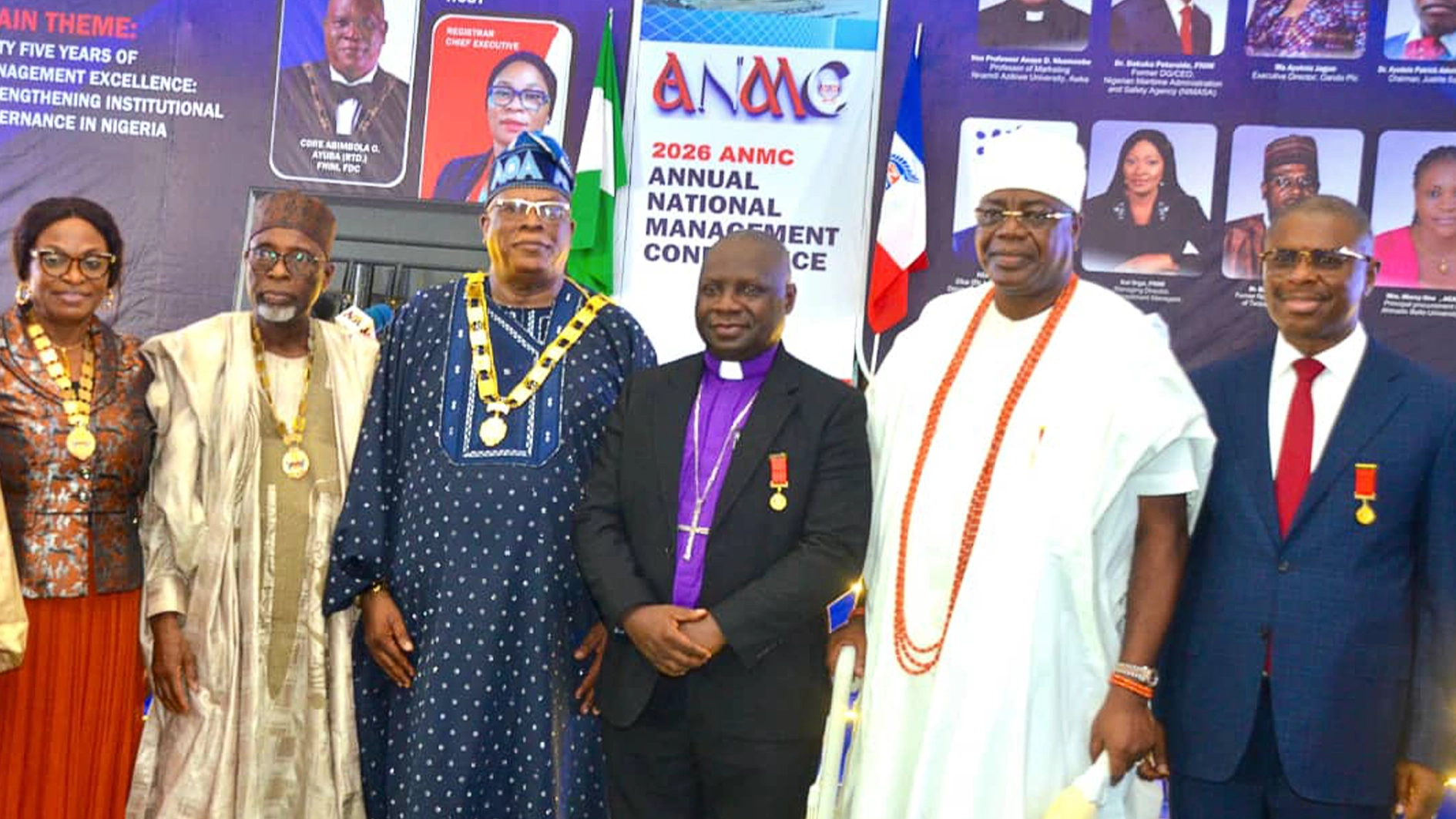
Former Director-General of the Nigerian Maritime Administration and Safety Agency (NIMASA), Dr Dakuku Peterside, has warned that weak institutions and poor policy implementation are undermining Nigeria’s economic growth and investment prospects.
Peterside said Nigeria’s fundamental challenge was not a shortage of natural resources, human capital or ideas, but the failure to build institutions capable of converting those assets into sustained economic prosperity.
Speaking at the Nigerian Institute of Management’s (NIM) 65th anniversary management conference, he said weak institutions create uncertainty for businesses, discourage investment and undermine government policies, stressing that predictable rules, credible institutions and competent management were critical to economic development.
“When rules are inconsistent, businesses delay investment. When procurement is opaque, value is lost. When public agencies lack capable managers, policies remain on paper,” Peterside said.
He added that weak data, poor accountability and the politicisation of institutions further erode public confidence, making national progress “accidental”.
Peterside said Nigeria’s challenges, including insecurity, inadequate infrastructure, low productivity, weak industrialisation and the persistent gap between policy formulation and implementation, were interconnected management problems rather than isolated failures.

He also linked the country’s long-term economic underperformance to political instability and policy discontinuity, which, he said, disrupt planning, weaken institutional memory and encourage successive governments to abandon programmes initiated by previous administrations.
Corroborating Peterside, the Alara of Ilara Kingdom, Epe Division, Dr Olufolarin Ogunsanwo, said strong institutions were essential for providing the stability, accountability, continuity and public confidence required for economic and organisational development.
Ogunsanwo said Nigeria’s resource endowment alone could not guarantee sustainable development, stressing that the decisive factor was the quality of institutions and how effectively they were governed.
He said effective institutions protect resources, preserve institutional knowledge and ensure that progress does not depend solely on the personality of whoever occupies a position.
“Nigeria must deliberately move from personality-driven leadership to institution-driven governance,” he said.
The monarch said the business and public sectors needed systems that can survive leadership changes, noting that an effective leader should not only deliver results while in office but also build structures capable of sustaining those results after leaving.
He identified competence, integrity and accountability as essential requirements for effective governance.
Ogunsanwo said competence ensured that those entrusted with responsibilities possessed the requisite knowledge, experience and capacity, while integrity required public officials and managers to place public interest above personal interest.
On accountability, he said those exercising authority must be answerable for their decisions and outcomes, while resources entrusted to institutions must be managed transparently.
President and Chairman of Council, NIM, Abimbola Ayuba, said Nigeria’s complex economic and social environment required stronger collaboration among professional institutions, government and the private sector.
Ayuba stressed that management expertise should play a greater role in shaping national policies and improving institutional performance.
He urged Federal and State Governments to leverage NIM’s six-and-a-half decades of management research, policy insights and practical administrative models in policy design and implementation.
According to him, the institute’s knowledge base could provide decision-makers with strategic guidance in tackling the country’s governance and administrative challenges.

