 Follow Us on Google News
 Follow Us on Google Discover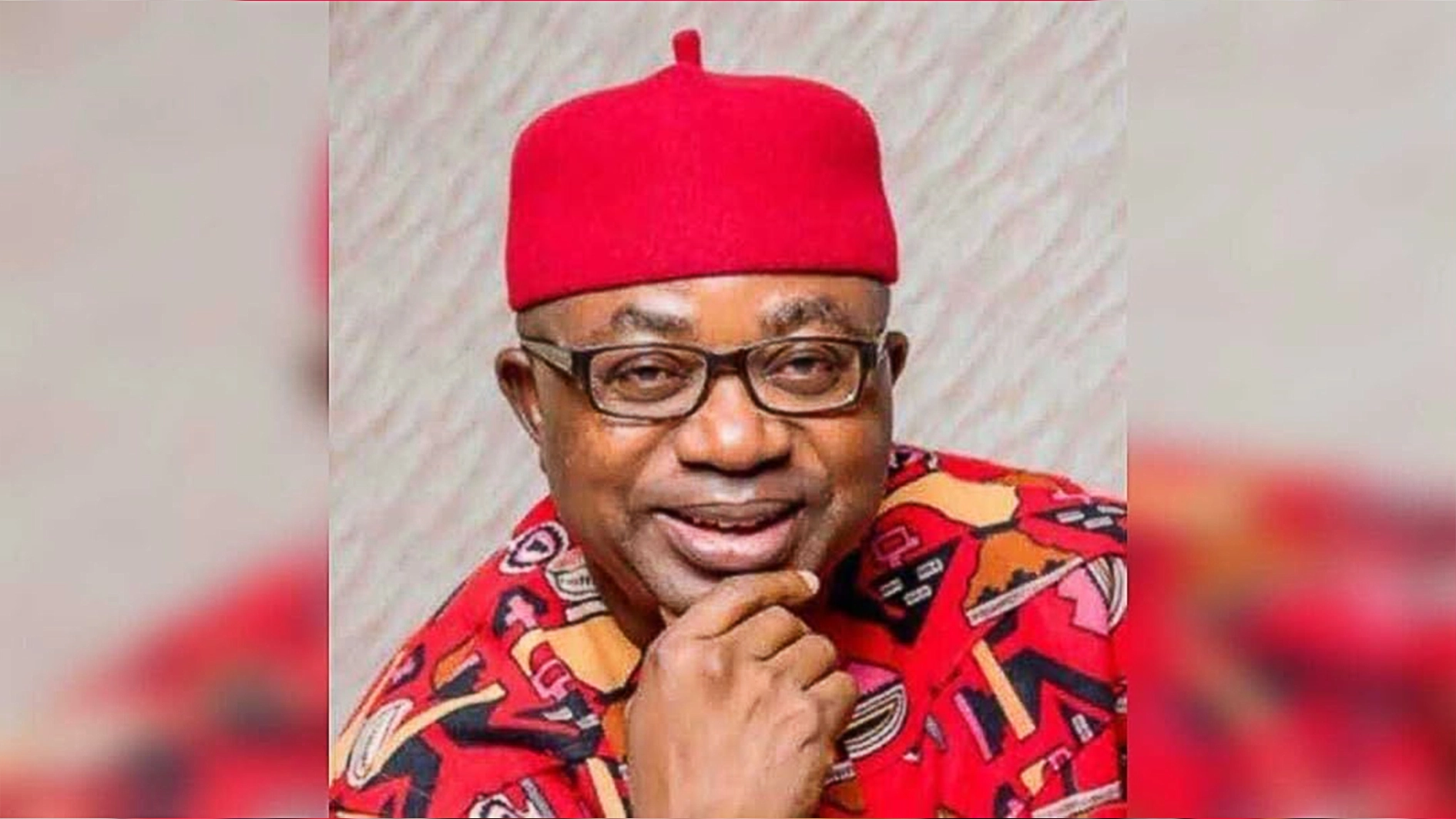
President of the Global Legislators Organisation for a Balanced Environment (GLOBE Legislators International), Rt. Hon. Sir Sam Onuigbo, has urged Nigerians to hold state governors accountable for increased revenues accruing to them from the removal of petroleum subsidy, insisting that the funds should translate into tangible development at the grassroots.
Onuigbo, a former Finance Commissioner in Abia State and two-term member of the House of Representatives, said the increased allocations from the Federation Account Allocation Committee (FAAC) had placed state governments in a better financial position to address economic hardship, improve infrastructure and strengthen local government administration.
Speaking with journalists in Abuja at the weekend, he regretted that many governors had failed to reciprocate President Bola Tinubu’s fiscal reforms by ensuring that local government councils received the funds required to deliver essential services.
He argued that while the Federal Government had benefited from increased revenues following the removal of the petrol subsidy, state governments should allow the third tier of government to access its constitutionally allocated resources to promote development in rural communities.
Onuigbo’s call comes against the backdrop of public statements by some governors acknowledging the significant increase in monthly allocations to their states since the Tinubu administration introduced its fiscal reforms.
Nasarawa State Governor, Abdullahi Sule, recently disclosed that the state’s monthly FAAC allocation had risen from an average of between N3.8 billion and N4.5 billion before the subsidy removal to between N14 billion and N16 billion.
Speaking while receiving a delegation of the Renewed Hope Ambassadors in Lafia, the state capital, Sule said: “With the removal of subsidy today, I can tell you for free, Nasarawa State is receiving an average of N14bn to N16bn every month.”

Similarly, Imo State Governor, Hope Uzodimma, had recalled that state governments previously shared about N784 billion monthly from the Federation Account, while distributions had risen to between N1.8 trillion and N2.6 trillion following the reforms.
Bauchi State Governor, Bala Mohammed, also recently commended Tinubu for increasing the resources available to state governments, acknowledging the Federal Government’s role in improving their revenue base.
Onuigbo, however, questioned why the increased financial inflows had not translated into commensurate development in many local government areas, particularly in rural communities where residents continue to grapple with poor infrastructure, unemployment and insecurity.
He expressed concern over the continued operation of Joint Account Committees (JACs), through which state and local government representatives manage allocations to councils, arguing that the arrangement had enabled some governors to exercise excessive control over funds meant for grassroots development.
The former lawmaker identified Borno State Governor, Babagana Zulum, and Lagos State Governor, Babajide Sanwo-Olu, as exceptions, claiming that local government councils in their states were allowed to receive their allocations directly.
He maintained that local government councils needed financial independence to undertake development projects, including rural road construction, agricultural support, drainage and culvert works, as well as other initiatives capable of improving livelihoods.
According to him, denying councils access to adequate resources has contributed to poor service delivery and weakened the capacity of rural communities to respond to economic and security challenges.
“Governors are no longer running around in search of funds to pay salaries. We are also looking at a situation where resources meant for the local government are made available to them to pursue agriculture, so that citizens at the rural level can now engage in productive activities,” he said.
Onuigbo added that adequately funded local governments would be better positioned to identify emerging security threats within their communities and work with state authorities and relevant federal agencies to address challenges beyond their capacity.
“When you talk about agriculture, or constructing culverts and tarring of rural roads, you recognise that once the local governments have these resources, they would also be able to identify individuals that have the potential to cause trouble. The challenges they cannot handle they escalate up to the state level or federal agencies like the Department of State Services (DSS),” he said.
He further lamented that the poor condition of some local government headquarters, including premises overgrown with weeds, reflected what he described as the marginalisation of the third tier of government.
Onuigbo, who sponsored Nigeria’s Climate Change Act, signed into law in 2021, said effective collaboration among the federal, state and local governments was necessary to ensure that increased public revenues translated into inclusive economic growth.
He argued that stronger local government administration could expand agricultural production, create employment opportunities and reduce rural-to-urban migration by bringing development closer to citizens.
The former lawmaker urged Nigerians to use the electoral process to demand explanations from governors on how increased allocations had been utilised, insisting that public officeholders should be judged by the development outcomes their administrations deliver.
He also called for continuity in economic reforms, warning that abrupt policy reversals could undermine gains already recorded, while urging the federal and subnational governments to work together to improve living conditions.
“If we have a similar synergy among the local governments, state and federal levels, in no distant time you will have a well-rounded nation, where rural-to-urban migration and unemployment will be drastically reduced. We know we have the resources, and it needs to percolate down to the grassroots,” he said.

