 Follow Us on Google News


 Follow Us on Google Discover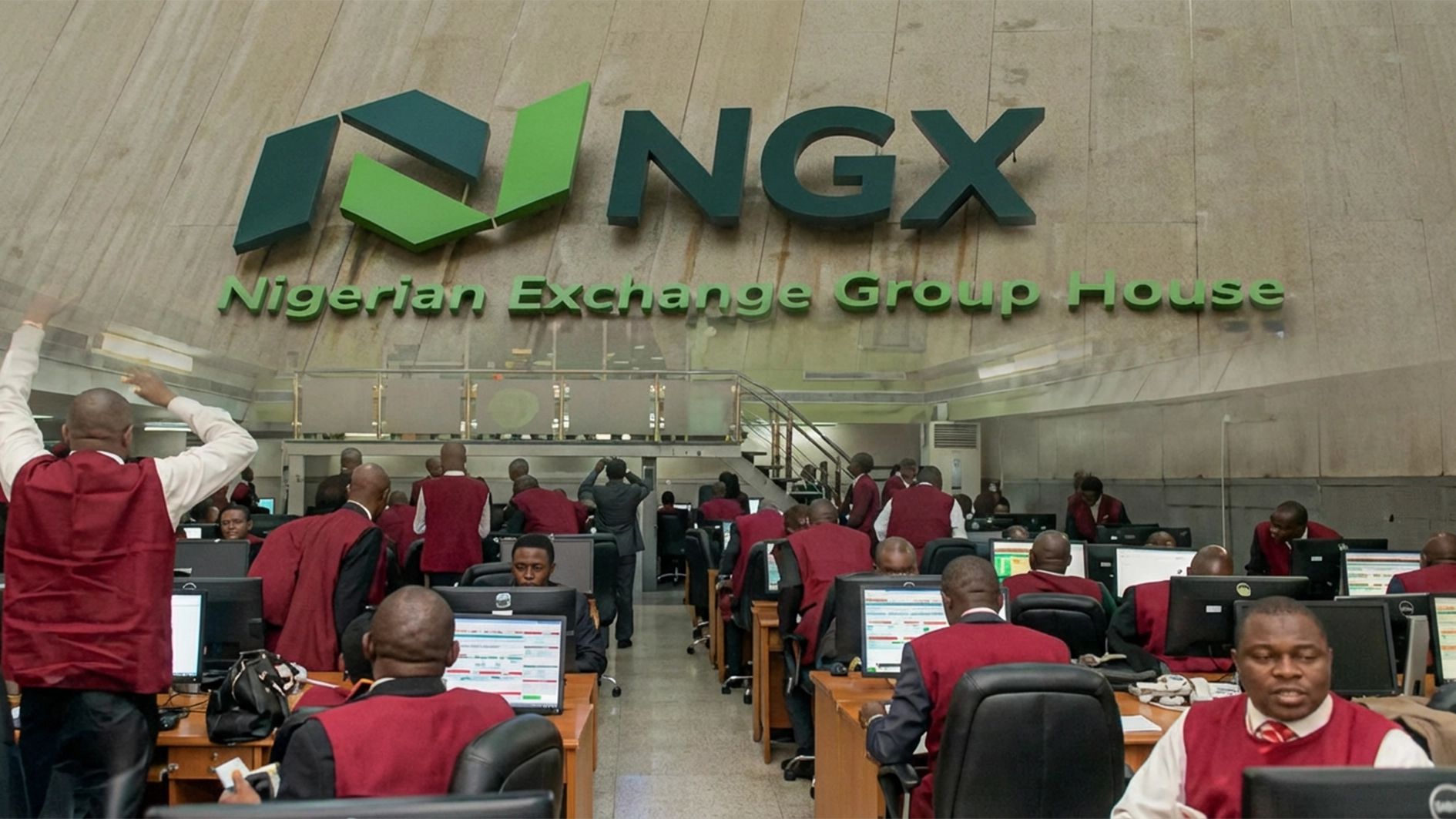
Despite crossing the N100 trillion market capitalisation mark, the Nigerian Exchange Limited (NGX) contributes only about 16 per cent to the gross domestic product (GDP), a disconnect that has continued to unsettle market operators and raise concerns about the depth of the capital market.
Operators over the weekend attributed the weak contribution to the non-listing of some major corporate entities that dominate Nigeria’s local economy.
Despite the presence of several blue-chip multinationals, oil and gas majors, telecom operators and fast-moving consumer goods (FMCG) companies on the exchange, key corporate entities such as NNPC Limited, Eleme Petrochemicals Limited, electricity distribution companies (DisCos) and generation companies (GenCos) are left out.
Despite their sizable revenues, economic significance and nationwide reach, they operate outside the capital market.
With a capitalisation of N106 trillion or a paltry 16 per cent of the GDP and 177 listed firms, they noted, the figures show that the market is extremely shallow when compared with the Johannesburg Stock Exchange (JSE), with a total stock market capitalisation of $1.48 trillion or about 250 per cent of the country’s GDP as of January.
South Africa’s financial services sector alone accounts for around 20 per cent of GDP.

According to the operators, the absence of some major corporations on the bourse significantly shrinks the breadth and depth of the exchange, limiting its ability to fully reflect the huge potential of the local economy.
In the case of the Egyptian Stock Exchange (EGX), its stock market capitalisation currently stands around EGP3 trillion. Like Nigeria, the valuation represents approximately 16.5 per cent of the country’s output.
Also, the Casablanca Stock Exchange (also known as Bourse de Casablanca), Morocco’s main equities market, has a total market capitalisation of about 1.04 trillion Moroccan dirhams (MAD), roughly equivalent to $116 billion.
The figure is close to 50 per cent of its GDP
In the case of Nigeria, the challenge is further compounded by low retail investor participation.
With a population of over 200 million, only a small fraction actively invests in equities.
Persistent issues such as low financial literacy, weak disposable income, inflationary pressures and carried-over distrust have continued to dampen grassroots participation.
Trading activity is currently heavily skewed in favour of institutional and foreign investors, constraining broad-based market growth.
Managing Director and Chief Executive Officer of Arthur Stevens Asset Management Limited, Olatunde Amolegbe, said expanding Nigeria would require deliberate policies to incentivise large private and state-linked enterprises to list, alongside sustained efforts to grow confidence and deepen retail participation.
He pointed out that major companies in the upstream oil and gas sector are not listed on the exchange, while the DisCos and GenCos are still privately owned.
Amolegbe argued that in most developed economies, companies are effectively captured in the financial system such that there is transparency, accountability and broader economic inclusion even when such companies are not publicly quoted.
He said there is an urgent need for the government to introduce policies that would compel companies operating in Nigeria to list on the exchange after a definite period of operation.
An independent investor, Amaechi Egbo, said that the market capitalisation figure, though impressive, is inflated by price appreciation in a narrow concentration of large-cap stocks rather than by a wide expansion in listings or active participation.
According to him, the concentration means gains in market value do not translate proportionately into real economic impact or GDP contribution.
He argued that this imbalance limits the capital market’s ability to serve as the barometer of economic growth, stressing that increases in market value under such conditions do not translate proportionately into wider economic activity, job creation or stronger GDP growth.

