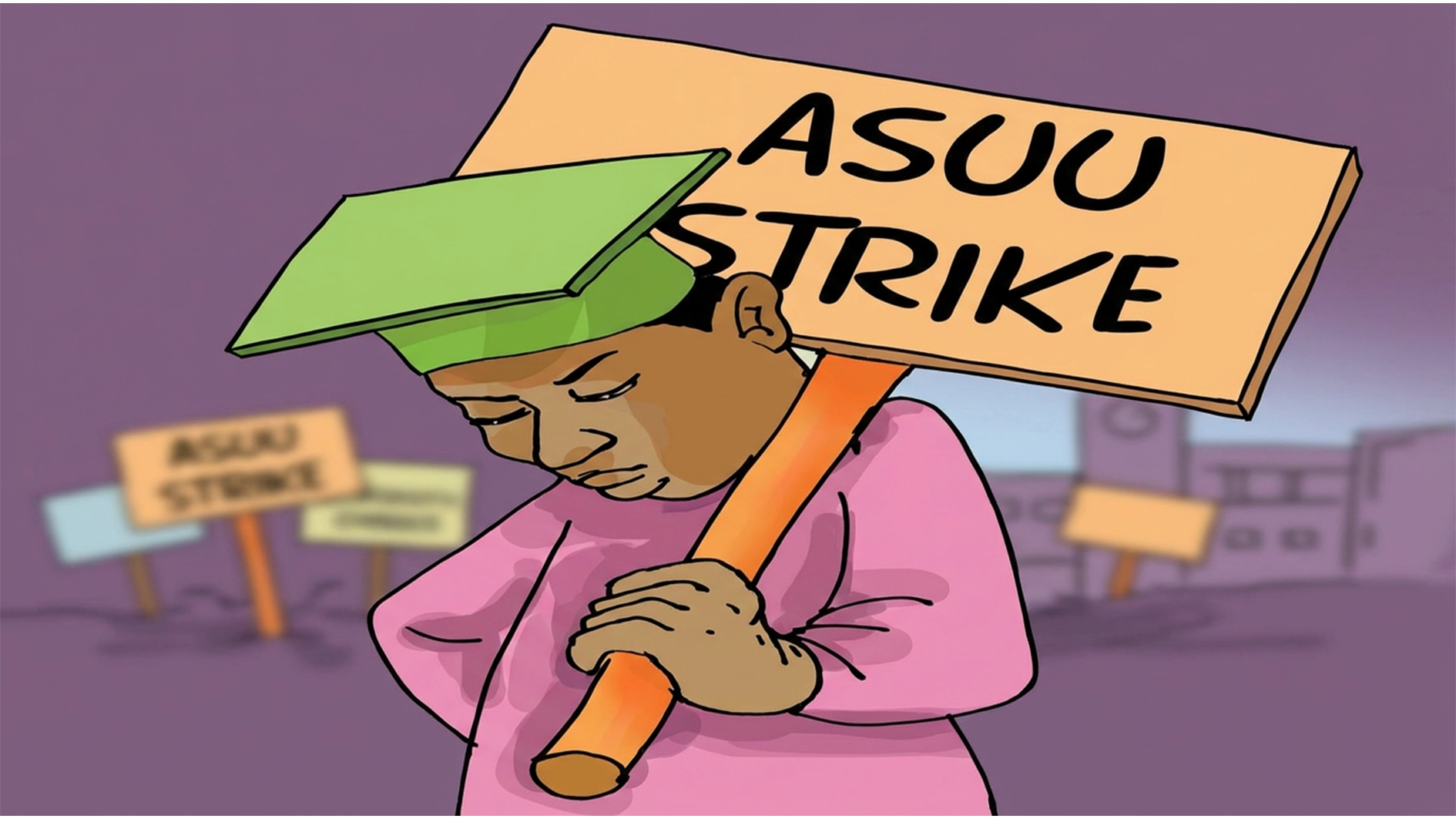
Nigerian students, parents and scholars lamenting the 16-year industrial crisis that has rocked the country’s university system over the 2009 agreement between the Federal Government and the Academic Staff Union of Universities (ASUU) may soon have a sigh of relief, as ASUU has accepted government’s proposed 40 per cent pay increase for academic staff, The Guardian reports.
The union announced that it formally reached a fresh agreement with the Federal Government on December 23, 2025, noting that the development brings to an end the renegotiation of the 2009 FGN–ASUU Agreement.
Under the new agreement, Professors are to earn pension equivalent to their annual salary at retirement age of 70, while the proposed National Research Council (NRC) to fund research with at least 1% of Nigeria’s Gross Domestic Product (GDP).
The Agreement, which takes effect from January 1, 2026, will be reviewed after three years.
This was announced on the union’s official Facebook handle on Wednesday.
Other key highlights of the agreement are better university funding model with dedicated allocations for research, libraries, labs, equipment, and staff development; stronger university autonomy and academic freedom; elected academic leadership (Deans/Provosts), with only professors eligible.
It also noted that there would be no victimisation of anyone involved in the struggle.
“ASUU leadership has called on the government to implement the agreement without delay and extend negotiations to other university unions to ensure stability in the system”, the union noted.
The Guardian reports that the 2009 FGN–ASUU Agreement has remained a persistent source of disagreement between the Federal Government and the Academic Staff Union of Universities, shaping industrial relations in Nigeria’s university system for more than a decade.
The agreement, originally intended to address critical issues in the sector, has repeatedly resurfaced as a focal point of disputes due to challenges surrounding its full implementation.b
Central to the contention have been concerns over lecturers’ welfare, including salaries, allowances and conditions of service, as well as the broader question of adequate funding for public universities.
ASUU has consistently argued that successive administrations failed to honour key provisions of the agreement, leading to deteriorating infrastructure, overcrowded classrooms and declining academic standards across many institutions.
The unresolved issues embedded in the 2009 agreement have also contributed to frequent strikes and disruptions to the academic calendar, affecting millions of students and their families.