 Follow Us on Google News


 Follow Us on Google Discover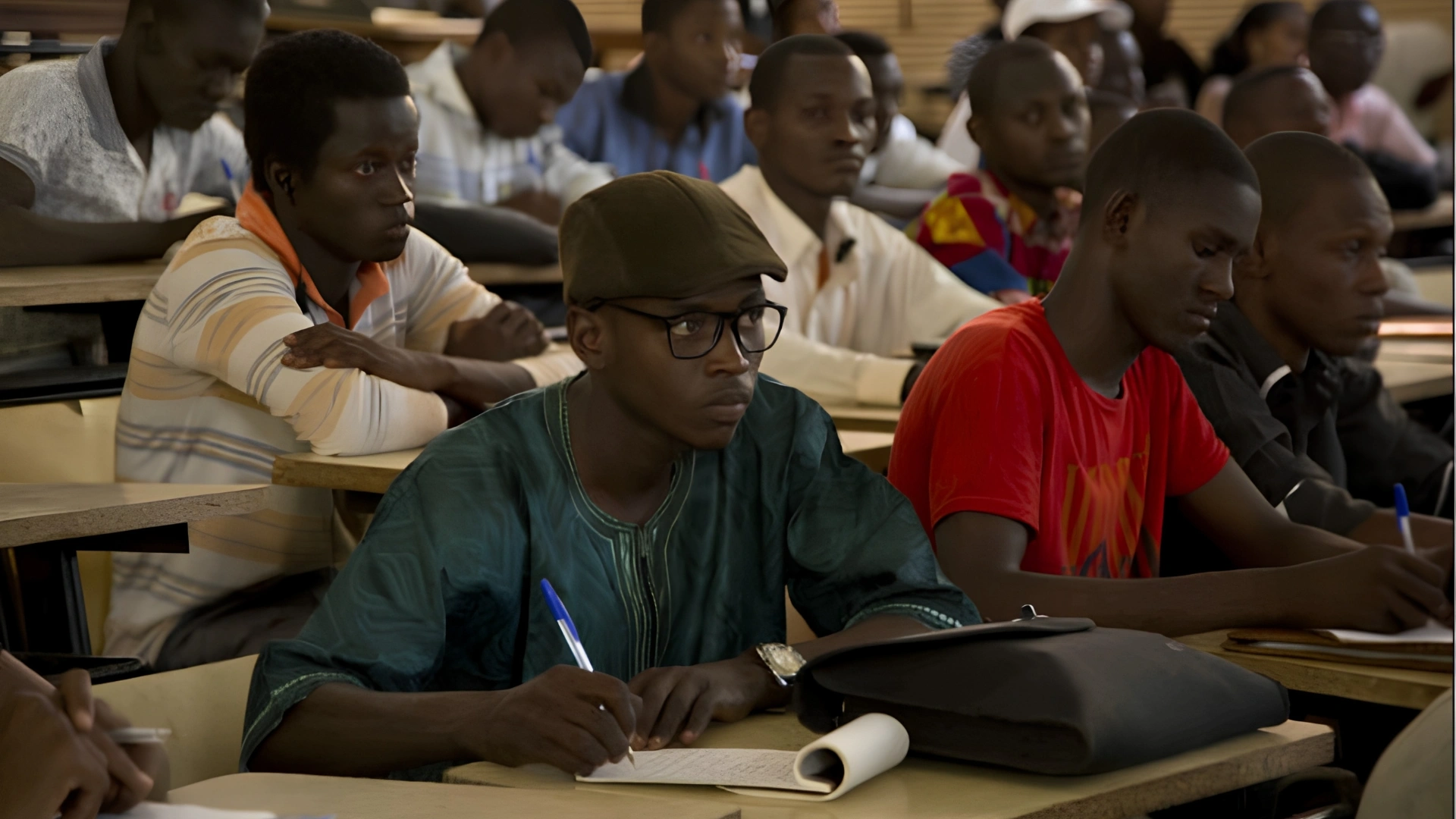
For the past decade, the competition for influence in Africa has shifted toward a less visible battlefield than infrastructure or military bases: the training of elites. China has been expanding its network of Confucius Institutes. France continues to champion its grandes écoles and Campus France.
And the Gulf States, long absent from this game, are rapidly catching up, deploying resources and a speed of execution their predecessors did not always have. According to Brand Finance’s Global Soft Power Index, an annual ranking that evaluates the international influence of 193 countries among 173,000 global decision makers and experts, the United Arab Emirates has ranked among the world’s top 10 since 2023 and remained there in 2025.
Over the same period, Saudi Arabia climbed from 26th to 20th place and Qatar from 31st to 22nd. This rise rests, among other levers, on growing investment in international education, including initiatives directed at the African continent.
A University Ecosystem Built for the World
Abu Dhabi has built an ambitious apparatus. New York University Abu Dhabi has an admission rate of roughly 4% and hosts more than 1,800 students from 120 countries, with a recruitment team that includes a unit dedicated to Africa. The Mohamed bin Zayed University of Artificial Intelligence (MBZUAI), founded in 2019 in Masdar City, goes further still: its 700 students and alumni from 49 nations all receive full scholarships, part of a broader strategy to position the UAE as a global AI hub.
What distinguishes the Emirati model is its grounding in the logic of reciprocity: students are trained to global standards, with the option of later joining the African subsidiaries of Emirati companies operating on their own continent, from DP World to Masdar, rather than being absorbed into a foreign economy.
Qatar has developed a comparable approach through Education City, its flagship campus in Doha. Qatar Foundation has committed $1.2 billion annually to university partnerships there, hosting branch campuses of Carnegie Mellon, Georgetown, and Northwestern, among others. In 2024, the Qatar-Morocco program highlighted Moroccan students at Education City as an emblematic case of outreach toward the African continent. Saudi Arabia, for its part, has significantly expanded its international scholarship programs: in the 2025 cycle, King Saud University received more than 30,000 applications for roughly 2,500 funded places, explicitly targeting Africa, the Arab world, and Asia.
Africa, a Priority Testing Ground
For African states with limited human resources, the offer is hard to turn down. The President of the Seychelles put it bluntly: his country preferred to rely on the UAE to train its future AI specialists, citing strong bilateral relations and local demographic constraints. In November 2025, Nigeria’s Ministry of Youth signed an MoU with the UAE Digital School, an initiative of the Mohammed bin Rashid Al Maktoum Foundation, to roll out digital training for Nigerian youth through the Nigerian Youth Academy.
In a country of more than 200 million people, the signal is unmistakable. Recognition of African talent also flows through other channels. The Zayed Sustainability Prize, worth $5.9 million and awarded each year by the President of the UAE during Abu Dhabi Sustainability Week, reserves a category for sub-Saharan Africa within its high schools category. In 2025, Ghana’s Sakafia Islamic Senior High School won for an aquaponics project aimed at tackling food insecurity. That year, three of the eleven global winners were African, a signal the UAE is sending deliberately: African innovation deserves recognition, not just training.
According to a study published in the Journal of International Cooperation in Education, Saudi Arabia ranks among the leading destinations for mobile African students, alongside France, China, and the United States, with Nigeria, Cameroon, Kenya, and Ghana among the most represented countries. Qatar Foundation, through its Al Fakhoora program, had awarded 11,634 higher-education scholarships by the end of 2025, targeting in particular vulnerable communities, including refugees and internally displaced people, a positioning distinct from Abu Dhabi’s more selective approach.
A Model Still Taking Shape
These initiatives sit within a broader economic context. The UAE invested $110 billion in Africa between 2019 and 2024, building established positions in port logistics, finance, and renewable energy. The coherence of the Emirati model lies in this connection: training African professionals who can then contribute to their own countries’ development, including within the Emirati companies operating there. It is less a brain drain than a transfer of skills.
What the Gulf States have understood, and what other players are still slow to grasp, is that lasting influence is not built through infrastructure or military bases alone. It also runs through campuses, scholarships, and prizes awarded to high schoolers in Kumasi or Lagos. France has known this for a long time. The Gulf, for its part, is turning it into a strategy of its own.

