 Follow Us on Google News


 Follow Us on Google Discover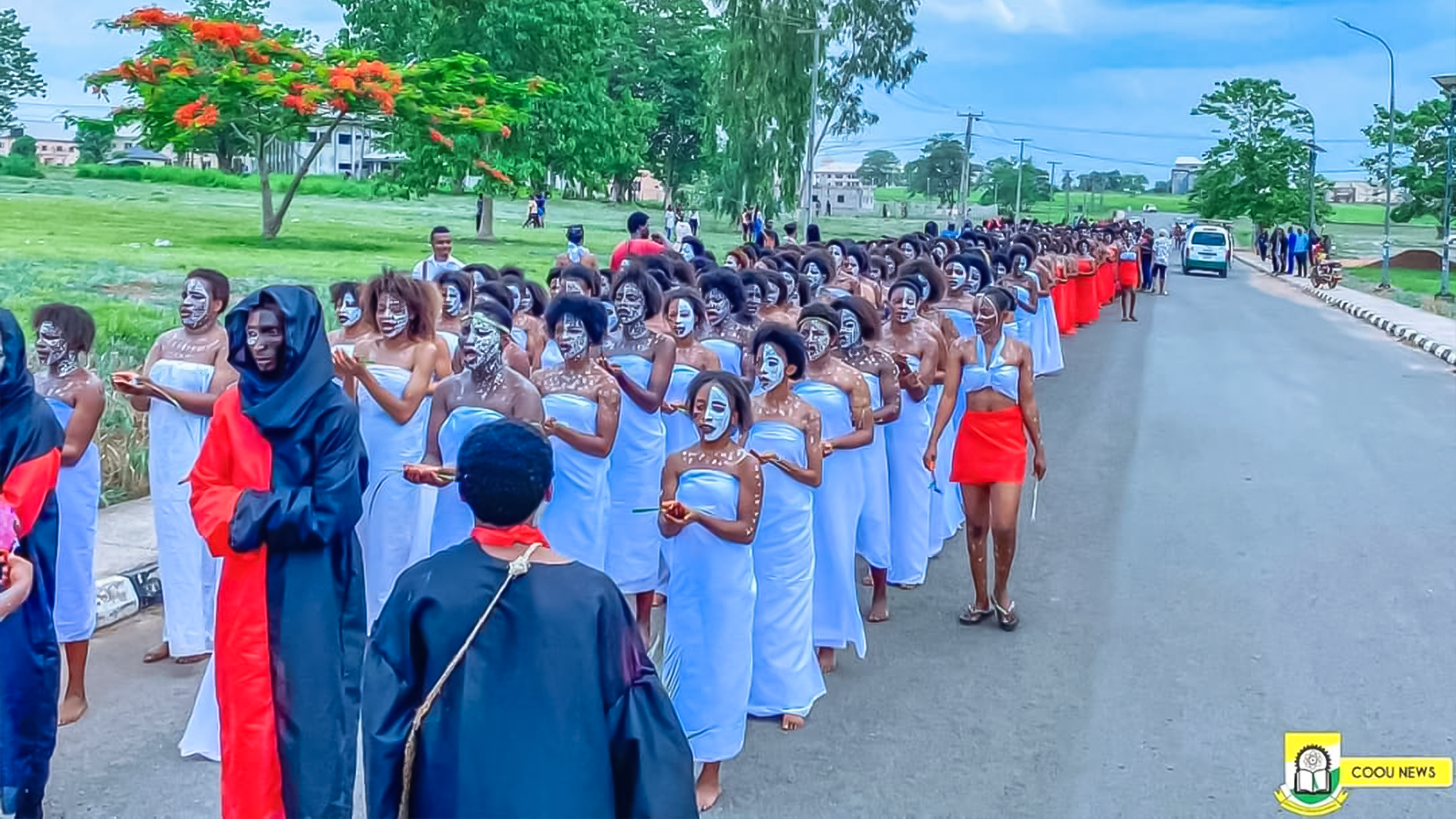
It’s a significant milestone for the new students accepted into the Theatre and Film Studies program at the University of Nigeria, Nsukka. The atmosphere is charged with anticipation as preparations for the induction ceremony reach their peak. Freshers, adorned in vibrant costumes that reflect their individuality, gather amidst the fragrant scent of makeup and the sparkle of small props catching the sunlight.
As they come together, the inductor’s authoritative yet encouraging voice resonates through the crowd, inviting them into a world filled with creativity and imagination. This initiation serves as a reminder of the commitment required for each performance. In a spirited response, the students unite in a lively chant, their voices harmonizing with the rhythm of joyful dance.
A ceremonial pot releases aromatic smoke, enriching the atmosphere of tradition and celebration as students march in unison around the campus. This ritualistic procession is steeped in significance, symbolizing their entry into a rich and vibrant artistic community.
The tradition of theatre induction ceremonies in Nigerian universities gained momentum during the 1970s to the 1990s, establishing a structured way to welcome new students. Pioneering institutions like the University of Ibadan, the University of Nigeria, Ahmadu Bello University, and the University of Calabar played crucial roles in spreading this practice to other universities. As theatre departments developed, student associations began to organise informal initiation activities.
These early ceremonies were often modest, yet impactful, incorporating dramatic performances, symbolic costumes, chants, and processions, fostering solidarity among theatre students and affirming the presence of theatre culture within university settings.
These ceremonies transcend mere campus celebrations; they embody transformation, creativity, discipline, and a sense of belonging. By inducting students into the artistic community through ritualized performance, Nigerian universities uphold a uniquely African philosophy of theatre education that regards performance as an essential aspect of life.

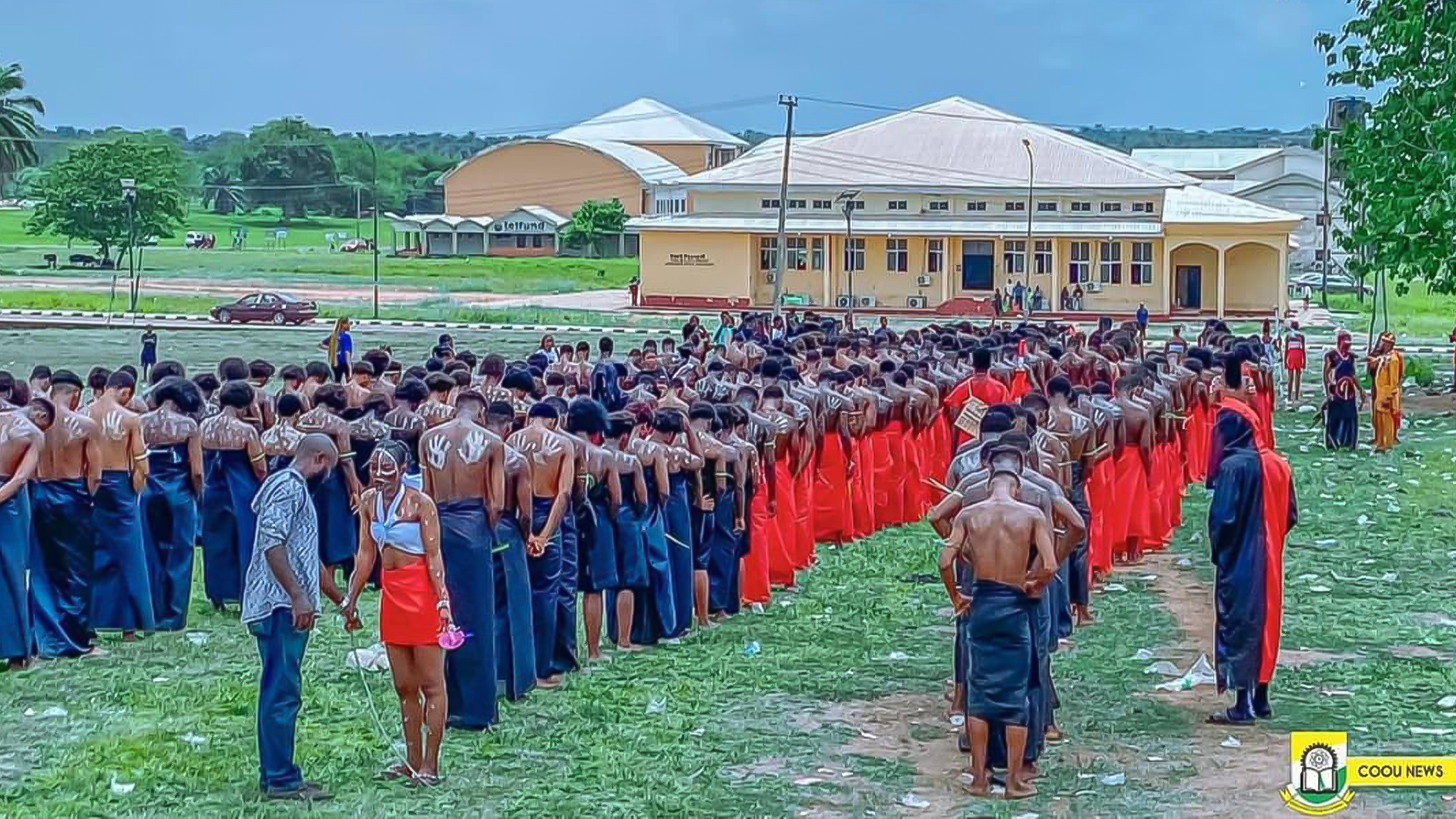
Despite their widespread acceptance, theatre induction ceremonies have faced some critique. Certain ritualistic elements have raised concerns, particularly when they echo indigenous religious practices. Critics have sometimes labeled these ceremonies as overly elaborate or even cult-like. Yet, scholars advocate for a deeper understanding of African ritual aesthetics and theatre pedagogy, emphasizing the value of these traditions.
Reflecting on this, seasoned film critic and actor Kelvin Udochukwu shared his perspective, suggesting that the excitement of joining a department that aligns with one’s passion eclipses any negative interpretations of the rituals. He views the induction as a vital component of theatre training, instilling the spirit of performance in new students who may initially be unaware of the course’s depth.
Kelvin further emphasized the cultural significance of these inductions, noting that the dynamics vary based on the university’s locale. “During my time at the University of Nigeria Nsukka, the costumes and chants reflected the rich Igbo culture. Had the university been located in the north or west, the expressions would resonate with the local culture. Induction serves as a cultural enlightenment exercise, igniting passion in each inductee.”
Dr. Ikechukwu Erojikwe, a senior lecturer in the Department of Theatre and Film Studies at the University of Nigeria Nsukka and a dedicated cultural researcher, described inductions as a profound exploration of theatre’s foundational truths. He conveyed that the essence of performance lies in its embellishments:
“We are midwives of the soul, the doctors of the mind. New students must recognize the significant responsibilities they are about to embrace. Our role is to connect individuals’ consciences to societal realities. Theatre transcends mere entertainment; it serves as a vessel for important teachings, akin to a worship leader preparing minds to receive deeper truths.”
Dr. Erojikwe remarked that students with a research orientation will approach theatre performance with critical insight, while those with a non-critical mindset might misinterpret it as “diabolical and fetish.” In the university environment, which fosters critical thinking, it becomes crucial to engage with and appreciate the multifaceted nature of performance art.

