 Follow Us on Google News


 Follow Us on Google Discover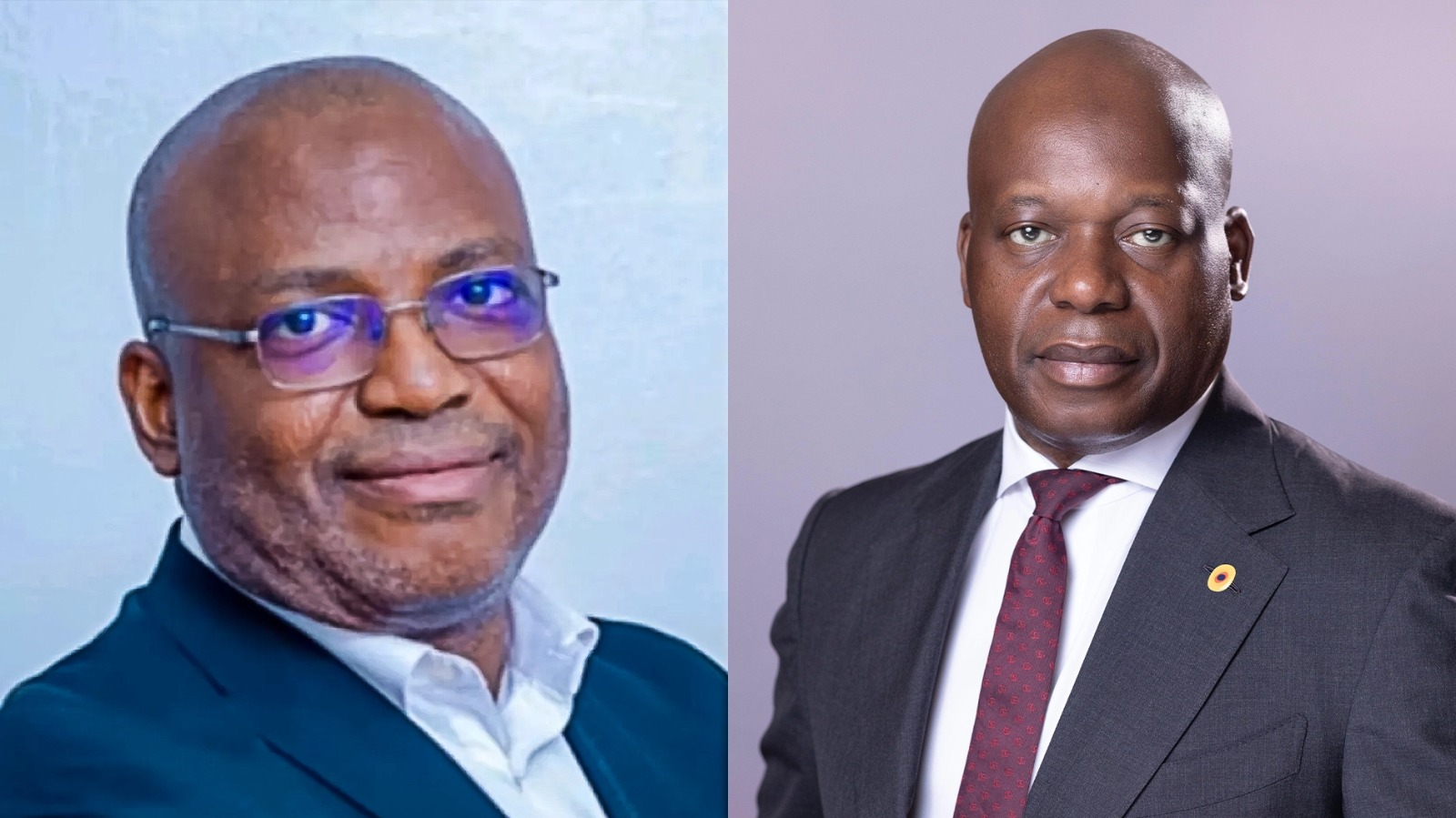
Africa’s energy future will not be shaped by resources alone. It will be shaped by the companies willing to invest, the leaders prepared to take risks, the technologies that improve production, the capital that backs African ambition and the local talent that sustains long-term growth.
At African Energy Week 2026, scheduled to take place from October 12 to 16 in Cape Town, South Africa, Nigeria’s role in that future will be strongly represented by two major industry figures: Wale Tinubu, Group Chief Executive Officer of Oando PLC, and Dr. Nosa Omorodion, Country Director for Nigeria at SLB.
Tinubu has been confirmed as a speaker at AEW 2026, bringing one of Africa’s most prominent indigenous energy executives to the continent’s premier energy investment platform. Omorodion, meanwhile, will receive the AEW 2026 Lifetime Achievement Award in recognition of more than three decades of contribution to Africa’s upstream oil and gas industry through technology deployment, local content development, workforce training and production optimisation.
Together, their participation reflects a larger story: Nigeria is no longer only a source of oil and gas reserves. It is increasingly a source of African energy leadership, indigenous operatorship, technical capability and human capital.
AEW 2026 will bring together government leaders, operators, financiers, regulators, service companies, technology providers and investors to advance project development across Africa’s oil, gas, power and wider energy sectors. For Nigeria, the gathering comes at a defining moment.
Indigenous companies are expanding their asset base, technology providers are deepening local capability, and the search for African capital is becoming more urgent as global financing for hydrocarbon projects becomes more selective.

That makes the presence of Tinubu and the recognition of Omorodion especially significant.
Oando and the New Scale of African Indigenous Operatorship
Wale Tinubu’s participation at AEW 2026 comes as Oando enters one of the most ambitious expansion phases by an African-owned energy company in recent years.
Following its 2024 acquisition of Nigerian Agip Oil Company’s onshore assets, Oando significantly expanded its producing portfolio and strengthened its position as one of Nigeria’s largest indigenous upstream operators. The transaction marked more than a corporate milestone.
It reflected the growing transfer of operational responsibility in Nigeria’s upstream sector to indigenous companies with the capacity, ambition and local knowledge to manage complex assets.
Oando is now seeking to raise up to $750 million for a 100-well drilling programme, a campaign that could significantly increase the company’s production profile. If successfully executed, the programme could raise Oando’s output by as much as 300%, positioning the company as one of the most aggressive growth stories in Africa’s upstream market.
The drilling campaign forms part of a wider strategy to deepen production across the company’s Nigerian assets while expanding its regional presence.
Through Oando Energy Resources, the company holds interests in more than 14 oil and gas licences across Nigeria and São Tomé and Príncipe, with more than 22,400 square kilometres of gross acreage. Its asset base is supported by a pipeline network of 1,255 kilometres, 14 flow stations and gas processing capacity exceeding 3.6 billion standard cubic feet per day.
This scale gives Tinubu’s AEW 2026 participation wider significance. He is not merely attending as the head of a Nigerian company. He is expected to bring to the AEW stage the perspective of an African operator seeking to mobilise capital, execute large-scale drilling, expand production and demonstrate that indigenous companies can compete at continental level.
Oando’s regional ambition is also becoming clearer. In March 2026, the company signed a Production Sharing Contract for Block KON-13 in Angola’s onshore Kwanza Basin, a move that signals its intention to take Nigerian operating experience into wider African markets. The block has estimated prospective resources of between 770 million and 1.1 billion barrels, aligning with Oando’s broader strategy to diversify beyond Nigeria and build a more regional African energy portfolio.
At AEW 2026, Tinubu is expected to speak to the strategic priorities shaping Oando’s next phase of growth, including upstream investment, regional expansion, African-owned capital and the future of indigenous operatorship. His presence will also add weight to one of the most important conversations in African energy today: how the continent can finance its own development in an era when many international banks are reducing exposure to hydrocarbon projects.
The case for African pension funds, sovereign wealth institutions, local banks and development finance institutions to play a deeper role in energy project funding is no longer theoretical. It is becoming a commercial necessity.
“Wale Tinubu is exactly the kind of voice AEW 2026 needs on its stage,” said NJ Ayuk, Executive Chairman of the African Energy Chamber.
“He has built an African energy giant from the ground up, navigated every cycle this industry has thrown at him, and he is still pushing the frontier. His message on African capital, African ownership and African ambition is one every investor, minister and operator at AEW needs to hear.”
Nosa Omorodion and the Technology Foundation of Africa’s Energy Future
While Tinubu’s participation highlights the expansion of African-owned operatorship, Dr. Nosa Omorodion’s Lifetime Achievement Award underscores another essential pillar of the continent’s energy future: technology, skills and local capacity.
A geoscientist with more than 30 years of industry experience, Omorodion has held several senior leadership roles within SLB, including Director for Nigerian Independents and General Manager for Local Content across Nigeria and the Gulf of Guinea. As Country Director for Nigeria, he has played a central role in strengthening domestic capability across the energy value chain while enabling operators to deploy advanced technologies and improve operational performance.
His recognition at AEW 2026 is therefore not only a personal honour. It is a statement about the importance of the technical ecosystem that supports Africa’s upstream industry.
Oil and gas growth does not depend only on licences, reserves and capital. It also depends on geoscience, drilling performance, well construction, production optimisation, digital tools, operational efficiency and trained professionals who can sustain complex energy systems. Omorodion’s career has been defined by this intersection of technology and people.
Under his leadership, SLB has expanded initiatives aimed at building Nigeria’s long-term energy workforce. These include structured training and early-career development programmes such as the SLB Technology Graduate Trainee Program, which provides Nigerian graduates with hands-on technical training and industry placement. The SLB Young Creators Program has also supported STEM education by encouraging students to apply innovation and problem-solving skills to real-world energy challenges.
Omorodion also oversaw the launch of Nigeria’s first AI Academy, an initiative designed to strengthen digital and data science capabilities among young professionals and reinforce the country’s transition toward a more technology-driven energy industry.
These initiatives are central to the future of African energy. As the sector becomes more digital, data-led and efficiency-driven, countries that fail to develop technical capacity will struggle to capture long-term value from their resources. For Nigeria and the wider continent, technology transfer must move beyond rhetoric. It must be matched with training, institutional depth and a workforce capable of applying advanced solutions in local operating environments.
Omorodion’s contribution also extends into wider professional leadership. He is a Fellow and former President of the Nigerian Association of Petroleum Explorationists and serves on the organisation’s Board of Trustees. He remains actively engaged with the Society of Petroleum Engineers Nigeria Council, contributing to broader professional development and industry capacity building.
At the operational level, SLB has continued to support Nigeria’s upstream sector through advanced technologies across drilling, well construction and production optimisation.
These solutions help operators improve recovery from mature fields, enhance efficiency and maximise output from new developments. Omorodion has consistently emphasised the need to align technology deployment with local capability development, ensuring that innovation is supported by the skills required to sustain it.
His development focus has also reached beyond the oil and gas industry. Under his direction, SLB partnered with the ONE Campaign to install solar power systems across ten healthcare facilities in Lagos, Delta, Imo and Rivers states. The initiative improved access to reliable electricity, reduced dependence on diesel generation and strengthened healthcare delivery in underserved communities.
“Dr. Nosa Omorodion has made an enduring contribution to Africa’s energy industry through a consistent focus on innovation, local capacity development and workforce empowerment,” said NJ Ayuk.
“Leadership across SLB Nigeria has helped strengthen the country’s talent pipeline, advance technology deployment and reinforce the long-term foundations of Africa’s energy future. The African Energy Chamber is proud to recognise these achievements with the Lifetime Achievement Award at AEW 2026.”
Nigeria’s Broader Message at AEW 2026
The presence of Tinubu and the recognition of Omorodion point to a broader Nigerian message at AEW 2026.
Nigeria’s energy future will be determined not only by the assets it holds, but by the quality of the institutions, companies, technologies and people it builds around those assets.
The country’s upstream industry is undergoing a major shift as indigenous operators assume greater responsibility for production growth. At the same time, technology providers and service companies remain critical to improving output, reducing inefficiency and building the skills required for long-term competitiveness.
This convergence is important for Africa as a whole.
Across the continent, governments are looking for ways to increase production, monetise gas, attract investment, improve energy access and develop local industries. But the old model, in which Africa simply provided reserves while others supplied capital, technology and expertise, is no longer sufficient. The next phase requires African companies that can own and operate assets, African financial institutions that can back projects, and African professionals who can lead technically demanding industries.
That is the deeper significance of AEW 2026.
It is not only a conference for project announcements and investor meetings. It is a platform for defining who will lead Africa’s energy growth, who will finance it, who will operate the assets, who will deploy the technology and who will build the workforce.
Tinubu represents the rise of the African energy company seeking scale beyond national borders. Omorodion represents the technical and human-capital foundation without which such ambition cannot be sustained.
Both stories are deeply connected.
An indigenous operator cannot deliver growth without technology, skills and disciplined execution. A technology leader cannot transform the sector without operators willing to invest, expand and take on complex assets. Africa’s energy future requires both ambition and capability.
African Capital, African Talent and African Ownership
AEW 2026 is taking place at a time when Africa’s energy sector is facing a difficult financing environment. Global climate commitments, energy-transition pressures and changing bank policies have made hydrocarbon financing more complicated. For African producers, this creates both a challenge and an opportunity.
The challenge is clear: major oil and gas projects still require significant capital, and many traditional sources of financing are becoming more cautious. The opportunity is equally clear: Africa must deepen its own financial architecture for energy development.
This is where Tinubu’s expected contribution at AEW 2026 becomes especially relevant. The debate around African pension funds, development finance institutions, banks and private capital is becoming urgent. If African countries want to monetise their resources, improve energy security and industrialise, they cannot depend entirely on external financing systems that may not fully reflect African priorities.
But capital alone is not enough.
Omorodion’s recognition reminds the industry that energy development must also be built on skills. Without engineers, geoscientists, data specialists, technicians, project managers and local service capacity, Africa will continue to lose value across the energy chain.
The combination of African capital, African companies and African talent is therefore central to the continent’s next energy chapter.
A Defining Platform for Africa’s Energy Leaders
AEW 2026 will bring together the actors shaping that chapter. For Nigeria, the participation of Wale Tinubu and the honouring of Dr. Nosa Omorodion will serve as a powerful statement of the country’s influence in Africa’s energy industry.
One is leading an African-owned company through a major upstream expansion and regional growth strategy. The other has spent decades strengthening the technical, technological and human-capital foundations of the sector. Together, they reflect the ambition and capability Africa needs.
Their stories also underline a wider truth: Africa’s energy future will not be delivered by one type of leader alone. It will require entrepreneurs, operators, engineers, financiers, policymakers, regulators, technology experts and workforce builders.
It will require those who can acquire assets and those who can optimise them. Those who can raise capital and those who can train talent. Those who can speak for African ownership and those who can build the systems that make ownership productive.
That is why AEW 2026 matters.
For Nigeria, Tinubu and Omorodion will not only represent individual achievement. They will represent two sides of a larger national and continental story: the rise of African energy leadership at a time when the continent must take greater responsibility for its own development.
Africa’s energy future will be negotiated in Cape Town.
Nigeria will have important voices in the room.

