 Follow Us on Google News
 Follow Us on Google Discover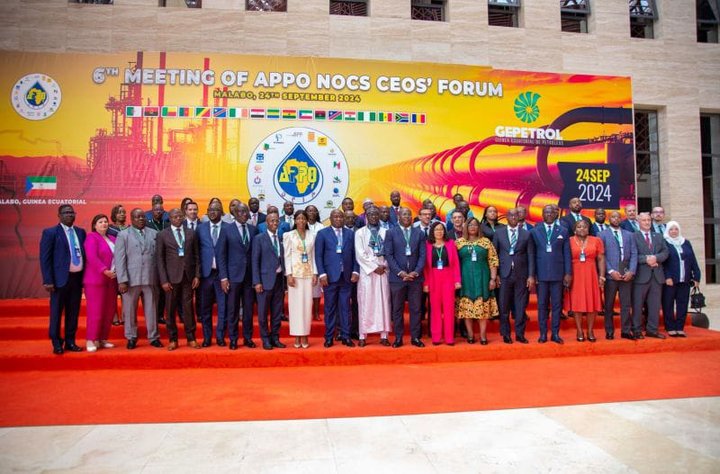
APPO NOC-CEO Forum will bring national oil company leaders together at AEW 2026 to advance African refining, regional gas markets, cross-border trade and continent-backed project financing
Africa’s leading national oil companies will meet in Cape Town in October to advance an ambitious plan to process more of the continent’s petroleum resources locally, finance strategic projects with African capital and build an integrated regional energy market.
The eighth African Petroleum Producers’ Organization NOC-CEO Forum will take place on October 12 alongside African Energy Week 2026, bringing together chief executives from national oil companies across the continent.
Hosted by the South African National Petroleum Company, the high-level meeting will focus on regional refining, petroleum-product trading, gas monetisation, shared infrastructure, regulatory harmonisation and the mobilisation of African capital for energy projects.
The central question facing the executives will be how Africa can retain a greater share of the economic value generated by the oil and gas it produces.
For decades, many African petroleum-producing countries have exported crude oil while importing expensive refined products, losing potential industrial activity, foreign exchange, employment and technical expertise in the process. The Cape Town meeting will seek to move the continent from fragmented national operations towards coordinated investments across the energy value chain.
Organisers said the forum would be structured around identifying projects, establishing commercial partnerships and agreeing practical initiatives that member national oil companies can implement over the coming year.
The meeting is expected to conclude with resolutions, a delivery roadmap and key performance indicators for 2027, reinforcing its intended role as an execution platform rather than another arena for broad policy declarations.
APPO shifts towards commercial integration
The forum comes as APPO seeks to transform itself from a predominantly intergovernmental policy-coordination organisation into a more commercially focused energy alliance.
Established in 1987, APPO has historically provided a platform for petroleum-producing African countries to coordinate policy and defend common interests. Under Secretary General Farid Ghezali, however, the organisation is placing greater emphasis on investment mobilisation, local content, regional infrastructure and practical cooperation among national oil companies.
Ghezali has identified the operationalisation of the Africa Energy Bank, capacity development, stronger South-South cooperation and greater African influence in global energy discussions as central priorities for the organisation.
APPO has presented the bank as an instrument for financing African energy priorities at a time when several international financial institutions are restricting or withdrawing support for new hydrocarbon developments. The proposed institution has an initial capitalisation target of $5 billion.
The shift is particularly significant for African national oil companies, many of which hold valuable reserves and infrastructure portfolios but face limited access to affordable long-term capital.
At the Cape Town forum, executives will examine how the Africa Energy Bank, working alongside the African Export-Import Bank and other financial institutions, can support upstream production, pipelines, gas-processing facilities, refineries, storage terminals and petrochemical projects.
They are also expected to identify bankable projects for 2027 and explore financing structures that distribute risk among governments, national oil companies, private investors and regional institutions.
Refining African crude at home
Expanding domestic and regional refining capacity will be one of the most important items on the agenda.
Delegates will consider proposals for refining and petrochemical hubs capable of processing crude oil closer to producing markets. Such facilities could reduce Africa’s dependence on imported petroleum products while creating industrial opportunities in refining, plastics, fertilisers, chemicals, logistics and manufacturing.
The approach reflects a growing recognition that producing crude oil does not automatically translate into energy security.
Several African countries remain exposed to international supply disruptions, volatile shipping costs and foreign-exchange pressures because they lack sufficient refining, storage and distribution infrastructure. Regional processing hubs could allow countries to pool crude supply, infrastructure and demand rather than attempting to develop isolated national facilities.
The previous APPO NOC-CEO Forum, hosted by the Ghana National Petroleum Corporation in Accra in September 2025, highlighted the importance of this agenda.
Executives attending that meeting visited the 40,000-barrel-per-day Sentuo Oil Refinery, underlining the role of domestic refining and value addition in reducing fuel-import dependence.
The Cape Town forum is expected to build on that momentum by examining which refining and petrochemical projects could be developed jointly by national oil companies rather than by individual countries acting alone.
Building an African petroleum market
Alongside refining, APPO is advancing plans for a more integrated African petroleum-products market.
The forum will discuss a proposed exchange platform that could connect producers, refiners, marketers and buyers across member countries. Executives will also consider harmonising fuel specifications, simplifying cross-border transactions and reducing regulatory barriers that make it difficult for African countries to trade petroleum products with one another.
Differences in product standards, customs procedures, taxation and transportation rules currently complicate regional energy trade. Greater alignment could allow fuels produced in one African market to be sold more easily in another, improving supply security and strengthening the commercial case for regional refining investments.
The initiative forms part of APPO’s broader attempt to replace disconnected national markets with a regional value chain in which African crude, capital, technology and technical expertise circulate more efficiently across the continent.
Gas moves to the centre of strategy
Natural gas will also feature prominently in the discussions as African governments seek reliable energy for electricity generation, industrial development and household consumption.
National oil company executives are expected to consider regional LNG cooperation, long-term gas-supply agreements, gas-to-power investments, LPG distribution and projects designed to reduce routine flaring.
Africa holds substantial gas resources, but many discoveries remain undeveloped because of inadequate pipelines, processing infrastructure, domestic markets and financing.
Regional cooperation could make smaller gas fields commercially viable by aggregating demand across several countries. It could also support electricity generation, manufacturing, fertiliser production and cleaner cooking initiatives.
Rather than treating gas solely as an export commodity, APPO’s strategy increasingly positions it as a foundation for African industrialisation and improved energy access.
NOC chiefs converge on Cape Town
The scheduled participants represent some of Africa’s largest and most strategically important petroleum-producing countries.
They include Sonatrach CEO Nour Eddine Daoudi; Sonangol Chairman and CEO Sebastião Gaspar Martins; SNH-Benin President and CEO Issifou Moussa Yari; SNH-Cameroon CEO Adolphe Moudiki; SONAHYDROC Managing Director Augustin Nkuba Kasanza; SNPC Director General Maixent Raoul Ominga; Petroci CEO Fatoumata Mbalou Sanogo; EGPC CEO Salah El-Din A/Kareem; and GEPetrol CEO Bienvenido Nguema Envo.
Other expected participants include GOC CEO Marcellin Simba Ngabi; GNPC CEO Kwame Ntow Amoah; Libya National Oil Corporation CEO Masoud Suleman Mousa Mahmoud; Namcor Managing Director Victoria Sibeya; Sonidep Director General Colonel Ali Seibou Hassane; NNPC Group CEO Bashir Bayo Ojulari; Petrosen CEO Alioune Guèye; SANPC CEO Godfrey Moagi; and SHT Director General Djalila Abdourahim.
Their participation gives the forum the institutional authority needed to move beyond general declarations and towards joint investments, shared infrastructure and formal cooperation agreements.
Executives will review existing partnerships among member companies and identify new opportunities for joint ventures, technical collaboration, procurement, training and research.
Digital platforms intended to connect suppliers, investors, research institutions and training organisations across APPO countries will also be considered. The proposed tools will cover supplier certification, procurement opportunities, project financing, technical research, business intelligence and professional development.
The objective is to make it easier for African companies and professionals to participate in projects undertaken by national oil companies across the continent.
From sovereignty to execution
Discussions will extend beyond commercial expansion to include methane reduction, carbon capture, asset integrity, petroleum regulation and APPO’s revised Long-Term Strategy for Sustainable and Inclusive African Energy Sovereignty by 2050.
The inclusion of these issues reflects the growing pressure on African producers to expand energy supply while meeting increasingly demanding environmental, technical and governance standards.
But the defining measure of the forum will be whether the continent’s national oil companies can translate shared ambition into executable projects.
Africa possesses the resources, growing markets and institutional capacity needed to develop a more integrated energy economy. What it has frequently lacked is coordination across borders, financing mechanisms suited to its development priorities and a sustained commitment to implementation.
By placing national oil company chief executives, financiers and policymakers in the same room, the APPO forum aims to narrow that gap.
As Africa seeks to finance more of its own infrastructure, refine more of its own crude and trade more energy within the continent, the October meeting could become a significant test of whether energy sovereignty can be converted from a political aspiration into a commercially viable African project.

