 Follow Us on Google News


 Follow Us on Google Discover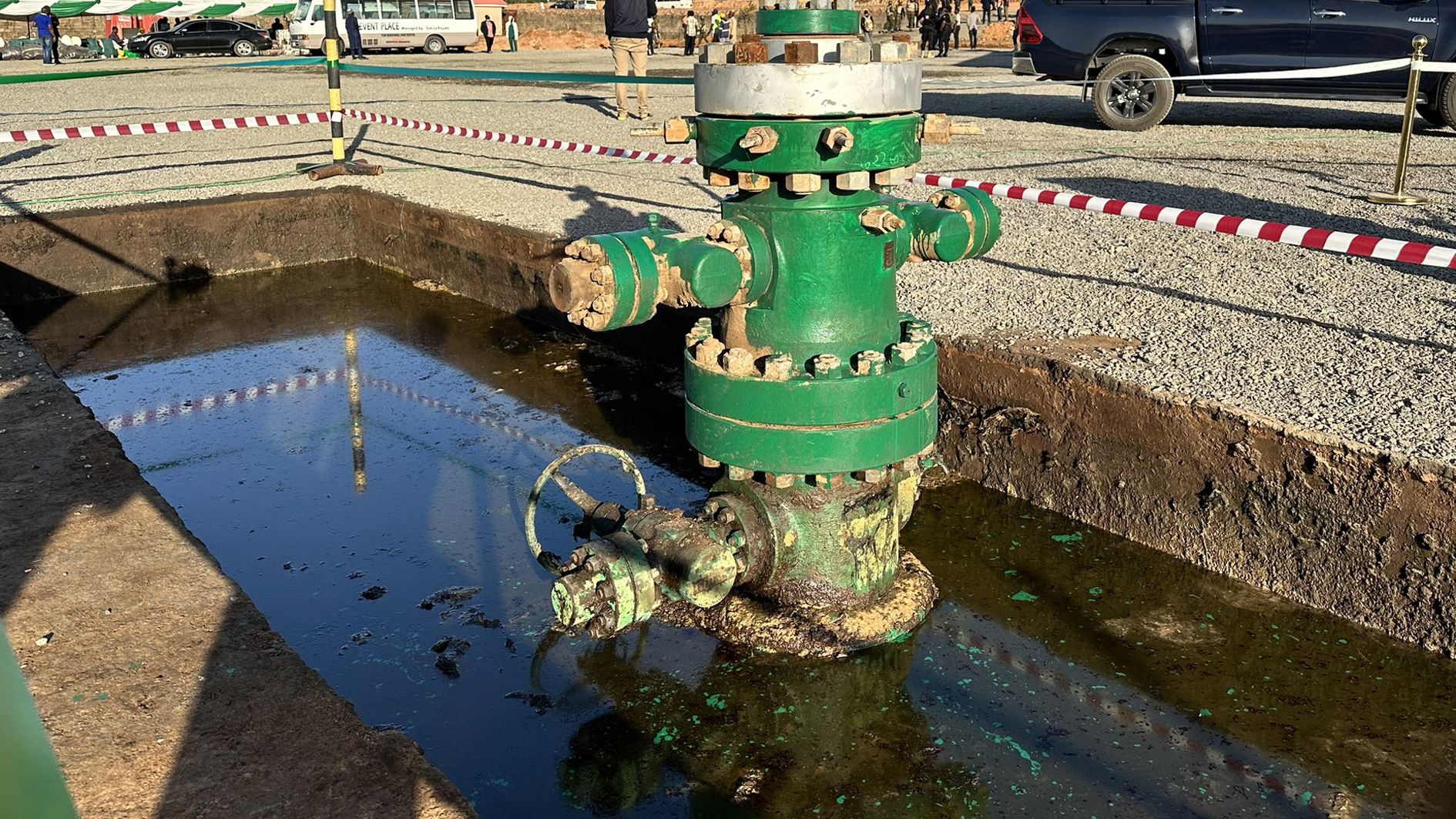
• 13 blocks in Chad Basin, Benue, Niger Delta fail to attract investors
• Stakeholders raise concerns over poor seismic data, undersized oil blocks
• NNPC mum over proposed refinery, fertiliser plants in Gongola Basin
The dream that a private sector-led oil exploration drive will return to northern Nigeria and other frontier basins where taxpayers’ money has been invested in recent years suffered a major setback yesterday after investors outrightly refused to bid for oil blocks in most inland basins.
This is coming four years after the Nigerian National Petroleum Company Limited (NNPC) led former President Muhammadu Buhari to Kolmani, announcing a one billion-barrel oil discovery, 500 billion standard cubic feet of gas, a proposed $3 billion investment, a refinery, fertiliser plant as well as gas-fired power plants.
Unlike previous bid rounds, 13 of the oil blocks marketed by the Nigerian Upstream Petroleum Regulatory Commission (NUPRC) failed to attract any investor interest.
Three of the four marketed blocks in the Chad Basin received no bids, while two blocks each in the Benue and Benin basins were ignored. More significantly, six blocks in the Niger Delta also failed to attract bidders, raising fresh questions over the commercial attractiveness of the 2025 licensing round despite repeated assurances by regulators that investor confidence had returned.
The Guardian exclusively reports that oil block without bids include Ayama PPL 2A52 in the shallow waters of the Niger Delta, Foniwetoiro PPL 2A37, Olori PPL 2A36, Misty PPL 2A35, Kenam PPL 2A34 and Ikuru PPL 2A31, alongside PPL 309, PPL 307, PPL 802, PPL 803, PPL 701, PPL 702 and PPL 703 located across the inland basins.

The Federal Government confirmed that the 13 blocks would now be returned to the licensing basket after failing to receive bids during the 2025 Licensing Round.
Speaking at the 2025 Commercial Bid Conference in Abuja, Chief Executive of the NUPRC, Oritsemeyiwa Eyesan, disclosed that only 37 of the 50 blocks offered received representations from prospective investors.
“At the end of the exercise, we had 50 blocks on offer, but we only had representation for 37 of those 50 blocks. Thirteen of those blocks will be returned to the basket,” she said.
Eyesan, however, described the exercise as successful, noting that 143 companies eventually submitted about 200 bids after a rigorous screening process.
According to her, almost 300 companies initially expressed interest in the licensing round before the figure was reduced to 196 after prequalification and eventually 143 participants at the commercial stage.
While the commission projected the outcome as evidence that investor confidence in Nigeria’s upstream industry is improving, industry experts told The Guardian that the pattern of bidding tells a more nuanced story. Rather than indicating renewed appetite for frontier exploration, they argued that investors merely concentrated on producing or near-producing assets while avoiding speculative acreages.
The companies that emerged winners of the 2025 Licensing Round include: SSonic Petroleum Limited (PPL 2A29), CFP Pipeline and Flowlines (2A30), Dutchford E&P Limited (2A32), Attabanson Global Company Limited (2A33 and PPL 901), Rosem Energy Limited (2A38), Pivot-GIS Limited (2A39), Network E&P (2A40), Asharami (2A41), LexOil (2A42), BVOF (2A43), GupscoEnergy Limited (2A44 and 2A51), Saratoga (2A45), Volante (2A46), Concept-Reel Petroleum Services Limited (2A47 and 2A55), Clinton Oil Field (2A48 and 2A62) and Nuway Oaklane Limited (2A49).
Others are Ramec (2A50), Italia (2A53), Blueridge E&P (2A54), Up Energies Limited (2A56), AYM Shafa (2A57), Blackrock Holdings Limited (2A58), Funtay Integrated Business Limited (2A59), Riparian Development and Production Limited (2A60), Nikstallis (2A61 and PPL 900), Stardeep Petroleum (PPL 2010), Dakoda & U Limited (PPL308 and PPL 800), Southborne Oil and Gas Limited (PPL 902), Lanaka Petroleum (PPL 903) HighbanResources Limited (PPL 700), Eyre Energy Limited (PPL 801).
These firms, NUPRC said, would only be presented with final awards after the payment of the appropriate signature bonus and the approval of the Minister of Petroleum Resources in line with the Petroleum Industry Act, 2021.
Stakeholders raise concerns over poor seismic data, undersized oil blocks
A senior geologist with one of Nigeria’s leading international oil companies, who requested anonymity because he was not authorised to speak publicly, said the outcome reflected long-standing structural weaknesses in the country’s frontier basin strategy.
“The outcome of the licensing round was not surprising. Virtually all the blocks located outside the Niger Delta attracted little or no interest from investors. The way these frontier blocks have been partitioned raises serious concerns. Many of the acreages are simply too small to support meaningful exploration activities, with some covering barely 100 square kilometres. For a capital-intensive and high-risk business such as oil exploration, such block sizes are commercially unattractive,” he said.
According to him, the entire approach appeared driven more by political considerations than commercial realities.
He argued that investors were unlikely to commit millions of dollars to highly speculative assets where the government had failed to provide adequate seismic and geological information capable of reducing exploration risk.
“Exploration is inherently speculative, and companies require robust geological and seismic data before making investment decisions. Unfortunately, the government has not made sufficient subsurface data available to de-risk these frontier acreages. Asking investors to pay about $7 million for blocks with limited data and uncertain prospects is simply unrealistic,” he stated.
He recalled that previous licensing rounds attempted to compel investors to acquire frontier acreage alongside more attractive Niger Delta assets under the “drill or drop” policy but noted that the strategy failed to stimulate sustained exploration.
The geologist also questioned the official narrative surrounding the Kolmani discovery.
He noted that unlike conventional industry practice, where discoveries undergo several appraisal stages before reserves are declared commercially recoverable, the Kolmani announcement was accompanied by bold political declarations that were never followed by publicly available technical evidence.
“Years after the announcement of crude oil discoveries in the Kolmani area, neither the government nor NNPC has publicly disclosed the actual size of the discovery, the estimated recoverable reserves or the commercial viability of the find. Exploration companies rely on credible geological evidence, not political pronouncements,” he added.
Partner at Kreston Pedabo, Olufemi Idowu, said the outcome of the licensing round underscored growing investor caution towards frontier exploration, arguing that capital naturally gravitates towards projects with clearer commercial prospects.
According to him, the inability of 13 frontier basin blocks to attract bids reflects concerns over the high cost and uncertainty associated with inland exploration, particularly in areas where supporting infrastructure remains inadequate.
He noted that the Kolmani Integrated Development Project, launched with expectations of over one billion barrels of crude oil and significant gas reserves, had yet to deliver commercial production nearly four years later, raising fresh questions about the viability of similar projects.
Idowu said: “The lesson is straightforward. Without adequate infrastructure, reliable geological data and commercially attractive incentives, frontier basins will remain largely unattractive to investors. Nigeria may achieve better returns by prioritising investment in proven oil and gas assets where production can commence more quickly and investment risks are significantly lower.”
Those concerns have become more pronounced because many of the promises made during the Kolmani flag-off have yet to materialise.
In November 2022, Buhari inaugurated the Kolmani Integrated Development Project spanning Bauchi and Gombe states, describing it as Nigeria’s first commercial oil discovery outside the Niger Delta.
The project was projected to produce about 50,000 barrels of crude oil daily and unlock over one billion barrels of crude oil reserves alongside about 500 billion standard cubic feet of gas.
Government officials also announced plans for a refinery, fertiliser plant, gas processing facilities and gas-fired power generation, while NNPC stated that more drillable prospects had been identified within the Gongola and Chad basins.
At the time, Buhari acknowledged that the project faced difficult economics because of its landlocked location but insisted that NNPC had successfully leveraged its assets to attract more than $3 billion in investments despite declining global appetite for fossil fuel projects.
Nearly four years later, however, none of the proposed industrial projects has reached completion, commercial crude production has not commenced, while independent reserve certification and appraisal results have remained unavailable to the public.
NNPC mum on frontier basins’ appraisal
The Guardian contacted the Chief Corporate Communications Officer of NNPC, Andy Odey, seeking clarification on the status of the Kolmani project, including the refinery, fertiliser plant, gas facilities, power project, current reserve estimates and total public investments committed to frontier exploration.
Although Odey acknowledged receipt of the enquiry and promised to respond, no answers had been received as of the time of filing this report despite repeated follow-up calls and messages.
Former Shell management staff, Madaki Ameh, said investor reluctance reflected commercial discipline rather than loss of confidence in Nigeria.
“It is not surprising that investors did not show any interest in the 13 frontier basins which were put up for sale in the current bid round. The risk is quite high, and investors would rather stick to fields with proven reserves which have actually produced or are producing.
“Considering the huge capital outlay in terms of the cost associated with the bids and signature bonuses, it is only prudent to take calculated risks.”
According to him, the absence of visible progress at Kolmani has further reinforced investor caution.
“The much-celebrated Kolmani Field, with all the huge costs sunk by NNPCL into it, has not shown any further activity, thereby heightening the aversion of investors to such frontier fields. A whole lot still needs to be done to make frontier basin fields attractive to investors.
“I won’t advise further investments in the frontier basins because such investments may not yield the desired results in the short or long term. Let us optimise production from existing fields and minimise undue costs associated with risky political investments in the oil and gas industry at this time,” he said.
Similarly, Chairman of the Board of Trustees of the Community Development Committees of Niger Delta Oil and Gas Producing Areas (CDC), Joseph Ambakederimo, said the bidding outcome demonstrated that investors remain focused on assets capable of generating quicker and more predictable returns.
He argued that in an era where global capital is increasingly selective, frontier exploration faces stiff competition from producing fields with lower geological uncertainty.
According to him, although the Petroleum Industry Act introduced fiscal incentives aimed at attracting upstream investment, the incentives alone were insufficient to compensate for the technical risks associated with frontier acreage.
He added that signature bonuses ranging between $3 million and $7 million, combined with substantial work programme obligations, further weakened the commercial appeal of many of the blocks.
Ambakederimo also questioned the long-standing claims surrounding Kolmani’s reserve estimates.
“Despite the proven reserves of over one billion barrels of crude oil and nearly 500 billion cubic feet of gas as we were made to believe, the study has always been called to question in my mind, and I still hold those reservations. Perhaps it was a made-up study designed to justify taking out resources and putting them into a basket.
“I think frontier basins within the Niger Delta hold greater prospects for investors. If there are frontier opportunities in that region, it is only sensible for NUPRC to restrategise to derive optimum benefits for the country,” he said.
Petroleum economist and founder of Energy Business Analytics, Dr Kaase Gbakon, said the failure of the frontier basin blocks to attract bids reflected the high risks associated with exploration in Nigeria’s hinterland basins.
According to him, the basins are characterised by limited geological data, inadequate infrastructure and high development costs, requiring patient capital and substantial long-term investment before production can commence.
He noted that investors are instead gravitating towards proven oil provinces with established reserves and existing infrastructure, while companies willing to undertake frontier exploration have more attractive opportunities in countries such as Namibia, Guyana, Senegal and Côte d’Ivoire.
Echoing similar views, Professor Emeritus of Petroleum Economics, Wumi Iledare, said the outcome should not be interpreted as a lack of confidence in Nigeria’s frontier petroleum potential but as a commercial decision driven by prevailing market realities.
He stressed that investors are guided by commercial viability rather than geological prospects, noting that the slow progress of the Kolmani Integrated Development Project illustrates the gap between hydrocarbon discoveries and economically viable developments.
Iledare added that sustained investor interest would depend on policy certainty, fiscal competitiveness, regulatory consistency and continued transparency in the implementation of the Petroleum Industry Act.

