 Follow Us on Google News
 Follow Us on Google Discover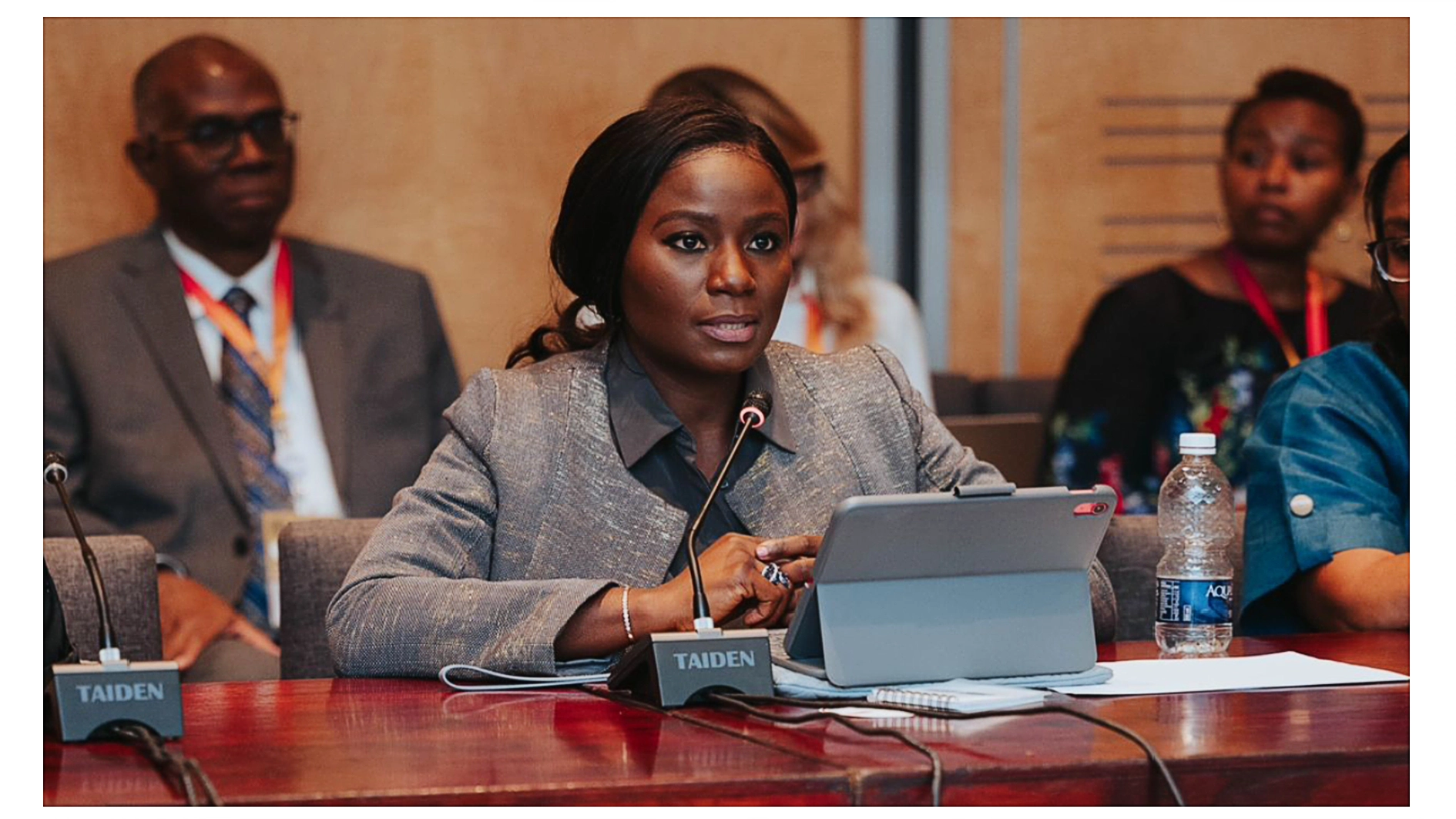
The Special Adviser to the President on Oil and Gas, Mrs Olu Arowolo Verheijen, has disclosed that Nigeria’s share of upstream investment decisions across Africa rose from about four per cent before 2023 to roughly 40 per cent in 2024 and 2025, drawing some $10 billion in commitments and a $50 billion pipeline.
Speaking at the Nigerian-British Chamber of Commerce Energy Day 2026 in Lagos on Thursday, Verheijen noted that reforms introduced under President Bola Ahmed Tinubu are transforming Nigeria’s energy sector from one defined by untapped potential to one driven by measurable results, citing gains in local refining, oil production, gas development, investment inflows and power-sector reforms.
Addressing an audience of industry leaders, investors, regulators and development partners, Verheijen said Nigeria’s challenge has never been a lack of resources but the inability to consistently translate those resources into prosperity.
“Nigeria has never lacked potential. We have oil. We have gas. We have sunlight, water, land, talent and scale. What we have lacked is conversion — the discipline to turn resources into results,” she said.
According to her, the administration inherited a sector weighed down by unsustainable fuel subsidies, foreign exchange distortions, weak production levels and mounting debt across the power value chain.
She said the government first moved to restore fiscal stability through the removal of fuel subsidies and foreign exchange reforms, describing both decisions as difficult but necessary.

Verheijen disclosed that total federation revenue rose to about ₦21 trillion in 2024 from approximately ₦12 trillion in 2023. She also highlighted progress in domestic refining, noting that local petrol production has increased from virtually zero in 2023 to about 48 million litres per day.
“For the first time in a generation, the majority of the petrol Nigerians consume is now refined locally rather than imported,” she said.
The presidential adviser added that growing local refining capacity has significantly reduced the country’s dependence on imported fuel and eased pressure on foreign exchange demand.
According to her, petrol import costs dropped from about ₦2.3 trillion in the first quarter of 2025 to less than ₦90 billion during the same period a year later.
She said the administration has also recorded improvements in crude oil production and investor confidence.
Verheijen stated that crude oil and condensate production averaged 1.64 million barrels per day in 2025, representing an increase of about 400,000 barrels per day compared to 2023 levels.
She further revealed that more than $4 billion worth of international oil company investments had been completed, creating opportunities for greater indigenous participation in onshore operations while major international firms concentrate on deepwater and gas investments.
On investment attraction, she said regulatory reforms and presidential directives aimed at improving competitiveness have yielded results.
She cited projects such as Bonga North, Ubeta and several gas developments as evidence that previously stalled investments are advancing.
The presidential adviser also described natural gas as central to Nigeria’s industrialisation agenda, noting that proven gas reserves now exceed 215 trillion cubic feet.
She said gross gas production has increased from about 6.83 billion standard cubic feet per day in 2023 to approximately 7.63 billion standard cubic feet per day.
“Our objective is not simply to produce more gas, but to ensure Nigerian gas becomes Nigerian power, Nigerian products, Nigerian jobs and Nigerian exports,” she said.
Verheijen highlighted ongoing efforts to address liquidity challenges in the electricity sector through the Presidential Power Sector Debt Reduction Programme.
She explained that the Federal Executive Council approved a bond programme of up to ₦4 trillion to settle verified debts owed to generation companies and gas suppliers.
According to her, generation companies have already signed settlement agreements worth about ₦2.28 trillion, while the first tranche of a ₦501 billion bond has been issued and oversubscribed.
A second tranche valued at ₦729 billion is expected to complete the first phase of the programme.
She said the initiative is intended to restore confidence, improve liquidity and encourage fresh private-sector investment in power generation and gas supply.
Verheijen also pointed to improvements in electricity metering, stating that the national metering rate has risen to about 57 per cent, with hundreds of thousands of meters being deployed annually through government-backed programmes.
She added that tariff reforms are being implemented gradually, with about 45 per cent of electricity consumers now on cost-reflective tariffs linked to service quality, while subsidy support is being better targeted at vulnerable households.
The presidential adviser stressed that energy reforms extend beyond the oil and gas industry and have direct implications for living standards, employment, transportation costs and economic growth.
“When we speak of energy reform, we are speaking about the price of food, the cost of transport, the survival of small businesses, the strength of the naira and jobs for young Nigerians,” she said.
She called on British and Nigerian investors to deepen collaboration in financing, infrastructure development, technology transfer and skills development, arguing that Nigeria now offers not only potential but a clearer reform pathway and a growing pipeline of bankable projects.
Verheijen said the focus going forward would be on sustaining reforms, expanding energy access and delivering reliable power needed to support industrial growth and national development.

