 Follow Us on Google News


 Follow Us on Google Discover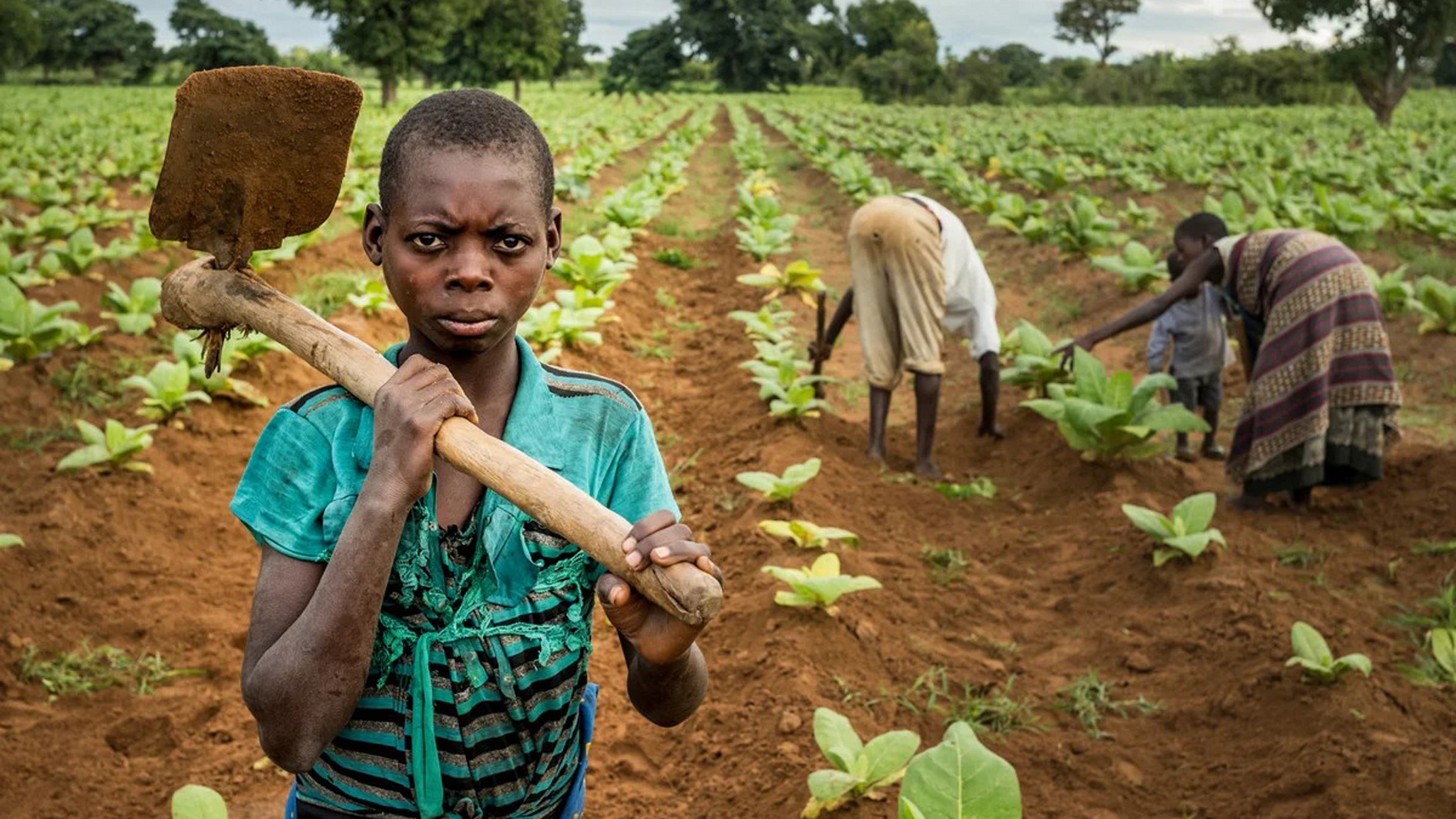
Forced labour in agriculture sector is rated as one of the least visible forms of exploitation, which affects millions of children. The National Bureau of Statistics (NBS) Child Labour Survey highlights that 39.2 per cent of Nigerian children aged 5 to 17— representing roughly 24.67 million children — are engaged in underage labour, with 56.8 per cent working in agriculture. Despite efforts to solve this problem, it has continued to grow at an alarming rate writes GBENGA AKINFENWA.
Farmers and other stakeholders in agro business face three major challenges: high cost of inputs, lack of funds and the dearth of farm hands. The third became acute seven years ago in the build-up to 2019 general elections.
A farmer in Oyo State, Oluronbi Josiah, narrated that farm hands from other ECOWAS countries, who were always engaged on yearly contract, left en mass and failed to return, leaving a large pool of farmers stranded, owing majorly to depreciation of the naira, which made farming less attractive.
He said: “Majority of the labourers used to come from Togo, Benin and Ghana to work as farm hands on yearly contract. Aside from the stipend for their daily upkeep, they were usually paid at the end of the year, which they would convert to their home currencies. Owing to the decline in naira value, it was no longer economically viable for them to continue with the job, as most of them now prefer to stay in their countries and look for alternative means of survival.”
Regrettably, it’s learnt that the bulk of farm labourers from Kogi, Benue, Ebonyi and other parts of the country who were very useful over the years to these farmers, especially in states such as Osun, Ondo, Ogun, Ekiti and Oyo, even areas like Epe, Badagry and other agrarian parts of Lagos State, have now become commercial motorcyclists, preferring to have daily good returns, instead of working in the farms.
And what has become an option for the farmers is to embrace mechanisation – use of tractors and other machineries – which has not been consistent.

Investigations showed that only three states have tractors for farming. Sadly, where these tractors and other equipment are available, the cost of hiring them is far beyond the reach of these farmers.
Indeed, the average rental rate of a tractor, which was around N80, 000 per day in 2023, covering about 10 hours of work, increased to N205, 000 per day in 2025. This increase hinged on several factors – rising fuel costs, inflation, higher maintenance expenses, and the increasing cost of spare parts.
Even, the farmers who have the funds to acquire the tractors are being frustrated by government policies, especially the exorbitant tariff placed on imports. For instance, one of the stakeholders, Nnaemeka Obiaraeri, said he cleared a tractor he bought for N33m, with a whooping sum of N15m.
Since these options have failed and the farm hands have practically disappeared, the farmers have resorted to hiring children, especially under-age to work in the plantations; generally known as child labour in agriculture, a development experts say violates the rights of children.
According to Nigeria International Labour Organisation (ILO’s) Convention, Child Labour refers to any work that deprives children of their childhood, potential, dignity and undermines their physical and psychological development. It includes all works that is mentally, emotionally, socially and morally dangerous and harmful to children.
It also involves all works that restricts or deprives children of the opportunity to attend school and force them to leave school prematurely. It also includes works that makes children combine school and labourious work for excessive periods of time.
ILO says the agric sector is one of the three most dangerous in terms of work-related fatalities, non-fatal accidents, and occupational diseases, posing serious risks to children’s health, safety, and development.
According to the latest global estimates by the ILO and United Nations Children’s Fund (UNICEF), approximately 138 million children are trapped in child labour worldwide. 61 per cent of these children (nearly 84 million) work within the agricultural sector, including farming, fishing, livestock rearing, and forestry.
The National Bureau of Statistics (NBS) Child Labour Survey highlights that 39.2 per cent of Nigerian children aged 5 to 17 — representing roughly 24.67 million children are engaged in child labour, with 56.8 per cent working in Agriculture, while 22.9 per cent (14.3 million) perform hazardous work that is physically or psychological injurious.
Experts describe child labour in Nigerian agriculture sector as widespread and affecting millions of children. To them, it’s not just about kids helping on family farms after school—it often means full-time, hazardous work that steals their childhood and health.
Reports have it that children in agriculture often begin working at a very young age, sometimes, as early as five years old, with a significant proportion – 67.5 per cent of them in the category of unpaid family workers, which is even higher in agriculture.
In Nigeria, investigations showed that this is very common among cassava and cocoa farmers. It was learnt that because cassava is a long duration crop, women often stoop for hundreds of hours to weed and keep just one hectare of cassava clean for a year.
In some cases, children are withdrawn from school to help their parents to weed, while others entice the children with money to force them to stay out of school, a practice that compromises the education of children and undermines their future.
The former President of Cocoa Farmers Association of Nigeria (CFAN), Comrade Adeola Adegoke, said the practice is a serious social issue that is very prevalent in the sector owing to poor agricultural Return On Investment (ROI) and poor remuneration of farmers who cannot afford to pay for labour hiring but rely heavily on family labour over the years.
“This prevalence is linked to poverty where majority of our farmers live within $1 a day, thereby depriving them from making a sustainable living wage in their farm businesses and prevented them from hiring labourers. Most farmers rarely cover their inputs cost on their farm investment, not to talk of making profit margins that can sustain their livelihoods. To send their children to school through payment of their school fees becomes a problem, and hiring additional labour becomes another issue.
“Many of the children of the farmers are often forced to support their parents during harvest periods and these often lead to their absence from school and prevent them from attending classes. These factors often contribute to out-of-school factor. These parents rely on the support of their children for their farming activities as a substitute for hiring laborers,” he said.
The Executive Director, Kids & Teens Resource Centre (K&TRC), Folashade Bamigboye, disclosed that the crisis is apparent in rural and agrarian communities. She noted that the NBS data reveals that 44.8 per cent of children in rural areas are engaged in labour compared to 30 per cent in urban centres.
She added that in major cash-crop ecosystems like cocoa production and local food crop farming, children are frequently exposed to hazardous tasks like handling chemical pesticides, clearing dense forests, and carrying heavy loads.
Investigations revealed that children from poorer homes, whose household heads are less educated, are the major victims of this heinous act. They are often engaged in major areas of agriculture, including farming, fishing, aquaculture, forestry, and livestock.
Children, irrespective of their gender, are increasingly exposed to harsh experiences of life as their parents find it difficult to provide for their needs.
Between October 2023 and September 2024, the Lutheran World Relief launched a Child Labour Education and Resilience (CLEAR) project in Ondo State.
Its primary objectives included addressing the root causes of child labour, empowering communities with limited education on the issue, increasing net income from cocoa farming, and equipping children of cocoa farmers with essential life skills.
The initiative underscored the importance of reducing incidences of child labour, while emphasising the project’s complementary relationship with the larger TRACE initiative in agriculture and cocoa ecosystems.
Also, the International Institute for Tropical Agriculture (IITA), working under the Cassava Weed Management Project (CWMP) and the African Cassava Agronomy Initiative (ACAI) made bold step years ago to tackle the menace.
Their researchers developed an integrated weed control package combining best-bet agronomic practices and the use of environmentally friendly herbicides in a kit known as the Six Steps to Cassava Weed Management to reduce manual labour often done by the children and women. The package is being disseminated to help improve the livelihoods of farmers.
Workshops were also organised with the aim of addressing this problem. For instance, ILO held a four-day Media Training Workshop on Child Labour eradication organised by Action Against Child Labour in Agriculture in West Africa (ACLAWA), in Akwanga, Nasarawa State in 2024.
The organisers said the media is being encouraged to help target policy makers and government leaders swiftly on need for the enactment of the Labour Standards Act.
The organisation stressed an urgent need to have a legal framework that meets the international standards, adding that there are gaps in current Labour Act, which should be addressed.
Highlights of the training workshop included an evaluation of government efforts and policies for the elimination of Child Labour and various challenges.
Head, Child Labour, Forced Labour, Human Trafficking and Modern Slavery Unit, Inspectorate Department of the Ministry of Labour and Employment, Mrs. Tessy Odoh, who was present at the workshop, said Nigeria is hoping to, at least, drastically reduce child labour occurrence if not eliminate it by 2025.
Regrettably, the ILO lamented that the country is witnessing an upsurge in child labour activities. In another workshop, the National Project Manager of ILO’s programme initiative – ACLAWA, Dr. Agatha, said Nigeria has over 24 million children engaged in one form of child labour or the other, noting that agriculture remains the branch of economy with the highest child labour prevalence at 56.8 per cent followed by services at 25.8 per cent and industry at 17.4 per cent.
According to its child labour situation index in Nigeria, over 31 million children representing 50.5 per cent are involved in economic activities, while 24,673, 485 children, representing 39.2 per cent are engaged in child labour practices.
“The index also showed that 14,390, 353 children representing 22.9 per cent are engaged in hazardous labour.”
Dr. Agatha regretted that child labour has unfortunately been woven into the fabric of rural life in Nigeria, particularly within agricultural communities.
She said on a national scale, Nigeria has more boys (12,689,663) than girls (11,983,822) exploited in the workplace, but when accessed by place of residence, the country has more girl victims in the urban and more boys in the rural areas.
“Nigeria has 30 per cent of the population of children aged 15-17 that are out of school while 22.4 per cent of children aged 5-14 are also out of school.”
SADLY, these children are faced with severe hazards, which often times, lead to untimely deaths. According to the Nigeria Child Labour Survey 2022, 16.3 per cent of children in child labour had experienced workplace injuries.
Experts are of the opinion that child labour by its nature undermines the rights of children to good living and denies them the opportunity to acquire basic education necessary for productive adult life.
They also emphasised that child labour has manifested in various forms with daring consequences on the health, safety and morals of children.
Reports have it that exposure to pesticides and agrochemicals; carrying heavy loads beyond their physical capacity; working long hours in extreme heat; and cuts, burns, and musculoskeletal injuries from cutlasses and hoes; snake bites are some of the dangers faced by the children engaged in underage labour in agriculture.
The worst part is that unlike adults, the children work with machetes, hoes, and chemicals with little or no shield from danger.
Investigations showed that the children engaged in work on cocoa plantations might be exposed to pesticides, apply chemical fertilisers without protective gear, use sharp tools or carry heavy loads, and sometimes work under conditions of forced labour.
However, a couple of stakeholders emphasized the need to distinguish that not all children engagement in agriculture – fisheries, livestock production and crop cultivation falls under the category of child labour.
It was gathered that some age-appropriate, non-hazardous tasks can support children’s development and contribute to food security and skill transfer.
While the advocates of this practice claimed that the categorisation depends on the child’s age, the nature and duration of the tasks, and the risks involved, they claimed that though some children engage in this practice, it is basically to support their parents and also contribute to the country’s food security dream.
It was also learnt that like in family farming, some children from tender age have their own portions where they cultivate out of passion or a kind of ‘side hustle’ to support their future ambitions.
A chartered accountant based in Abeokuta, Ogun State, Mr. Ayinde Olukola, who confirmed this, narrated how he usually followed his father to his farms from the age of five and how he had his own portion of land, where he cultivated vegetable and pepper till he graduated from the Polytechnic.
“Though my father was unlettered, yet he supported all his children’s academic pursuit. I had my own portion of lands where I cultivated. During holidays, I’ll rush home and work on the farm. I usually keep the proceeds from my harvest in my bank because my father provides us with the necessary things, including regular pocket money.
“Will you categorise this as child labour? No. It was out of passion and there are many children currently that are still engaging in this practice. There is difference, and the difference is clear,” he said.
Bamigboye noted that allowing child labour to continue in the agricultural sector poses severe, multi-dimensional threats to Nigeria’s long-term socioeconomic stability. She itemised perpetuation of poverty cycles; human capital depletion; threat to agricultural sustainability; and international trade and economic sanctions as some of the consequences of the menace.
She said: “When children are deployed to fields instead of classrooms, they are denied the foundational skills required for decent work and employment. This traps agrarian families in a generational cycle of subsistence poverty, crippling rural economic mobility.
“Nigeria already faces an acute out-of-school children crisis. Feeding the agricultural machinery with child hands drains the nation’s future talent pool, leaving us with a future workforce that lacks the technological and analytical literacy required to drive a modern economy.
“Relying on child labour masks the critical need for agricultural modernisation. It delays the adoption of mechanisation and smart farming practices. To build a food-secure future, Nigeria needs agricultural scientists and agropreneurs, not a workforce of unschooled, manual labourers.”
She stated that as global markets are increasingly enforcing strict environmental, social and governance compliance, there is need for continued high rates of child labour in key export commodities like cocoa risk attracting international bans or heavy sanctions, which could devastate foreign exchange earnings.
The upsurge of child labour in agriculture, experts say is majorly driven by poverty, alongside limited access to quality education; inadequate agricultural technologies; labour shortages; hazardous working conditions; and traditional norms regarding children’s roles in rural livelihoods.
Bamigboye lamented that despite legal framework such as the federal adoption of the Child’s Rights Act (CRA), several systemic bottlenecks continue to sabotage intervention strategies.
She identified deep-seated rural poverty; cultural norms and misconceptions; weak enforcement and regulatory gaps; and deficits in rural educational infrastructure, as some of the challenges impeding remediation efforts.
“For many smallholder farmers, child labour is not a choice but an economic survival mechanism. Low crop yields, unfair pricing and lack of access to rural credit mean families cannot afford to hire adult labour, forcing them to rely on their children.
“In many rural settings, there is a blurred line between age-appropriate character-building chores and exploitative child labour. Farm work is often traditionally viewed simply as family apprenticeship, making advocacy difficult to digest. While the laws exist on paper, the capacity to monitor and enforce compliance in remote rural farmsteads is nearly non-existent. There is a severe deficit of labour inspectors equipped to cover the vast informal agricultural sector,” she said.
Bamigboye revealed that in many agrarian communities, schools are either physically inaccessible, completely dilapidated or lack teachers, noting that when the quality of available education is poor, parents see little return on investment in schooling and opt to put their children to work instead.
As this menace continue to rise despite several interventions, concerned Nigerians, especially child rights activists are calling for the sanction for erring farmers or investors still engaging in this heinous practice, through necessary legislations.
For instance, Section 28(1) of the Child Rights Act, states that no child shall be subjected to any forced or exploitative labour, employed to work in any capacity except where he is employed by a member of his family on light work of an agricultural, horticultural or domestic character required, in any case, to lift, carry or move anything so heavy as to be likely to adversely affect his physical, mental, spiritual, moral or social development employed as a domestic help outside his own home or family environment.
Section 28(2) also states that: “No child shall be employed or work in an industrial undertaking and nothing in this subsection shall apply to work done by children in technical schools or similar approved institutions if the work is supervised by the appropriate authority”. Section 30(2) of the Child Right Act also has relevant provisions that prohibit children labour.
The Trafficking in Person (Prohibition) enforcement and Administration Act 2015’, PART IV, No. 23(1b) on Employment of Child as Domestic Worker and Inflicting grievous harm, states that: “Any person who employs, requires, recruits, transport, harbours, receives or hires out a child to do any work that is exploitable, injurious or hazardous to the physical, social and psychological development of the child, commits an offence and is liable on conviction to imprisonment for a minimum term of two years, but not exceeding seven years without an option of fine.”
To solve the problem, Adegoke said his organisation has taken a strategic approach to collaborate with ILO to support farmers’ livelihood and provide adequate capacity training to enlighten them to understand the evil of depriving their children from attending schools or classes because of their farming activities, empowering them and strengthening their cooperative.
“The collaboration is also done with other stakeholders: state governments, NGOs and the Federal Ministry of Labour and Employment. The partnership is sometimes designed to strengthen farmers’ cooperatives and provide incentives with sustainable farming practices that can help them to achieve sustainable growth and development that will improve their livelihood. Access to good market and diversification of their farming investments were also intensified to ensure that their incomes are dependable and sustainable.
“Many policies and laws were adopted and enacted by the stakeholders in the industry to safeguard child labour and forced labour rights and also protect the vulnerable children from exploitation and abuse at their teenage age.”
He added that the issue of EUDR regulations, which guarantees sustainable production across value chain of some commodities, is also to ensure in addition that there is no element of child labour or forced labour in the supply chain aside being deforestation free.
IN its reaction, the Ministry of Labour and Employment attributed the menace to a combination of socio-economic, cultural, and structural factors.
The Head, Child Labour, Forced Labour, human trafficking and modern slavery Section Inspectorate Department of the ministry, Tessy Odoh told The Guardian that Child Labour in agriculture in Nigeria is mainly caused by poverty, as poor households often rely on children to assist their parents on farms to supplement household income; limited access to education in rural areas; weak enforcement of Child Labour laws and the demand for cheap labour in agriculture; informal nature of agricultural activities; economic hardship, displacement, and insecurity, among others.
“The Federal Government recognises that while some light household tasks may be culturally accepted, hazardous work that affects a child’s health, safety, education, or dignity is unacceptable and prohibited under Nigerian Labour law and international labour standards.”
Odoh confirmed that the Federal Government has made several arrests through relevant enforcement and protection agencies, and has taken actions against violations relating to child labour, trafficking, forced labour, and exploitation of children.
“Agencies such as Federal Ministry of Labour and Employment, National Agency for the Prohibition of Trafficking in Persons, the Nigeria Police Force, and state authorities work together to investigate and prosecute cases involving child labour and other forms of exploitation.
“However, it is important to note that child labour in agriculture often occurs within informal and family-based settings, making detection and prosecution more challenging. The government is therefore strengthening labour inspection systems and extension of labour inspection services to the informal sector.
“The establishment and training of Agric Extension Workers for engagement with the farmers in the communities, establishment and training of Child Labour Desk Officers across of Ministry of Agriculture and Food Security across the 36 states of the federation, as well as training and capacity building of the management of the ministry at the head office, and inter-agency collaboration to improve enforcement and ensure that offenders are held accountable,” she said.
Odoh noted that the emphasis is not only on arrests and prosecution, but also on prevention, rehabilitation, education, and support for vulnerable families.
“The Federal Ministry of Labour and Employment is implementing several strategic interventions to eliminate child labour, particularly its worst forms in agriculture. These include implementation of national policy on child labour and the national action plans for the elimination of child labour; labour inspection and monitoring; public awareness and advocacy; collaboration with national stakeholders and international partners; and support for education and social protection.
She listed others to include – “Alliance 8.7 and Global Commitments – Nigeria is a pathfinder Country of Alliance 8. 7, and is actively participating in global efforts under Alliance 8.7 to accelerate action towards the elimination of child labour, forced labour, human trafficking, and modern slavery in line with Sustainable Development Goal Target 8.7 to eliminate child labour by 2030.
“Community-Based Approaches – The Ministry supports community child labour monitoring systems through the state offices, in collaboration with the ILO, and encourages state governments and local authorities to establish mechanisms for early identification and referral of child labour cases,” Odoh said.
She assured that the Federal Government remains committed to protecting the rights, dignity, and future of every Nigerian child and calls on all stakeholders — communities, employers, civil society, parents, the private sector and the media through effective reporting — to join hands in eliminating child labour in all its forms.

