 Follow Us on Google News
 Follow Us on Google Discover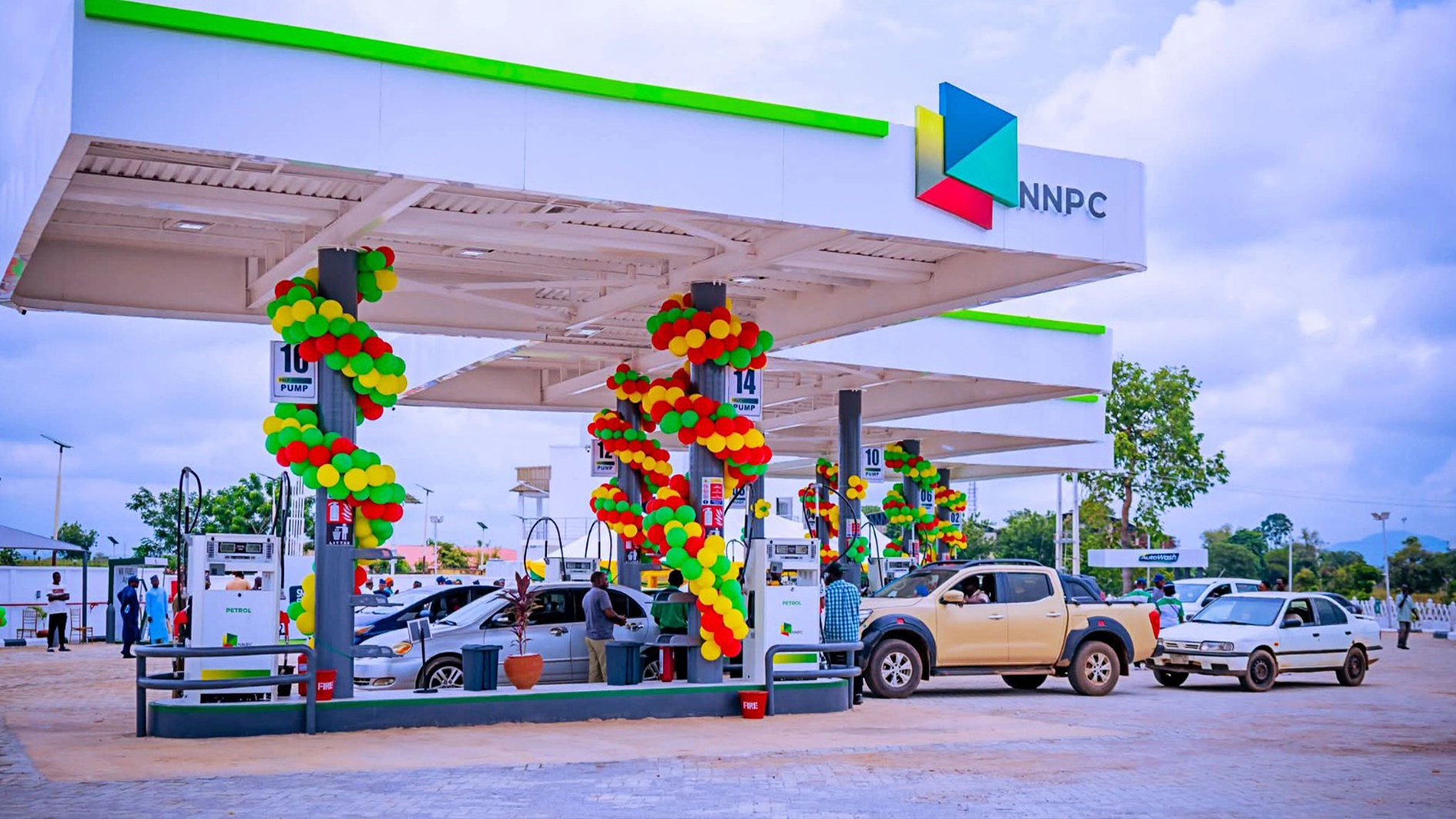
• Muda describes gesture as return of subsidy
• Economists demand disclosure of discount, fiscal exposure
• Atiku, Obi, Makinde reject measure, seek lasting relief
• Agbakoba proposes N400/litre through crude price differential
• Labour demands below N1,000 price cut
The Federal Government’s 30-day petrol discount at NNPC Limited stations offers no relief for millions of hard-pressed Nigerian households, economists, labour leaders and other stakeholders have insisted.
The intervention, announced by the Federal Government yesterday, targets public transporters nationwide, with the “relief” that seeks to restrict the price of fuel at N1350 per litre during the period. This suggests that its immediate impact on consumers would depend largely on how the lower fuel price results in reduced transportation fares.
While the mechanism of the price-fixing approach is not fully disclosed yet, the choice of N1,350 per litre has also caused unease among consumers who are questioning its logic and whether it actually amounts to relief considering that the current price is only N10 to N20 above the benchmark.
Minister of Finance and Coordinating Minister of the Economy, Taiwo Oyedele, said the government was also targeting a N1,350-per-litre ceiling on the ex-gantry or landing cost of petrol
He explained that the proposed ceiling was not a fixed pump price of N1,350 per litre, but was intended to prevent sharp movements in global crude prices and exchange rates from immediately translating into higher petrol costs.

“Pump prices should not have to follow every swing in global crude or the exchange rate. The government is negotiating a ceiling of N1,350 a litre on the ex-gantry or landing cost of petrol to keep pump prices stable,” Oyedele said.
According to the Nigerian Midstream and Downstream Petroleum Regulatory Authority (NMDPRA), the average pump price in July was N1,271.56; in August, it was N1,294.50, while it was N1,378 per litre in September. This puts the three-month moving average at N1315 per litre, suggesting that the government’s discounted price is a significant markup over the historical price path.
The discount may also create market rigidity than it seeks to grant relief. For instance, there are questions about access, with NNPC Limited’s outlets accounting for only four per cent of the number of fuel stations across the country.
According to data, the pseudo-government outlets are 900, an insignificant percentage of a total of 22,700 registered filling stations in the country.
Yet, the government expects the measure to reduce transport and logistics costs and ease inflationary pressure.
However, stakeholders warned that without a mechanism to ensure that the savings are passed on to passengers, the intervention could reduce operators’ fuel expenses without significantly improving household welfare.
The 30-day duration has also raised questions about its sustainability, particularly as Nigerians continue to face high transportation, food and energy costs.
Oyedele said NNPC would sell petrol at the benchmarked cost during the period, with priority given to public transporters.
“We are offering a discount on petrol dispensed by NNPC Limited for the next 30 days in the first instance, with priority for public transporters nationwide. So, it’s not a subsidy; the government is just saying we sell to you at cost,” he said.
The government has said the intervention is intended as temporary relief while it pursues a longer-term mechanism to provide greater stability for domestic refiners and consumers through forward crude sales.
However, petroleum economist and Professor Emeritus of Petroleum Economics, Prof. Wumi Iledare, said the intervention would only achieve its objective if the savings were transmitted to passengers.
“I actually see a defensible economic rationale for targeting public transporters rather than giving every motorist cheaper petrol. The objective should not be cheap petrol. It should be: lower transportation cost, lower logistics cost, reduced inflationary pressure and protection of vulnerable households,” he said.
Iledare, however, warned that cheaper petrol for transporters could fail to produce a consumer benefit if fares remained unchanged.
“But there must be a measurable pass-through mechanism. If a transporter receives cheaper petrol but passengers continue paying the same fare, the public does not receive the intended welfare gain,” he said.
He urged the government to disclose the discount per litre, volume of petrol covered and maximum fiscal exposure, as well as publish the actual cost, volume sold and financial impact at the end of the 30 days.
“Those five answers will tell us whether this is genuinely a temporary market intervention or subsidy by another name,” he said.
Iledare said the distinction between a discount and subsidy should be determined by who bears the economic cost and who receives the benefit, rather than by the government’s terminology.
“I would call it a subsidy-equivalent risk unless the incidence is demonstrated otherwise. The test is not the name attached to the policy. The test is who bears the economic cost and who receives the benefit,” he said.
He also warned against undermining downstream market reforms by turning NNPCL into a government-directed price setter, saying any intervention should be targeted, time-bound, transparent, independently auditable and fiscally capped.
Chief Executive Officer, Centre for the Promotion of Private Enterprise (CPPE), Muda Yusuf, also described the arrangement as a form of subsidy, although different from the former blanket regime because it is restricted to NNPC stations.
“It is a form of subsidy anyway, but it’s not the subsidy in the form in which we know it because it is not a blanket subsidy,” Yusuf said.
He said NNPCL would bear part of the cost by surrendering some of the margin it would ordinarily earn.
“It’s a concession and I’m sure this is something that will, of course, affect the bottom line of NNPCL. So they will bear some of those costs because what normally they should have made has been given away as a discount,” he said.
MEANWHILE, legal practitioner and former President of the Nigerian Bar Association, Olisa Agbakoba, has called for a more structural approach to reducing domestic petrol prices through differential pricing for crude supplied to local refineries.
Speaking at the Association of Energy Correspondents of Nigeria (NAEC) Conference 2026, Agbakoba argued that the removal of the former petrol subsidy should not prevent the government from adopting a different crude pricing mechanism for domestic refining.
He proposed a crude price differential that could support a petrol price of about N400 per litre, arguing that locally produced crude should not necessarily be priced for domestic refiners in the same way as crude sold internationally.
“What is affecting Nigerians today is hunger. And the reason why Nigerians are hungry is that the price of petroleum is too high,” he said.
Agbakoba cited Saudi Arabia’s domestic pricing arrangements and urged political candidates to make crude pricing and affordable domestic petroleum products part of their policy discussions ahead of the elections.
FORMER Vice President and presidential candidate of the African Democratic Congress (ADC), Atiku Abubakar, rejected the 30-day intervention, arguing that it would not address the underlying pressure on households, transport operators and businesses.
In a statement issued by the Director of Strategic Communication of the ADC Presidential Campaign Council, Phrank Shaibu, Atiku questioned how much motorists would save per litre and whether transport operators would pass the savings to passengers.
“Atiku totally rejects this calendar-scheduled, election-laced subsidy package. Nigerians are not fools to be offered a month of discounted fuel after years of punishing prices and then expected to forget the hardship when the discount expires,” he said.
He asked what would happen after the intervention expires, arguing that Nigerians would return to the same fuel, transport and food prices.
“Nigerians need lasting relief, not a countdown to the return of hardship,” he said, calling for a longer-term mechanism tied to domestic refining and production support.
The Nigeria Democratic Congress and the Obidient Movement have condemned the Federal Government’s 30-day petrol discount through NNPC retail stations, describing the measure as “tokenism,” an “election year Greek gift” and an attempt to reintroduce subsidy through the backdoor.
THE Obidient Movement, in a statement by its Director of Media and Communications, Onyeka Dike, questioned why the government waited three years before introducing measures to reduce the burden of high petrol prices on Nigerians.
“For three years, Tinubu told Nigerians that the ‘baby steps of pain’ were necessary. Now, suddenly, a petrol discount is possible. So, what changed?” Dike asked.
He questioned whether the government’s decision was linked to the 2027 presidential election, asking, “Did subsidy suddenly become good because Peter Obi said he would restore it? Why the desperation as elections approach?”
Dike described the policy as an election-season strategy, arguing that Nigerians had endured high fuel prices, increased taxes, rising tuition and food costs since the removal of subsidy.
“The pains were never necessary. They were policy choices,” he said.
THE Makinde/Daura Presidential Campaign Organisation (MDPCO) has rejected the Federal Government’s 30-day petrol discount, describing the measure as a “deceitful and failed media stunt.”
The campaign group of the Allied Peoples Movement (APM) presidential candidate, Gov. Seyi Makinde, said the discount was inadequate, arguing that Nigerians expected a more significant reduction in the price of petrol.
A statement signed by its Director of Strategic Communications, Richard Ihediwa, described the discount as an “offensive and provocative attempt to beguile Nigerians”.
The organisation said the measure amounted to a “slap in the face” of Nigerians who were expecting an impactful reduction in petrol prices.
According to him, where costs rise above the ceiling, refiners and importers would initially bear the shortfall and recover it later when market conditions allow.
THE Nigeria Labour Congress (NLC) urged the government to reduce the price below N1,000 per litre, with Assistant General Secretary, Chris Onyeka, describing the N1,350 benchmark as a “wicked set-up” against workers and Nigerians.
“What relief does this serve for Nigerians? It does not serve any relief. Fuel at N1,350 is a set-up. It is a wicked set-up against Nigerian workers and Nigerian people,” he said.
Onyeka said the government should “go below N1,000” to achieve a meaningful reduction in transportation and living costs.
Also, the National President of the Association of Senior Civil Servants of Nigeria (ASCSN), Muhammed Shehu, said N1,350 was insufficient to cushion the impact of high petrol prices on workers.
He urged the government to use the 30-day window to address structural problems, particularly the failure of domestic refineries.
“N1,350 is not enough. Because we are not too sure that within the one month, within the window, the Federal Government will be able to address the hike in the fuel price,” he said.
The General Secretary of the Federation of Informal Workers Organisations of Nigeria (FIWON), Gbenga Komolafe, described the intervention as “too little and too late”, questioning the significance of a N50 reduction.
“If you are doing from N1,400 to N1,350, what do you end up with? What percentage is that?” he asked.
Komolafe said the impact of high energy costs extended beyond transport fares to production, electricity and food distribution, warning that expensive fuel was increasing the cost of moving food from producing communities to urban centres.
The labour leaders called for longer-term measures, particularly the rehabilitation and operation of domestic refineries, alongside broader interventions to protect workers and vulnerable households from the continuing cost-of-living crisis.
SIMILARLY, the Petroleum Products Retail Outlets Owners Association of Nigeria (PETROAN) has asked the Federal Government to allocate 30 per cent of the petrol covered by its 30-day discount scheme to its members, saying the move would extend the benefit to consumers in rural and underserved communities.
The association said its retail network cuts across virtually all Local Government Areas, towns, villages and communities, including locations where NNPC retail outlets are not available.
Reacting to the initiative, PETROAN said allocating 30 per cent of the discounted petrol volume through its network would facilitate wider distribution of the intervention and ensure that its benefits extend beyond major cities and commercial centres.
The association said the intervention could help reduce transportation costs, which have a direct bearing on the prices of food, agricultural produce, manufactured goods and other essential commodities.
National President of PETROAN, Dr Billy Gillis-Harry, commended the Federal Government for recognising the strategic importance of transportation to the economy, saying lower petrol costs for transport operators could translate into reduced fares and lower logistics costs for businesses.
He said the impact could extend to commuters, traders, farmers and manufacturers by reducing the cost of moving people and goods.
Gillis-Harry, however, urged the government to ensure transparent implementation of the scheme, with clear guidelines on the exact discount per litre, eligible beneficiaries, monitoring mechanisms and distribution channels.

