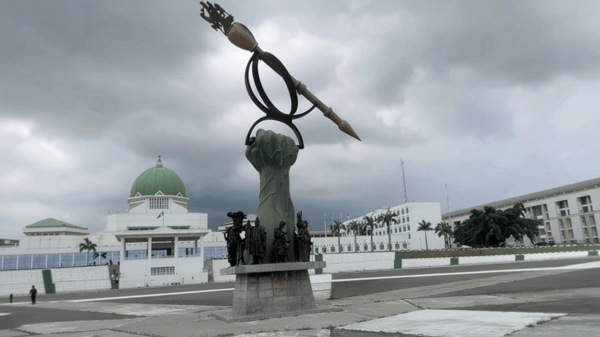
Concerns previously raised over discrepancies between Nigeria’s newly gazetted tax reform laws and the versions passed by the National Assembly have now been reinforced by the release of Certified True Copies (CTCs) by the National Assembly.
The CTCs set out in clear terms the provisions approved by lawmakers and provide authoritative documentary evidence of what was transmitted for presidential assent.
The House of Representatives had on Saturday released the CTCs of four tax reform Acts recently signed into law by President Bola Ahmed Tinubu, following public concerns over alleged alterations and the circulation of unauthorised versions of the laws.
The four Acts released are the Nigeria Tax Act, 2025; Nigeria Tax Administration Act, 2025; National Revenue Service (Establishment) Act, 2025; and Joint Revenue Board (Establishment) Act, 2025.
House spokesman, Akin Rotimi, who disclosed this in a statement, said the release was ordered by the Speaker of the House and Senate President, Godswill Akpabio.
He said the decision followed reports that multiple and conflicting versions of the tax laws were in circulation.
A member of the House of Representatives, Abdulsamad Dasuki, had during a plenary session alleged discrepancies between tax laws passed by the National Assembly and the versions subsequently gazetted and made available to the public.
He said his legislative rights had been breached because the content of the gazetted tax laws did not reflect what lawmakers debated and approved on the floor of the House.
The tax bills were passed by the House in February after months of debates, public hearings, and clause-by-clause consideration, and were later harmonised with the version passed by the Senate.
On 26 June, President Bola Tinubu signed the four bills into law.
According to Rotimi, the issue came to light after a member of the House raised a point of privilege over discrepancies noticed in some versions of the Acts.
He said the Speaker subsequently directed an internal verification and the immediate public release of the certified documents.
A review by The Guardian of the certified copies alongside the said gazetted Acts shows that several controversial provisions currently in force were not contained in the bills passed by the House, lending weight to earlier claims of post-passage alterations.
One of the major areas highlighted by the CTCs is Section 3 of the Nigeria Tax Administration Act.
The NASS-passed version explicitly assigns the Nigeria Revenue Service responsibility for administering key federal taxes, including taxation of income from petroleum operations and Value Added Tax (VAT).
However, these two items do not appear in the gazetted version of the Act.
The omission raised questions about whether the scope of federal tax administration was deliberately narrowed or altered after legislative approval, particularly given the central role of VAT and petroleum taxation in Nigeria’s fiscal framework.
Further discrepancies are evident in Section 29, which governs financial disclosures by banks and other financial institutions.
Under the version passed by the National Assembly, institutions were required to submit annual returns, with reporting triggered where cumulative monthly transactions reached N50 million for individuals and N250 million for corporate entities.
The NASS version also provided safeguards, including limits on the nature of information to be disclosed and a requirement that additional disclosures be backed by a formal notice.
In contrast, the gazetted Act replaces annual returns with quarterly reporting, lowers the thresholds to N25 million for individuals and N100 million for companies, and removes provisions that allowed taxpayers and institutions to rely on notice-based protections.
The changes significantly expand reporting obligations while narrowing procedural safeguards, a shift now confirmed by the absence of such provisions in the certified copies released by the House.
Differences were also confirmed in Section 39, dealing with currency computation for tax purposes.
The NASS-passed version allows taxes, including those relating to petroleum operations, to be assessed and paid in the currency of transaction.
The gazetted version, however, mandates that petroleum-related tax computations be made in United States dollars, a change with implications for compliance costs, foreign exchange exposure and financial planning for operators in the sector.
Perhaps the most striking validation provided by the CTCs relates to Sections 41(8) and 41(9), which do not appear at all in the House-passed version of the Nigeria Tax Administration Act.
These provisions, introduced in the gazetted law, require taxpayers seeking to appeal decisions of the Tax Appeal Tribunal to deposit 20 per cent of the disputed tax amount as a condition for approaching the High Court, while also formalising a tiered appeal process up to the Supreme Court.
The CTCs also clarify the limits of enforcement authority approved by the House.
In Section 60, the version passed by lawmakers allows tax authorities to appoint agents of a taxable person but does not include language permitting such action without an order of the High Court.
Similarly, Section 64 of the Act passed by the lawmakers confines the powers of tax authorities to investigation or the initiation of investigations into possible violations of tax laws.
The gazetted version goes further by introducing arrest powers, authorising tax authorities to effect arrests through law enforcement agencies. The powers are not contained in the certified legislative text.
Discrepancies were also confirmed in the Nigeria Revenue Service (Establishment) Act, particularly in sections dealing with accountability and legislative oversight.
The National Assembly version mandates the submission of quarterly and annual reports to the National Assembly and expressly empowers lawmakers to summon the Executive Chairman or board members on matters of administration, governance and finance.
These provisions are absent from the gazetted Act, which retains only basic audit requirements.
The certified copies also show that broader accountability duties assigned to the Executive Chairman in the NASS version, including the submission of strategic plans and routine reports, were removed before gazettement.
In the Joint Revenue Board of Nigeria (Establishment) Act, the CTCs confirm that lawmakers required officers exercising the board’s powers to be specifically authorised by the board.
The gazetted Act adopts broader language that does not clearly define the source of such authorisation.
While the House-passed version lists defined funding sources, the gazetted Act introduces additional contributions from members and removes explicit references to the Consolidated Revenue Fund as a funding source for the Tax Appeal Tribunal and the Office of the Tax Ombudsman.
Reacting to the release of the Certified True Copies, Coordinator of the Coalition of Northern Groups (CNG), Jamilu Charanchi, told The Guardian that the controversy surrounding the tax reform laws was not the result of confusion but a deliberate policy choice by the presidency.
He argued that the reforms were being pushed through without regard for public opinion, insisting that the version being implemented differed from what Nigerians, through their elected representatives, had agreed to.
Charanchi maintained that no bill passed by the National Assembly could become law without presidential assent, stressing that the gazetted version signed by President Bola Tinubu appeared fundamentally different from what lawmakers approved.
According to him, this raised serious questions about whose interests the reforms were designed to serve, adding that the divergence reinforced public suspicion that the process had departed from democratic norms.
Nigeria likes it or not. He’s not doing it for the sake of Nigeria neither is he doing it for the sake of Nigerians.
“He’s doing it for the sake of himself. We already know that there is no way that a law passed by the National Assembly can become a law without being fully signed by the presidency. And we have seen the one that the presidency has signed.
“That means President Tinubu is implementing something that is entirely different from what Nigeria agreed on. That is simply to tell you that President Tinubu is not there for Nigerians.
“At the initial stage of this tax reform bill, we raised so many serious questions and allegations that this tax reform bill is not based on the interest of Nigeria.”
He further argued that Nigeria’s core challenge was not taxation but leadership, noting that the country was endowed with abundant resources but continued to struggle due to governance failures.
Charanchi said many Nigerians felt alienated by decisions taken without broad consultation, warning that policies imposed without popular consent risk deepening public distrust in government institutions.
He expressed concern that the National Assembly had been sidelined in a manner that weakened its constitutional role and diminished legislative authority.
Charanchi urged the National Assembly to assert itself and defend democracy by ensuring that only the version of the tax laws duly passed by parliament could be implemented.