 Follow Us on Google News
 Follow Us on Google Discover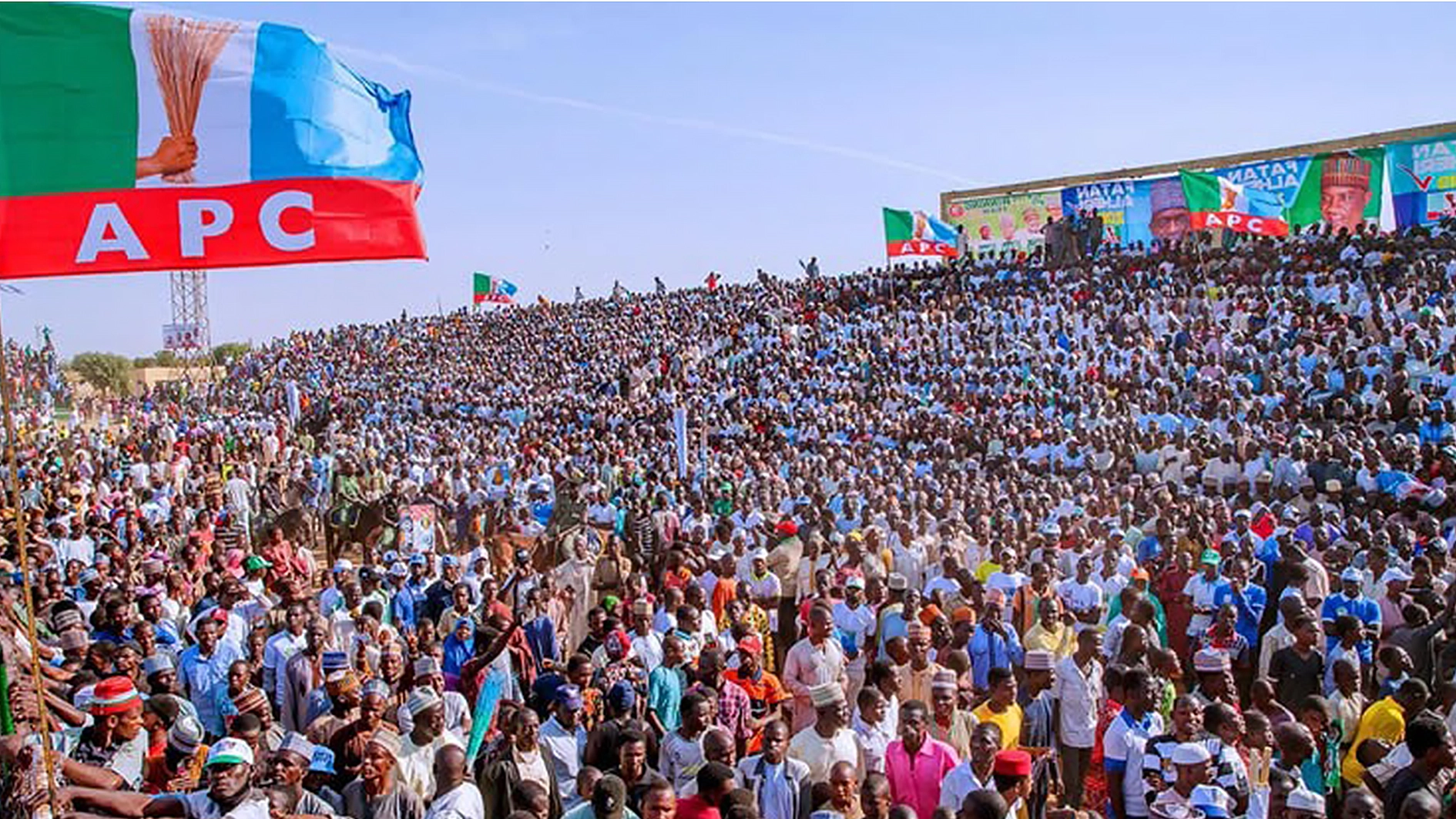
On the way to defending its hard-won laurels on three consecutive major electoral battles, the ruling All Progressives Congress (APC) has been grappling with the burden of its championship. The recent primaries by the party exposed some shaky steps, culminating in a bedlam that underscored the limiting force of its self-serving legislative provisions, LEO SOBECHI and ADAMU ABUH report.
The post-primary season of the ruling All Progressives Congress (APC) has evolved into far more than an internal contest over tickets and nominations. It has become a defining political moment exposing widening cracks within a party struggling to balance authority, inclusiveness, discipline and cohesion ahead of the 2027 general election.
Across several states, from disputed delegate selections to controversial consensus arrangements and allegations of imposed candidacies, the exercise has triggered political aftershocks now raising a difficult national question: Is the APC truly consolidating its strength for another electoral victory or quietly drifting towards fragmentation beneath the surface of official unity?
On the surface, the ruling party still appears formidable. The APC, which boasts 31 of the 36 state governors and an overwhelming majority at the National Assembly, remains Nigeria’s dominant political platform while retaining expansive grassroots structures and enormous political influence across the country. Party leaders continue to project confidence that the primaries were largely peaceful, orderly and reflective of internal consensus-building efforts designed to preserve stability ahead of the elections.
Before now, President Bola Ahmed Tinubu, who is said not to be pleased with the fallout of the primaries, has repeatedly pledged commitment to democratic ideals, internal party discipline and credible electoral processes, insisting that democracy can only thrive where fairness, participation and transparent competition are respected.
Similarly, APC National Chairman, Nentawe Yilwatda, has assured party members that the leadership remains committed to reconciliation, inclusion and protection of democratic values within the party structure. Yilwatda has consistently maintained that the APC would not abandon consultation, dialogue and internal conflict resolution, promising that aggrieved aspirants and stakeholders would be carried along through reconciliation mechanisms designed to preserve party unity ahead of 2027 elections.

Speaking with journalists after meeting with President Bola Ahmed Tinubu at his Lagos residence, last Wednesday, he noted that disappointments and emotional reactions were inevitable after competitive contests, stressing that the party would initiate what he described as an “early healing process” to maintain cohesion and prepare for the 2027 campaigns.
“We have our internal conflict resolution mechanism that has prevailed over a period. We have the Presidential Conflict Resolution Committee; we have the Party Conflict Resolution Committee, and the party itself has been working to ensure that we reduce crisis as much as we can,” he added.
Yet beneath these assurances lies a growing wave of resentment among party members who believe the primaries reflected political imposition rather than democratic competition. In many states, aggrieved aspirants, serving lawmakers, influential party loyalists and grassroots mobilisers openly questioned the transparency and credibility of the processes that produced candidates.
Allegations of manipulated membership lists, exclusion from voting venues, last-minute substitutions and elite-driven consensus arrangements became recurring complaints across strategic political zones. For many dissatisfied aspirants, the controversy goes far beyond merely losing elections. Their frustration stems from the belief that internal democracy within the APC is gradually being weakened by excessive interference from powerful political interests, particularly governors and influential stakeholders, who allegedly determined outcomes long before party members cast votes.
In several constituencies, aspirants complained that they entered contests expecting open competition only to discover that critical decisions had effectively been settled behind closed doors.
What makes the situation particularly delicate for the ruling party is the geographical spread of the grievances. From the South East, North-Central to the South-South, parts of the North-West, North East and sections of the South-West, the complaints emerging from the primaries no longer appear isolated or accidental – they increasingly form a pattern of dissatisfaction capable of hardening into organised resistance if not carefully managed.
One of the major reasons behind the withdrawals by promising aspirants jostling for various elective seats witnessed during the primaries was pressure from governors and influential party leaders to respect what they termed consensus arrangements. In many states, aspirants were persuaded to step aside in favour of candidates believed to enjoy the backing of dominant political blocs.
This trend reportedly played out across Yobe, Kogi, Ondo, Rivers, Kaduna, Kano, Nasarawa, Edo, Delta, Plateau, Imo, Lagos, Ogun, Oyo, Cross River, Kwara, Kebbi, Sokoto and Ekiti states, where party leaders argued that consensus would prevent divisive primaries and preserve party unity.
Another major factor was fear of disqualification during the screening process. Several aspirants reportedly became apprehensive after indications that the screening exercise could be manipulated to edge out strong grassroots contenders. Complaints emerged from states including Rivers, Ondo, Ogun, Lagos and Osun, where aspirants alleged that clearance processes were being used to pave the way for preferred candidates while frustrating rivals considered politically inconvenient.
Political negotiations and promises of future compensation also contributed significantly to the withdrawals. Some aspirants reportedly accepted arrangements involving assurances of future appointments, ministerial consideration, Senate backing or support for future elections. Party leaders often framed such compromises as sacrifices necessary for party cohesion and long-term political relevance within the APC structure.
Financial realities linked to direct primaries equally forced some aspirants out of the race. Direct primaries require extensive mobilisation – appointment of agents, logistics arrangement and statewide coordination – making the process financially demanding. In one of the states in the North East, House of Representatives aspirants were allegedly made to cough out at least N150 million to facilitate their selection by highly heeled party officials. Aspirants lacking strong financial structures reportedly concluded that competing against governor-backed contenders and entrenched political machinery would be economically unsustainable.
Fear of political isolation within party structures also influenced many withdrawals. Aspirants who resisted consensus arrangements risked losing access to political networks capable of sustaining future ambitions, forcing many to abandon their contests to avoid long-term marginalisation within the party. The post-primary tensions also triggered open threats and warnings from aggrieved aspirants and support groups across the country.
In Yobe State, governorship aspirants, including Kashim Tumsah, Bashir Machina and Mustapha Maihaja, rejected the emergence of Alhaji Baba Malam Wali anointed by Governor Mai Mala Buni and warned against candidate imposition, insisting that direct primaries remained the fairest option.
In Kaduna State, a coalition operating under the APC Coalition of Kaduna Senatorial and House of Representatives Frontline Aspirants issued a 48-hour ultimatum demanding cancellation of the primaries over alleged imposition of candidates. Figures linked to the protest reportedly included Yusuf Zailani, Yerima Shettima and Yusuf Bala Ikara.
Similarly, in Ondo East/West Federal Constituency, aspirants such as Jibayo Adeyeye, Ade Adeniyi, Bola Fisayo and Michael Ajilo reportedly rejected the endorsement of a consensus candidate and threatened resistance against what they described as imposed arrangements.
In Kogi East, tensions escalated further following grievances expressed by incumbent Senator Jibrin Isa Echocho over the conduct of the APC senatorial primary. Echocho and his supporters reportedly accused party stakeholders of manipulating the exercise and sidelining them to pave the way for the imposition of Ameh Erico.
The aggrieved camp warned that continued injustice and disregard for grassroots popularity could trigger anti-party activities, internal sabotage and protest votes capable of weakening the APC’s electoral fortunes in Kogi East ahead of the 2027 elections. His supporters also hinted at possible legal action and broader political resistance if the grievances were not addressed by the party leadership.
The withdrawal of Rivers State Governor, Siminalayi Fubara, from the APC governorship contest in the last minutes also generated significant political attention, not merely for the decision itself but for the timing and implications of it. Coming at a moment of heightened political realignment and internal negotiations within the APC, Fubara’s withdrawal was widely interpreted as both unexpected and strategically calculated. Many observers had anticipated that he would consolidate his recent political repositioning by testing his strength in the party’s primaries. His withdrawal therefore altered the tone of the Rivers APC landscape almost immediately.
In his explanation, Fubara, who is not in the good books of his political godfather and the FCT Minister, Nyesom Wike, framed the decision as one guided by the need to preserve peace, unity and stability within Rivers State and the party. Behind the formal statement, however, lies a deeper political reality. Rivers politics has remained intensely factional, with competing blocs, lingering tensions and strategic realignments shaping virtually every major decision within the state’s political structure.
Ultimately, Fubara’s withdrawal appears less like a retreat from political relevance and more like a tactical pause within a complex and evolving power equation in Rivers State.
Ironically, many of the mechanisms introduced to preserve unity within the party are now being accused of fueling division. Consensus arrangements, leadership endorsements and screening exercises were designed to reduce hostility and avoid prolonged factional battles. Critics, however, argue that these mechanisms have increasingly become instruments for narrowing participation and concentrating decision-making power within a small circle of influential actors.
The tension has also revived broader national debates about internal democracy within Nigerian political parties. While parties often campaign publicly on democratic ideals, transparency and inclusion, their internal processes frequently expose the limitations of those commitments.
As the ruling party, the APC now finds itself under greater scrutiny because its internal conduct inevitably shapes public perception of Nigeria’s wider democratic environment.
Already, opposition political parties consider the development as a good omen even as they look forward to capitalising on the growing dissatisfaction within the APC. The rival African Democratic Congress (ADC) sees the unfolding crisis not only as a political opportunity but also as evidence supporting longstanding criticisms against the APC’s management of the country’s affairs.
Recall that not even the public outrage against the controversial clauses in the Electoral Act 2026 was enough to call the APC-dominated legislature to order or even review its unthinking parochial legislations. One of such controversial stipulations was the provision for direct or consensus in the candidate nomination process. Equally outrageous was the stipulation for an electronic membership register that sought to outlaw dual party membership, while effectively closing the window of change of party platform after the register had been deposited with the Independent National Electoral Commission (INEC).
To the majority lawmakers that belong to APC, they had tomorrow tailored in their favour, and as such the rest can sort themselves out. With the kite of possible automatic tickets to re-contest their seats and return to the Assembly, the lawmakers threw circumspection out the window while handing the executive arm the legal instrument to constrict access to elective offices.
However, as the party began the processes preparatory to the 2027 common poll, it became obvious that the Electoral Act 2026 was not the sledgehammer against the rambunctious opposition it was programmed to be.
The first signs that the intended outcomes of the lawmakers could not fructify came on Thursday, April 23, 2026, when President Tinubu hosted members of the Progressives Governors’ Forum (PGF) to a strategy meeting regarding the impending party primaries. The governors of the ruling party, a significant number of which crossed over from the main opposition PDP, had complained about the mischievous stipulations in the Electoral Act, which they said was intended to rubbish their leadership of the party in their domains.
What the governors were actually pissed off about was particularly the provision for direct primary or consensus, which presupposed the granting of automatic return ticket to serving lawmakers both at the state and federal legislatures.
But in a clever move to escape the ambush, President Tinubu, himself a former state governor, sided with the state chief executives.
It is generally believed among politicians that state governors hold the aces as far as general elections are concerned. In that situation, many presidents seeking re-election could be at their mercy during the poll.
The President reportedly acceded to the governors’ request that they take charge of the party’s primary elections in their states on account of being the leaders of APC.
It was also at that conclave that the President reiterated his demand that all state governors at the final lap of their constitutional two-term mandates should go ahead and contest for the senatorial seats of their constituencies.
Prior to the meeting with the governors, the President had met with the leadership of the Senate, where the federal lawmakers unsuccessfully pushed for an executive directive for automatic tickets for APC lawmakers.
While all those meetings were going on, the timetable set by INEC for the commencement of party primaries drew nearer. By then, apprehension was thick in the air. Mutual suspicion set in. It was apparent that the provision for direct primary as a procedural alternative to consensus could not offer the embattled lawmakers any salutary balm. And as it has turned out, 70 of them reportedly lost the party’s return tickets.
Speaking to The Guardian on the situation, ADC National Publicity Secretary, Malam Bolaji Abdullahi, argued that the APC had become trapped by the same political framework it promoted.
“We are enjoying tremendously the chaos in APC because the trap they thought they were setting up for us, they have been caught in that same trap,” Abdullahi said.
According to him, aspects of the Electoral Act and the growing reliance on direct primaries and consensus arrangements were initially seen as political tools capable of weakening opposition parties but are now generating internal rebellion within the ruling party itself.
“And I’m also glad that many of the National Assembly members who conspired to make that Electoral Act against the wishes of the Nigerian people are now the first victims of that same Electoral Act,” he added.
Abdullahi further suggested that recent judicial interpretations weakening restrictions surrounding defections could open the door for dissatisfied APC members seeking alternative political platforms ahead of 2027.
“We are hoping that many of them who are unable to fit into their own party arrangements would come to us. I think the opposition parties would benefit from the chaos going on in the APC,” he stated.
Reacting to the confusion that pervaded the APC primary, a lawyer, Ekene Aninze, said the party shot itself in the foot by choosing to do what INEC could not attempt. He noted that by pushing through disputed consensus and shoddy direct primaries, the party might have set itself up for endless litigation.
In a post on his X handle, Arinze wrote: “First, APC started by selling forms to people they already knew would never be cleared to participate in the primaries. After making huge money from the exercise, they went ahead to disqualify almost one-third of those who purchased the forms, simply because they believed they lacked the locus to challenge the injustice in court.”
He noted that the real problem was that the party failed to announce results of the senatorial primaries for almost 48 hours after the exercise, even as he recalled that acting in line with its Constitution and guidelines, APC had earlier constituted Electoral Committees nationwide to conduct the Senate primary elections on Monday.
“But, shockingly, on the eve of the primaries, the party released a memo stripping those committees of the power to declare the results of the elections they were sent to conduct, unless such results were first vetted in Abuja. How do you empower people to conduct an election, yet deny them the authority to tell contestants who won and who lost?
“The implication of this manipulation is dangerous for the party itself. APC may have unknowingly fallen into the trap of aggrieved aspirants and handed even weak contenders a legal window to drag the party to court. The moment those results are finally announced, even people who genuinely lost the primary elections may head straight to court, not ne
cessarily to argue that they won, but to challenge the process used in declaring the results.
“Their argument will be that APC breached both the Electoral Act, the APC Constitution, and the party’s nomination guidelines, all of which mandates that primary election results must be declared at the venues where the election was conducted by the Electoral Committee Chairman who supervised it. Reference can easily be made to Article 20.4 of the APC Constitution and Section 9(ii)(e) of the APC nomination guidelines,” he contended.
Within the APC itself, anxiety over the fallout from the primaries is becoming increasingly difficult to conceal. A chieftain of the party observed: “In many states today, party primaries are not genuine democratic exercises. The governor simply decides who gets the ticket. Delegates become ceremonial spectators. Consensus arrangements are weaponised.
“Popular aspirants are schemed out long before any vote is cast. Internal democracy becomes a myth recited only in party constitutions and court filings.
“Then comes the emotional blackmail. The cheated aspirant is expected to swallow the injustice quietly and begin chanting, ‘the party is supreme.’ But supreme over who? Certainly not over the people!
“Democracy was never designed to worship political parties. Political parties are merely vehicles through which the people exercise sovereign choice. The moment parties become prisons from which aspirants cannot escape after manipulated primaries, democracy begins to suffocate.”
A senior party official, who spoke anonymously because of the sensitivity of the matter, acknowledged widespread dissatisfaction across the states.
“Certainly there is a lot of grumbling everywhere,” the official said. “People are feeling it is not an election but an imposition. What the people want is not what is given to them.”
The source blamed excessive interference by governors and influential stakeholders for worsening tensions within the party.
“The complaint is that there are directives from governors that this is how things should go. In many cases, there was no election at all. They said the results would be announced from the top. Many people are really unhappy with this,” the official stated.
He warned that failure to urgently address the grievances could weaken the APC’s electoral outlook ahead of the next general election cycle.
“If something is not done to redeem the situation, the prospects of the party in 2027 are actually darkened. I know the opposition will capitalise on this to poach those who are now grumbling. There are complaints everywhere,” he added.
For the APC leadership, the challenge now extends beyond merely defending the legitimacy of the primaries. The more urgent responsibility is preventing disappointment and frustration from transforming into large-scale defections, voter apathy or organised internal resistance.
Despite the tension, the ruling party still possesses formidable political advantages, including incumbency, national spread, financial strength and deeply established electoral networks. But Nigeria’s political history repeatedly demonstrates that dominant parties are often weakened less by opposition pressure than by unresolved internal contradictions. For instance, the APC itself was strengthened partly by dissatisfaction within the previous ruling People’s Democratic Party (PDP), and many analysts believe similar patterns could re-emerge if reconciliation efforts fail.
The coming months are therefore likely to test the strength of the party’s reconciliation mechanisms more than its campaign machinery. Through negotiations, consultations, strategic concessions and political accommodation, the APC leadership will have to reassure aggrieved aspirants and supporters that they remain valued stakeholders within the party.
Ultimately, the APC stands at a defining political crossroads. It may yet emerge from the turbulence stronger, more united and electorally prepared if the promises of reconciliation, democratic inclusion and fair internal processes by the party leadership are genuinely implemented.
But if the growing resentment beneath the surface is ignored or dismissed, the post-primary season may eventually be remembered not as a period of consolidation, but as the beginning of a slow and dangerous internal disintegration of the APC ahead of the 2027 elections.

