 Follow Us on Google News


 Follow Us on Google Discover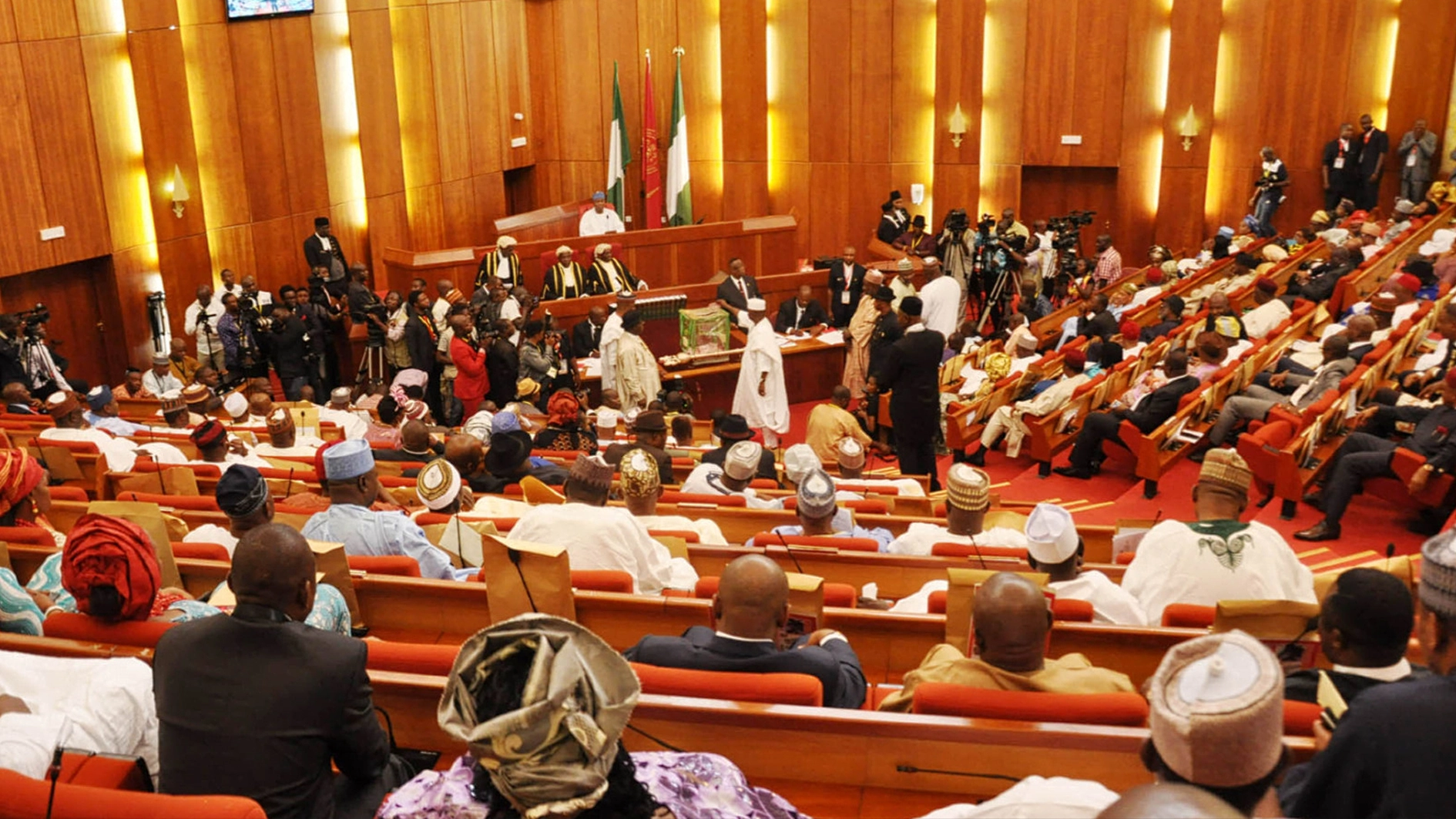
The Senate yesterday moved Nigeria closer to state policing, passing the Constitution of the Federal Republic of Nigeria (Alteration) (State Police) Bill, 2026, in a landmark reform that seeks to decentralise security while retaining extensive federal oversight powers.
The bill, transmitted to the Senate by President Bola Tinubu, was fast-tracked through all legislative stages in a single day following a coordinated push by the executive and the leadership of the upper chamber.
At the heart of the proposed constitutional amendment is the creation of State Police Services alongside a restructured Federal Police Service, which would replace the Nigeria Police Force.
While granting states the constitutional authority to establish and operate their own police services, the bill preserves extensive emergency intervention powers for the Federal Government.
Under Section 214 of the proposed law, the Federal Police Service would retain the authority to intervene in the internal security affairs of any state under specified circumstances, including an actual or imminent breakdown of public order, the inability of a state police service to function effectively, threats to national security, or evidence of serious human rights abuses, partisan intimidation or unlawful conduct by state policing authorities.
The legislation also empowers the Federal Police Service, where necessary, to assume temporary operational control of a state police service or any part of it, subject to presidential authorisation, Senate oversight and judicial review.

Leading debate on the bill, Senate Leader, Michael Opeyemi Bamidele, described the proposal as one of the most consequential constitutional reforms in Nigeria’s democratic history.
He said the measure was designed to address longstanding concerns over the limitations of a centralised policing structure in a country confronting diverse security threats, complex geographical realities and socio-cultural differences.
According to Bamidele, although the existing policing framework had served the country at various stages of its development, emerging threats such as terrorism, banditry, kidnapping, communal violence, cybercrime and organised criminal networks had exposed the need for a more decentralised approach to law enforcement.
“The principal objective of this bill is to establish a constitutional framework for the creation and operation of State Police Services while retaining a strong Federal Police Service and maintaining national standards, accountability and oversight,” he told lawmakers.
The Senate Leader explained that states would only be permitted to establish police services after passing enabling legislation through their respective Houses of Assembly and meeting national minimum standards prescribed by the National Assembly.
He stressed that the bill contained robust safeguards against political abuse, one of the major concerns historically associated with state policing.
Under the proposed framework, governors would be prohibited from directing state police authorities to target specific individuals, political parties, associations, or groups. The legislation also expressly forbids the use of police powers for partisan, ethnic, religious, or sectional purposes.
In addition, the bill establishes State Police Service Commissions responsible for recruitment, promotion, discipline, and oversight, while a reconstituted National Police Council would coordinate national policing policy and intergovernmental cooperation.
Senate President Godswill Akpabio, who presided over the proceedings, urged lawmakers to approach the debate with patriotism, diligence, and an unwavering commitment to national interest.
Describing the measure as a historic legislative undertaking, Akpabio said Nigerians expected their leaders to develop innovative and sustainable solutions to growing security challenges.
“This debate represents one of the most important legislative responsibilities before the 10th Senate,” he said.
“History will judge us not only by the laws we enact but by our willingness to confront difficult national questions with courage, patriotism and foresight.”
He called on senators to set aside partisan and regional interests and focus on the broader implications of the legislation for national security, public safety, and the country’s federal structure.
Behind the smooth passage of the bill, however, was a combination of executive lobbying, Senate leadership coordination, and procedural manoeuvring that compressed what would ordinarily be a lengthy constitutional amendment process into less than 24 hours.
The Senate leadership relied heavily on the chamber’s procedural powers to suspend or vary its rules in order to fast-track consideration of the proposal.
The bill moved through First Reading, Second Reading, Committee of the Whole, and eventual passage within the same legislative day.
A crucial turning point came during a closed-door executive session that lasted nearly three hours. During the meeting, senators were urged to view the proposal as an urgent national security measure requiring expedited action.
Lawmakers were reminded of longstanding public demands for state police and the growing pressure on federal security institutions to tackle increasingly sophisticated security threats across the country.
Although some senators raised concerns about certain provisions, particularly those granting the Federal Government authority to intervene in state policing operations, the overwhelming mood in the chamber favoured passage.
One of the most notable interventions came from Enyinnaya Abaribe, who questioned aspects of the proposed federal oversight mechanism. Supporters of the bill, however, argued that such provisions were necessary to prevent abuse, maintain national cohesion, and safeguard constitutional order.
The significance attached to the legislation by the executive arm of government was evident in the attendance of key presidential aides during the proceedings.
Among those present was the President’s Chief of Staff and former Speaker of the House of Representatives, Femi Gbajabiamila, whose presence was widely interpreted as a signal of strong presidential backing for the proposal.
Proceedings also witnessed an unusual procedural dispute when Akpabio sought the consent of senators to admit the governors of Ondo, Ogun, and Kaduna states into the chamber.
The request initially met resistance from lawmakers who argued that parliamentary rules did not permit governors to sit on the Senate floor during proceedings.
After consultations and persuasion by Senate leaders, senators eventually agreed to allow the governors into the chamber, citing their status as critical stakeholders in the constitutional amendment process.
Another remarkable feature of the day’s proceedings was the voting method adopted by the Senate.
Instead of electronic voting, senators were required to vote manually by rising to indicate support or opposition to specific clauses.
The open voting process ensured that individual positions were visible to colleagues and observers, a factor that appeared to strengthen support for provisions enjoying the backing of Senate leadership and the Presidency.
By the end of deliberations, the Senate had approved a constitutional framework that seeks to balance local policing autonomy with federal authority, while introducing safeguards aimed at preventing abuse and ensuring accountability.
If eventually endorsed by the House of Representatives, approved by at least two-thirds of state Houses of Assembly, and assented to by the President, the legislation would mark one of the most far-reaching security and constitutional reforms since Nigeria’s return to democratic rule in 1999.
Afenifere, Ogunsakin, others back state police, seek swift ratification
Prominent Nigerians and several organisations yesterday hailed the National Assembly and President Bola Tinubu over the passage of the State Police Bill, describing it as a significant step towards deepening true federalism and addressing the country’s security challenges.
Chairman of the Nigeria Police Committee on the Establishment of State Police, Prof Olu Ogunsakin, described the move as a significant step towards strengthening security and addressing Nigeria’s growing security challenges.
Ogunsakin explained that the bill must still be ratified by the 36 State Houses of Assembly before being transmitted to the President for assent.
According to him, “It is only after these constitutional processes have been completed that the Inspector-General of Police (IGP) Committee will fully commence its implementation activities.”
He disclosed that the IGP is currently engaging officers across the country to sensitise them to the concept of state policing and the safeguards being developed to prevent abuse of the system once established.
“The IGP has already visited Jigawa and several other police commands to interact with officers on the proposed state police structure. He will continue touring commands nationwide to obtain feedback and address concerns,” he said.
Ogunsakin added that officers would be given questionnaires and informational flyers containing frequently asked questions to enable the committee to gather opinions, suggestions and concerns from personnel.
He further revealed that the IGP has assured officers that the establishment of state police would not result in job losses, stalled promotions or reduced salaries.
The Director-General of the Development Agenda for Western Nigeria (DAWN) Commission, Seye Oyeleye, said the proposed establishment of state police would enhance security and make communities safer across the country.
While expressing optimism over the bill’s passage, Oyeleye noted that state police would not become operational immediately, as the legislation must still undergo further constitutional and administrative processes before implementation.
“Our appeal is that all the remaining processes should be expedited so that Nigerians can begin to enjoy the benefits of a decentralised policing system as soon as possible,” he said.
n a separate reaction, the pan-Yoruba socio-cultural organisation, Afenifere, commended President Bola Tinubu, the National Assembly and other key stakeholders for their commitment to the constitutional amendment process aimed at establishing state police.
The group’s National Publicity Secretary, Jare Ajayi, urged the 36 State Houses of Assembly to expedite action on the bill once it is transmitted to them for ratification.
While expressing support for the initiative, Afenifere stressed the need for adequate safeguards in the legislation to prevent abuse of state police by governors and other political actors.
The group maintained that clear checks and balances must be embedded in the law to ensure professionalism, accountability and respect for citizens’ rights.
Prominent northern elder, Alhaji Tanko Yakasai, also applauded the Senate for passing the State Police Bill, describing the move as a commendable step towards addressing Nigeria’s security challenges.
He said the lawmakers deserved praise for their commitment and determination in pushing the bill through the legislative process, expressing optimism that the initiative would strengthen security and improve policing across the country.
S’West ready for transition to state police, says Amotekun
The Western Nigeria Security Network (WNSN), codenamed Amotekun, has declared that the South-West is fully prepared for a seamless transition to state policing, describing the proposed decentralisation of Nigeria’s security architecture as the most effective response to the country’s security challenges.
Chairman of the South-West Amotekun Commanders, Adetunji Adeleye, said the region had attained a level of operational readiness that would support the smooth take-off of state police whenever the policy is implemented.
Adeleye, who also serves as commander of the Ondo State Amotekun Corps, cited the successes recorded by the regional security outfit since its establishment in 2020 by the six South-West governors as evidence of the effectiveness of community-based security frameworks.
According to him, Amotekun has demonstrated that locally driven security initiatives are better positioned to identify, track and apprehend criminals within communities.
He noted that the corps’ operational performance has been validated through successful prosecutions, with many suspects arrested by the outfit currently serving jail terms.
Speaking on the proposed state police structure, Adeleye said the council of Amotekun commanders had consistently maintained that state policing remains the most viable solution to the nation’s security problems.
“On the issue of state policing, in the last couple of years, the position of the Council of Amotekun Commanders of the South-West has always been that state policing remains the only viable solution to the present insecurity in the country because it’s easier, especially by adopting the Amotekun initiative, to identify criminals.
“That is why you find out that this year alone we have arrested and prosecuted well over 500 suspected criminals, and in so many of those cases we’ve been vindicated. Some of them are serving their various jail terms.
“So I think it is a giant stride in the right direction, adopting state policing as a way of decentralising the security architecture of the country,” he said.
Adeleye added that the South-West Amotekun Corps would readily align with any framework introduced to facilitate the establishment of state police.
“As per our readiness, as far as the South-West is concerned, we are ready to adjust and conform with whatever is put in place to ensure the smooth takeoff of state policing,” he said.
State police hinges on constitutional amendment, stakeholders insist
Stakeholders have stressed that constitutional amendments remain essential for the successful establishment of state police, following renewed discussions on decentralising Nigeria’s policing system.
A public affairs analyst, Bola Bolarinwa, described state policing as an idea whose time has come, noting that the Senate’s passage of the State Police Bill would require corresponding amendments to the 1999 Constitution before implementation.
According to him, the Constitution currently provides for only one police force and would need to be amended to accommodate multiple layers of policing at the federal, state and local government levels.
“The constitution says there shall be only one police force. Now, it will have to be amended to accommodate different layers of policing at the federal, state and local government levels. It is an idea whose time has come. It is even overdue,” he said.
Bolarinwa dismissed concerns that governors could use state police to harass political opponents, arguing that allegations of influence over security agencies are not limited to state governments.
He acknowledged that regional police forces were deployed against political opponents during the First Republic but maintained that such concerns should not prevent the country from embracing decentralised policing.
“Experience is the best teacher. Once we start this, we will begin to see loopholes and we will block them, just as we do with our elections through amendments to the Electoral Act,” he added.
Similarly, Think Yoruba First (TYF) has called for an immediate constitutional amendment to facilitate the creation of state police, insisting that Nigeria’s security challenges require a legally grounded restructuring of the policing system.
Speaking with The Guardian, the group’s General Secretary, Dr Bukola Adeniji, said decentralised policing could only be achieved by transferring policing from the Exclusive Legislative List to the Concurrent Legislative List through constitutional amendment.
She urged the National Assembly to enact a federal framework law after the amendment process to define jurisdictional boundaries, inter-agency coordination and national policing standards.
According to Adeniji, state governments would also need to pass enabling laws covering command structures, recruitment procedures, funding arrangements and civilian oversight mechanisms.
Expressing confidence that the process could be completed with sufficient political will, she said constitutional amendments and related legislation could be expedited to address the country’s worsening security situation.
Adeniji added that full implementation of state policing could be achieved within 12 to 24 months by leveraging existing regional security outfits, community intelligence networks and state administrative structures.
She warned that any attempt to establish state police outside the constitutional framework could produce weak institutions and undermine effective policing, describing adherence to the legal process as critical to the success of the initiative.

