 Follow Us on Google News
 Follow Us on Google Discover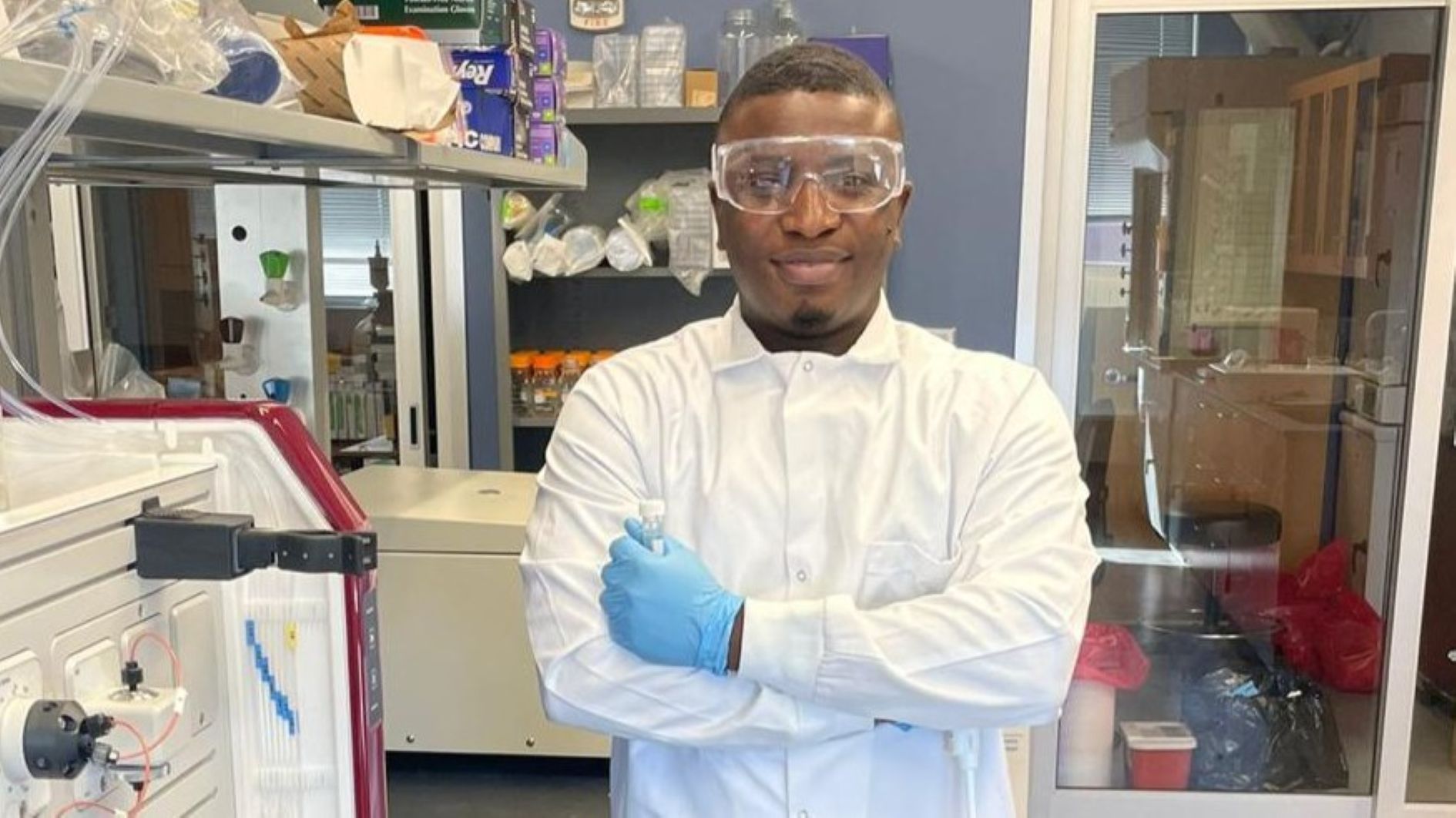
As breast cancer remains one of the leading causes of cancer-related deaths worldwide, there is an urgent need for innovative therapies capable of overcoming treatment resistance while minimizing damage to healthy tissues. Augustine Ofeh, a Ph.D. student in Biomedical Sciences and Graduate Research Assistant at Old Dominion University, is contributing to this effort through interdisciplinary research at the intersection of cancer biology, bioelectrics, mitochondrial biology, and precision medicine. His work focuses on understanding how nanosecond pulsed electric fields (nsPEFs) can be used to regulate mitochondrial function and alter cancer cell behavior, offering new possibilities for the treatment of therapy-resistant breast cancer.
At the Frank Reidy Research Center for Bioelectrics, Ofeh investigates how ultrashort electric pulses influence mitochondrial membrane potential, cellular metabolism, oxidative stress, and cell viability in endocrine-resistant breast cancer models. Using advanced laboratory techniques, including fluorescence microscopy, flow cytometry, live-cell imaging, and viability assays, he evaluates both the immediate and long-term biological responses of cancer cells following nsPEF exposure. His research seeks to determine whether bioelectrical stimulation can selectively target resistant cancer cells while reducing reliance on conventional chemotherapy, thereby contributing to the development of safer and more precise cancer therapies. Beyond his doctoral research, Ofeh has developed a multidisciplinary scientific background through diverse research experiences in cancer biology, microbiology, immunology, and molecular medicine. During his graduate research rotations, he investigated the cytotoxic effects of copper (II)-thiosemicarbazone complexes against triple-negative breast cancer cells under the mentorship of Dr. Alvin Holder, contributing to the evaluation of novel metal-based anticancer compounds. He also conducted molecular microbiology research involving recombinant protein expression in Escherichia coli and studied host-pathogen interactions by investigating how Rickettsia species manipulate mitochondrial dynamics and innate immune signaling during intracellular infection. These experiences have provided him with broad expertise in molecular biology, microbiology, immunology, and cancer research while strengthening his ability to approach complex biomedical problems from multiple scientific perspectives.
Ofeh has also established himself as a productive scientific author. He has co-authored numerous peer-reviewed publications covering infectious diseases, antimicrobial resistance, vaccinology, cancer biology, and public health. His publications have received more than one hundred citations, demonstrating the growing impact of his research within the international scientific community. His work has addressed important biomedical challenges ranging from infectious disease surveillance to translational cancer research, reflecting his commitment to generating knowledge that advances both scientific discovery and public health. In addition to his research, Ofeh is dedicated to scientific education and mentorship. As a Graduate Teaching Assistant in the Department of Biological Sciences at Old Dominion University, he has instructed undergraduate laboratory courses in General Biology, helping students develop practical skills in microbiology, molecular biology, experimental design, and data analysis. By incorporating real-world biomedical research into laboratory instruction, he encourages students to think critically and understand how scientific discoveries contribute to improving human health.
Ofeh actively participates in scientific conferences and professional development opportunities that strengthen collaboration between researchers and clinicians. In April 2024, he presented his research, “The Cytotoxic Effect of a Copper (II) Complex with Thiosemicarbazone Ligand on Triple-Negative Breast Cancer Cells,” at the First Graduate Student Government Association Research Conference at Old Dominion University. In June 2026, he attended the American Journal of Managed Care’s Institute for Value-Based Medicine event, “Pioneering the Next Era of Oncology Care,” in Washington, D.C., where leading oncologists, researchers, healthcare executives, and policymakers discussed advances in precision oncology and value-based cancer care. Participation in these scientific forums has broadened his understanding of how laboratory discoveries can be translated into clinical practice and improved patient outcomes. His commitment to scientific service extends beyond research. Ofeh has served as a volunteer judge for several prestigious science competitions, including the Virginia State Science and Engineering Fair, the Virginia Junior Academy of Science, and the Fairfax County Regional Science and Engineering Fair, supporting the development of future scientists through mentorship and evaluation of student research projects.
Professionally, Ofeh has completed Responsible Conduct of Research training through the CITI Program and is an active member of several scientific organizations, including the American Society for Microbiology, the American Association for the Advancement of Science, the Virginia Academy of Science, and the United Nations Association of the USA. He was also selected for the American Society for Microbiology Future Leaders Mentorship Fellowship, recognizing his leadership potential and commitment to scientific excellence. Originally from Nigeria, Ofeh earned a Bachelor of Science in Microbiology from Delta State University, Abraka before pursuing doctoral studies in Biomedical Sciences at Old Dominion University. His interdisciplinary training, combined with his research, teaching, scientific service, and professional engagement, positions him to contribute meaningfully to the advancement of bioelectrical medicine and precision oncology. Through his work on mitochondrial regulation and bioelectrical modulation in therapy-resistant breast cancer, Augustine Ofeh is helping advance innovative strategies that may improve future cancer treatment and patient care.

