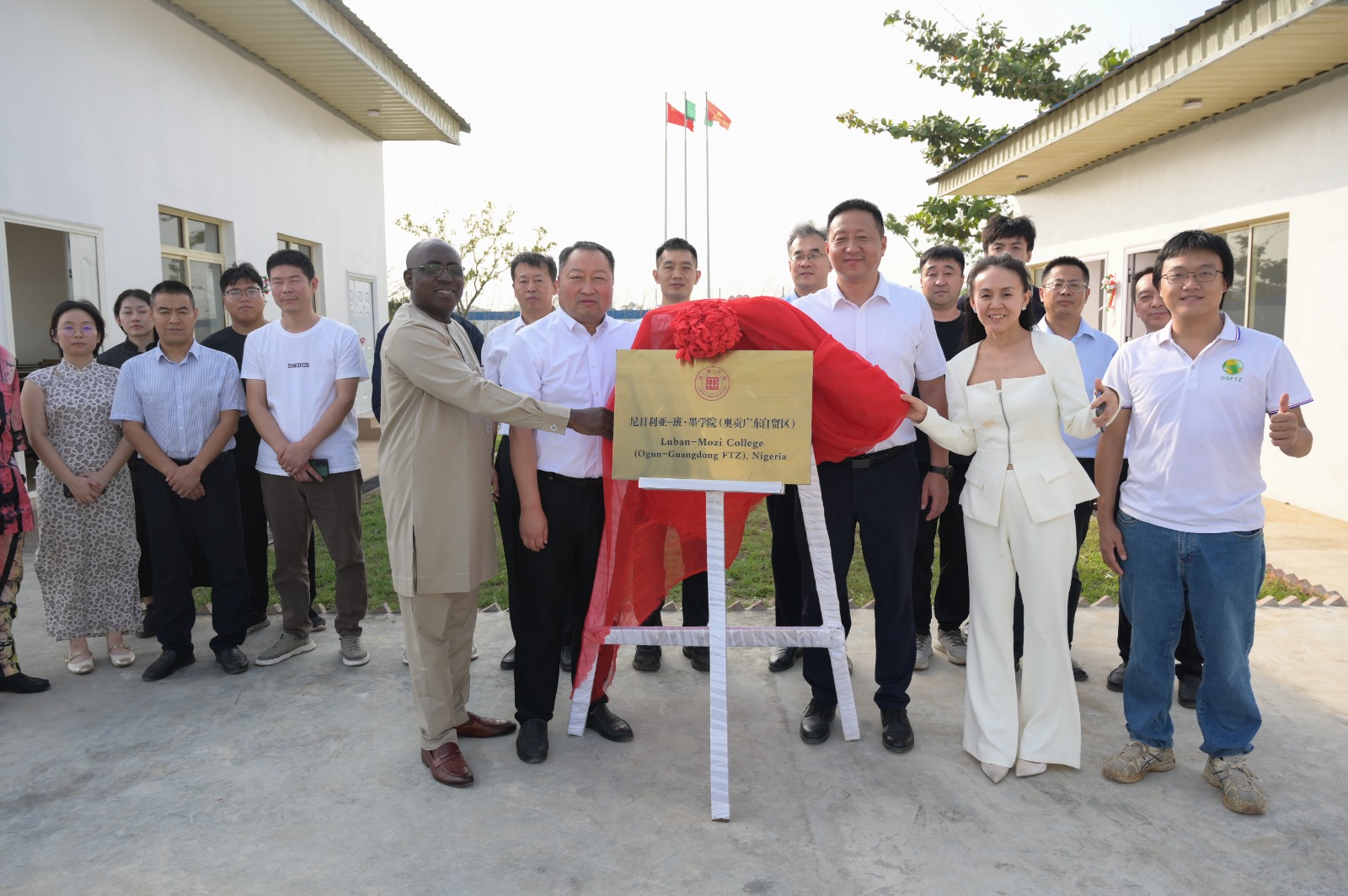
 Nigeria and China have launched Luban-Mozi College at the Ogun-Guangdong Free Trade Zone, heralding a new era in vocational education and agricultural innovation aimed at fostering talent development, boosting productivity, and strengthening bilateral ties.
The establishment of Luban-Mozi College was formalised on December 1, 2024 with the signing of key agreements between the Federal University of Agriculture, Abeokuta (FUNAAB), Weifang Vocational College in China, Beijing World Skills Ascending Youth Education Technology, and the Ogun-Guangdong Free Trade Zone Management Company.
These agreements include a Cooperative Construction Agreement and a Memorandum of Cooperation focusing on agricultural implements, machinery and pesticide production.
This initiative is part of the broader China-Nigeria Industry-Education Consortium, which aims to integrate education, industry, and research.
The collaboration is designed to address skill gaps in Nigeria’s workforce, particularly in agriculture, while enhancing the capacity of enterprises operating within the Free Trade Zone (FTZ).
Top Agriculture Technology FZE, a leading investor in the project, will provide financial support for research and product development.
This investment is expected to drive innovation in agricultural practices, creating a model for international vocational education and industry integration.
The project aligns with the strategic goals outlined in the Joint Statement on Establishing a Comprehensive Strategic Partnership and Building a High-Level China-Nigeria Community of Shared Future, issued earlier this year.
The Deputy General Manager of the Free Trade Zone’s Management Company, Liu Zhigang, expressed optimism about the collaboration, highlighting its potential to enhance local vocational education and agricultural training.
Liu emphasised that the project would cultivate a skilled workforce fluent in Chinese and equipped with professional expertise, meeting the demands of Chinese enterprises in the zone.
The initiative will also foster joint research efforts, encourage product commercialisation, and promote cultural and educational exchanges between Nigeria and China.
He said by optimising shared resources and creating innovative partnerships, Luban-Mozi College is poised to become a cornerstone of Nigeria’s agricultural and vocational education sectors, contributing significantly to the country’s economic development.
This partnership not only underscores the growing ties between China and Nigeria but also exemplifies the potential of international collaboration in addressing global developmental challenges.
The launch of Luban-Mozi College marks a turning point in bilateral relations, paving the way for sustained growth and mutual prosperity.