 Follow Us on Google News
 Follow Us on Google Discover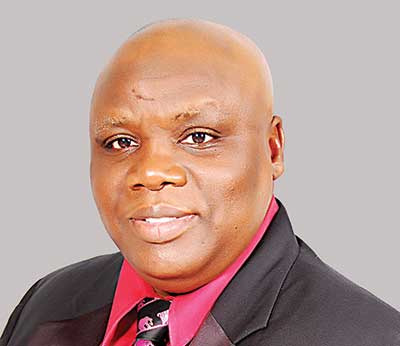

EXPERTS in the health sector have made recommendations on how to improve delivery in 2016 after appraisal of performance in 2015. They said 2015 was one of mixed fortunes for the health sector in Nigeria.
On the bright side were the resolve of government and care provider to prevent new episodes of the wild polio virus infection which had Nigeria hitherto made gain notoriety as one of the major exporters of this killer childhood disease. They, however, said all the stakeholders must continue with surveillance and immunisation in order to get the final certificate.

Another positive was the ability to curtail and prevent fresh cases or resurgence of the deadly Ebola Virus Disease (EVD).
President of Pharmaceutical Society of Nigeria (PSN), Ahmed Ibrahim Yakasai, told The Guardian that despite these seeming gains healthcare still remains in dire strait on the basis of a holistic appraisal.
Also, medical doctors under the aegis of the Nigerian Medical Association (NMA) have identified poor funding, brain drain, inequitable distribution of human resources, weak regulation and standardisation of quality of services, recurrent strikes and agitations, and non-harmonious inter-professional relationships as the major problems of the health sector.
President NMA, Dr. Kayode Obembe, has shared NMA’s thoughts and aspirations on how to strengthen the health sector and leverage on abundant potentials in the country.
Obembe said that greater investment of resources in health care delivery of the country would ultimately result in bumper economy and therefore well being of the nation.
Yakasai explained: “In the earlier part of 2015, the whole of the health sector was plagued in unprecedented strike action as a result of a legion of welfare issues and alleged violations of Memorandum of Understandings (MOU) as well as agreements with workers in the health sector.
“In spite of the passing of Nigeria’s first National Health Act in 2014 into law, nothing serious has happened in terms of operating the basic tenets of the enabling Act.
“Even when a lot of applause was extended to health workers for their gallantry in containing the Ebola scourge, fact of the matter remains that research efforts are at extremely low ebb. The Federal Government was actually negotiating with a United States based pharmaceutical company to collaborate with it by using drugs, which were still in the experimental phase to treat Ebola victims in Nigeria. From a logical perspective of protecting its patent rights, it was not surprising that the United States based company did not cooperate.”
The PSN President said as Nigerians march on in 2016, the federal government must embrace universal health coverage to give teeth to global norms which presume that access to health must be the right of all citizens. He said the fastest way to achieving this is to embrace primary healthcare, which places a premium on preventive care.
Yakasai recommended: “The Federal Ministry of Health must promote a true Public Private Partnership agenda which is fashioned out in conjunction with the relevant regulatory agencies and professional bodies with regards to the health professions.
“The welfare issues which have lingered for so long must be redressed. Adjustment of the Consolidated Health Salary Scale (CONHESS) for health workers like was done with Consolidated Medical Salary Scale (CONMESS) for medical doctors to ensure parity must be achieved through the 2016 budgets.
“The clamour for consultancy cadre must be approved for those health workers who have met the condition precedent with regards to due process.
“In 2016 the legal and moral teeth must be given the Health Act as part of an agenda to energize healthcare plans for our people.
“It is our hope that the 2016 budget (3.65 per cent) will be fully implemented.”
Obembe said the National Health Act has made provisions for significant improvement in health financing, particularly at the primary health care level and it will be a great deal of service to the nation if the National Assembly under makes it a duty to ensure that the funds specified in the Act are made available annually to the various agencies that will deploy them for the purposes specified in the Act.
He said both the National Health Insurance Scheme (NHIS) and National Primary Health Care Development Agency (NPHCDA) have great roles to play in the utilization of the funds to make quality health care accessible to the poorest of the poor and rural dwellers. “We therefore, passionately appeal to you to drive this process through necessary legislative processes,” Obembe said.
On the reversal of brain drain in the health sector, Obembe said it is no longer news that Nigeria can boast of having some of the best medical doctors and other healthcare workers practising all over the globe in revered health facilities.
The NMA President said it is also true that the country looses up to N1 billion dollars per year on health tourism; most often on illnesses that could be comfortably handled here at a lower cost and convenience of the patients especially for follow up appointments.

