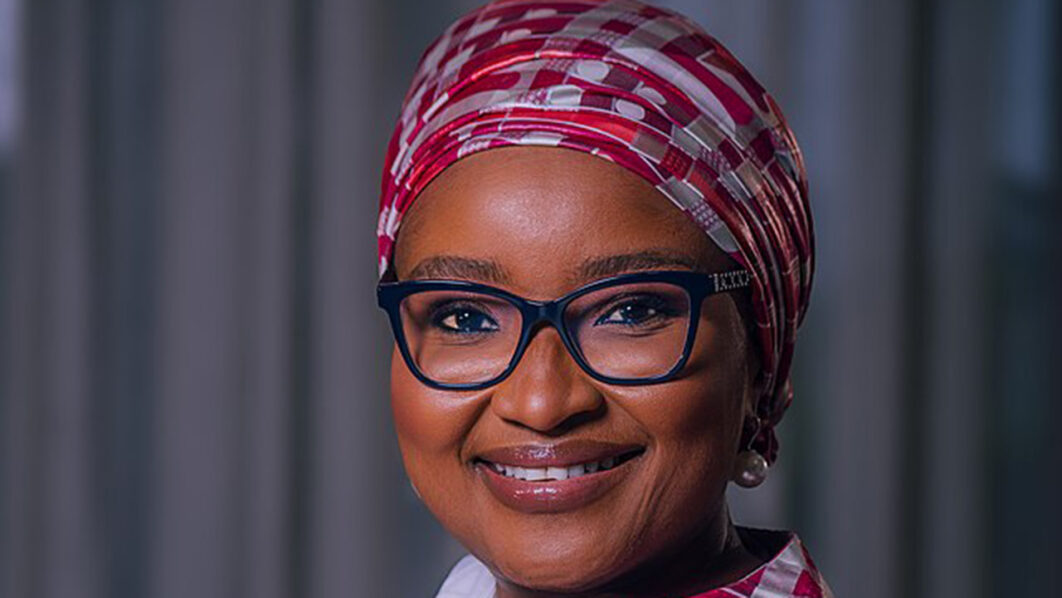
Dr. Zainab Shinkaffi-Bagudu is a consultant paediatrician. She is the first African President of the Union of International Cancer Control (UICC); member, African Breast Cancer Council and Chairperson of First Ladies Against Cancer Initiative. In this exclusive interview with CHUKWUMA MUANYA, she gives a blueprint on how cancer treatment can be better funded in Africa. She also speaks on why cases and deaths from the disease are increasing, pointing out how all cancers can be cured and eliminated from the continent.
What informed the establishment of the African Breast Cancer Council?
The Africa Breast Cancer Council was formed by pioneering African women to tackle the growing burden of breast cancer across the continent. The members are leaders in their fields and include oncologists, surgeons, first ladies, advocates, a survivor, a former minister, and an economist.
The Council, formed in 2024, will leverage the extensive and diverse experience of its members to guide and drive policy change in high-impact countries in line with the World Health Organisation (WHO) Global Breast Cancer Initiative Framework to improve early detection, diagnosis and treatment. The Council is supported by Roche, which was founded in 1896 in Basel, Switzerland, as one of the first industrial manufacturers of branded medicines.
What is the burden of cancer in Africa?
Breast cancer is the commonest and deadliest form of cancer on the continent and only one in two women in sub-Saharan Africa is expected to survive for five years after receiving a diagnosis. It can take more than six months for women in Africa to receive a breast cancer diagnosis after noticing symptoms, due in part to healthcare system inefficiencies and limited access to specialised care. This contributes to 60-70 per cent of African women receiving a diagnosis in the late stage, reducing chances of survival and increasing cancer care costs with more expensive therapies and longer hospital stays.
This is exacerbated by a lack of awareness of the importance of breast self-checks, along with widespread stigma surrounding breast cancer treatment. The Council will work at a national level to reduce the time to diagnosis from six months to 60 days.
The three-year survival rate for women diagnosed with breast cancer in Nigeria is estimated at 36 per cent, which is largely due to late diagnosis, linked to low awareness of the importance of breast self-examinations, the high cost of treatment, and the low number of health centres in rural areas. This is exacerbated by a lack of ring-fenced budgets for cancer care.
The burden of cancer in Africa is very high. For a country the size of Nigeria, the incidence is between 120,000 to 140,000 cases yearly out of which you have 80,000 deaths. If you look at a country with a population close to Nigeria like Brazil, they report about 800,000 cases yearly. So, something is wrong. What is happening to all those people that are not being reported? They are dying. They are there and they are not just accessing healthcare. There is no interface between them and health research. Now, this is the case across Africa. Awareness is low hanging fruit. It is the poorest factor that we have. This Council is made up of professionals that understand the terrain in Africa. We are not focusing on Nigeria alone, but Africa and the entire continent. Although we have so many diversities in Africa, the culture is interestingly similar. The stigma that a woman with breast cancer receives is the same everywhere. She will rather sit at home. The economic problems that they have are similar. So, this Council is going to look at all these problems, starting from awareness to economic empowerment.
Women empowerment is key. We have a group of high level women that understands the terrain and have made an impact.I was recently instituted as President-elect UICC, which is the largest cancer body in the world and as the first African to be elected. So, that kind of leverage is enormous and is going to give us a huge advantage. It is a 90-year-old organisation that has never been led by an African. So, it shows it is time for Africa to take the front seat. It is time for us to take that leadership; the timing is right, so that we can make a difference when it comes to cancer control. So many people are involved in the space; credible Africans with much more qualifications. But with this kind of link, to have a Council, to have a global leader, to have so many other people spread across Africa, we are going to make an impact. We are going to go and knock on the corridors of power.
I had a meeting with the Africa Centres for Disease Control (CDC). Africa CDC typically focuses on communicable diseases, which is a problem in Africa. But cancers, non-communicable diseases, are also becoming a huge burden for us in Africa.
One of the major problems in Africa is poverty and cancer is capital intensive. How is the council going to fund treatment?
It is a difficult question and nobody has the right answer. Cancer is very complex and very difficult to treat. I have somebody with stage three breast cancer. Just the other day she got a bill of N35 million, but she cannot afford N1 million. So, how do we fund this care? That is the lead question. The answer is in getting more partnership both within and outside the continent. Then indirect subsidy by the government.
What do you mean by that?
We have different funds but partnership is crucial. National Hospital Abuja or Nigeria Sovereign Investment Authority (NSIA) can be offering radiotherapy for N600,000 because they have calculated it to be around N1 million including the cost of electricity, staff remuneration and the cost of equipment that are all billed into that cost, even the consumables the patients need. Indirect subsidy means we can work with the government to say the Lagos University Teaching Hospital (LUTH) is already paying for electricity, for the staff that are there and that should not be cost in the treatment. So, let us fund LUTH to pay for their electricity better and drop the cost of treatment even if it is from N1 million to N800,000. At the bottom of that is health insurance. There is no way we are going to move an inch without having health insurance.
Does it mean cancer is not covered by the National Health Investment Authority (NHIA)?
No, it is not fully covered. The Director General of NHIA will tell you, yes, but if you talk to the patients they will tell you otherwise. So, in Nigeria, cancer is not fully covered under NHIA compared to developed countries where it is covered to a good extent.
Some diagnoses are covered, some screenings are covered but very little of treatment. On paper, it is surgeries that are covered but the insurance package that we have under NHIA is not enough. But there are some hospitals like University of Nigeria Teaching Hospital (UNTH), Enugu, offering radiotherapy for N600,000 under NHIA. So, that is the kind of model we want to emulate and the Council can work with all these bodies in pushing for more insurance coverage.
Right now we have insurance for the formal sector but how about the informal sector? The farmer, the petty traders are not covered. So, to expand, the state governments have big roles to play because they generate huge revenues and they need to use that to improve healthcare, especially in cancer care.
The Cancer Health Fund (CHF) has started and is doing quite well. The problem with CHF is that so many people do not know about it. People do not know that you can access the fund in about six teaching hospitals across Nigeria to pay for treatment. Right now, I think a patient can access about N7 million. I just told you that one breast cancer patient was billed N35 million for just chemotherapy with no surgery and this is a subsidised cost. So, how many N35 million can you afford? We need more funds appropriated to cancer. We need those who appropriate money for the sector to be educated on health finances. There are so many funds in Nigeria that can be pulled into cancer care. We have money but we are just not allocating it well.
What solution is the African Breast Cancer Council bringing on board? What is your blueprint?
We have a work plan and have selected some countries but Nigeria is not among.
Why?
Because we are too many for a pilot study. That is the problem. That blueprint is with successful examples in Africa like Egypt where they have a programme to eliminate all cancers.
Is the pilot study just in Egypt?
We are using model studies that have succeeded. Egypt is one; Rwanda is another one. Once the study starts, it includes intervention, human capital training, histology and expansion. When you have a good example, other people can pick it up. But you have a strong body like Roche and the professionals that have put together a pressure group to bring solutions.
There are medicines that work in Europe, United States and the United Kingdom that don’t work in Nigeria because Nigerians were not used in the clinical trials. This raises the issue of personalised medicine which comes at a great cost.
How bad is the situation and what is the solution?
If a drug has not been tried on Africans, how do you know that it works? There is an urgent need to have valid clinical trials in the African population. When you look at all these drugs, personalised treatment, targeted treatment and genomic treatment are the way forward. But if you have not examined the genes of an African woman, how will you develop a drug that will work for her? Now, we also have Artificial Intelligence (AI) and models that will be able to predict treatment outcomes. But if that model does not obtain African data it will not work. The Council is going to advocate for inclusion of indigenous African data in drug production.
In recent times, more people are developing and dying of cancer. In fact, cancer has become as common as malaria but with a very low survival rate. Why?
The awareness is increasing; more facilities are recording cases. In fact, it is going to keep increasing because of our exposure to carcinogens, sedentary lifestyles, Western diets and others. But in developed countries survival is increasing. In Nigeria, the typical people are going to churches and alternative practitioners and before they come to hospital it is almost late. They blame fear and stigma. So, what happens to the fear when they are at the dying stage, they now come out? People need to know the early signs and come for help.
Is there a cure for cancer?
Most cancers can be cured. In fact, all cancers can be cured if detected early. We have seen countries that are on the verge of elimination of cervical cancer as well as other cancers caused by Human Papilloma Virus (HPV). Once we are able to advance targeted treatment and take vaccination seriously, we shall be able to cure most cancers.
What is your message to Nigerians?
We should be more aware of our bodies and enlighten people on what they should do. The government should step up and provide health insurance; and universal coverage is key.