 Follow Us on Google News


 Follow Us on Google Discover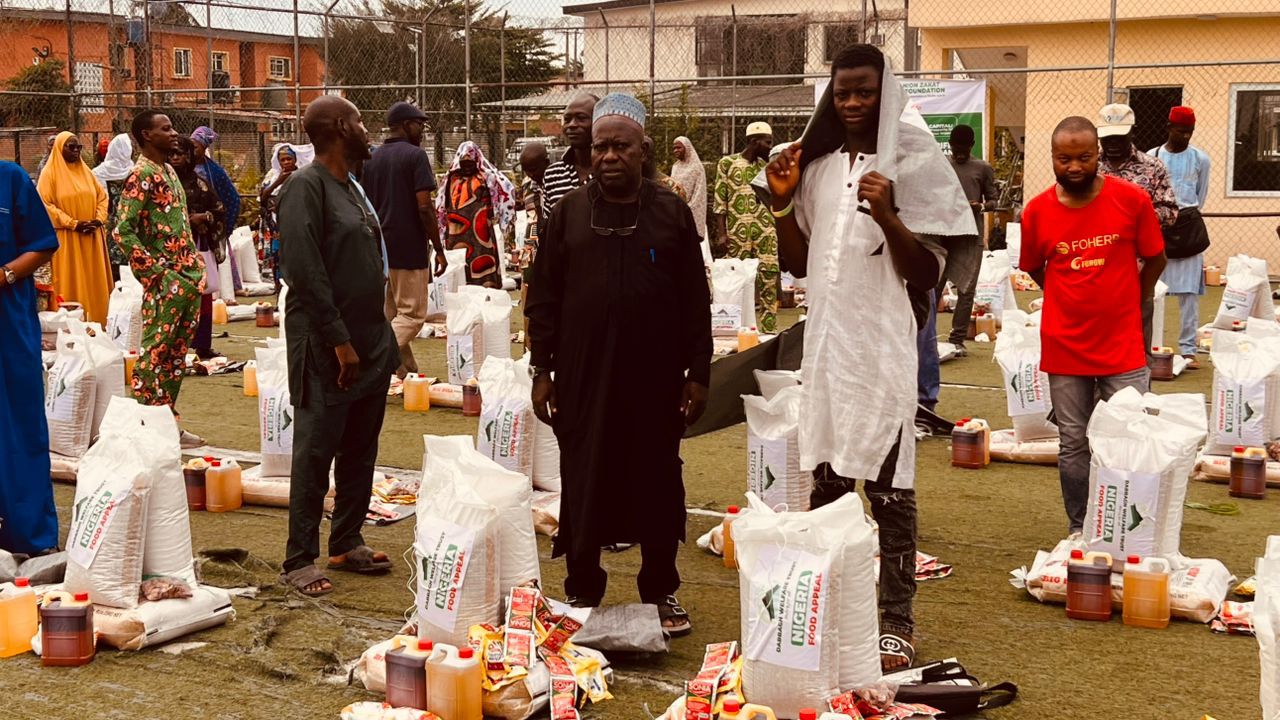
In a collaboration aimed at easing the burden of fasting amid Nigeria’s economic tailwinds, the Dabbagh Welfare Trust and The Companion have provided essential supplies to families in Lagos.
As the courtyard of the Agege Sports Centre in Lagos became a site of quiet relief as 500 families gathered to receive food packages and cash grants, part of a sustained humanitarian effort to combat food insecurity.
The initiative, a partnership between the UK-based Dabbagh Welfare Trust and The Companion (an association of Nigerian Muslim professionals), has now reached an estimated 1,500 individuals across the country since its inception in December.
Each family received a substantial kit including 25kg of rice, 10kg of beans, 10kg of garri, vegetable oils, Palm oil, tomato paste and dates.
The programme was initiated by the London-based Imam, Sheikh Mohammed Mahmoud, following a visit to Nigeria late last year. Identifying a need for structured food bank interventions, the Sheikh aligned his trust with The Companion’s Zakat and Sadaqat Foundation to mirror the charity’s existing outreach in the United Kingdom.
“The partnership was conceived to explore ways of supporting vulnerable Muslims through structured interventions,” said Mallam Mustafa Shafi’i, Operations Manager of the foundation.

Speaking at the Agege distribution point, Shafi’i noted that the project, now in its third phase, began during the month of Rajab and has spanned the entirety of the spiritual calendar leading into Ramadan.
For the organisers, the mission is as much about theology as it is about logistics. Shafi’i argued that the propagation of faith cannot be decoupled from physical welfare.
“Individuals struggling to meet basic needs are less likely to engage meaningfully with religious teachings,” he said.
Dr Rafiu Alabi, Executive Secretary of The Companion, remarked that the intervention was designed to ensure that the needy have sufficient food at home to celebrate Sallah with ease.
He added that the collaboration with a UK sponsor underscored the credibility and trust the Nigerian organisation has built in managing international donor funds.
“The timing of the distribution is critical. With Eid el-Fitr approaching, a period marked by communal feasting and celebration, the rising cost of living has left many families concerned about their ability to observe the holiday with dignity.”
For the recipients, many of whom travelled from across the Lagos metropolis, the assistance represents a rare moment of breathing room in a tightening economy.
“Given the difficult economic situation, this initiative is very timely,” said Soyeye Aminah, a beneficiary from Oshodi.
“It ensures that we have something to eat during and after Eid. It brings relief and joy to our families.”
Beyond the dry goods, beneficiaries were also provided with transport fares to ensure they could return home with their heavy packages without incurring further debt.
While the current phase concludes with the end of Ramadan, organisers indicated that there are plans to transform the appeal into a long-term humanitarian fixture, moving beyond seasonal relief toward a permanent food bank model.

