 Follow Us on Google News


 Follow Us on Google Discover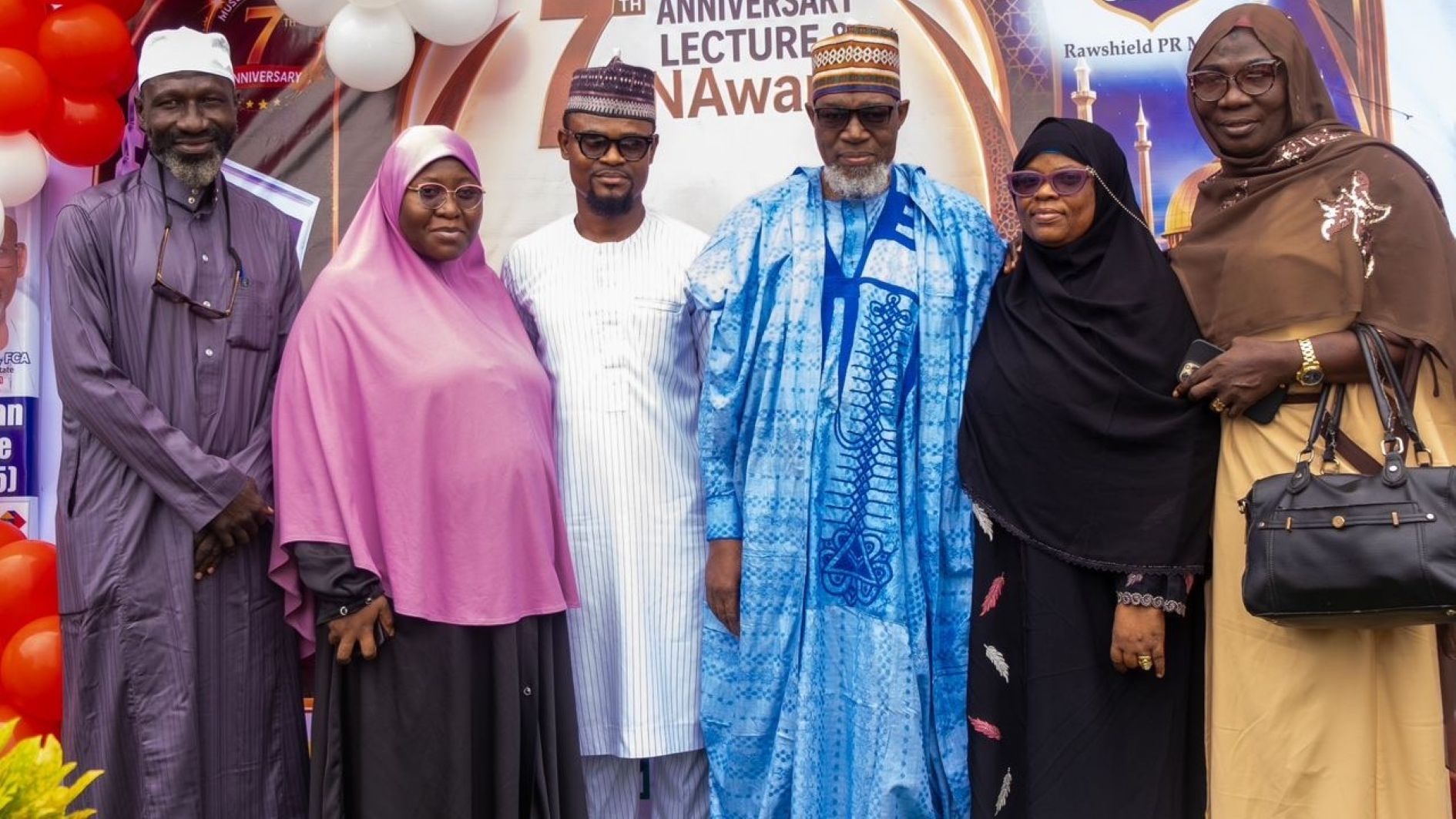
A high-profile assembly of religious leaders, academics, media executives, and professionals converged on Lagos last weekend, issuing a resounding call for greater media responsibility and stronger Muslim engagement in public discourse.
The stakeholders urged the global Islamic community to move from passive consumers of news to active storytellers in order to dismantle deep-seated stereotypes and counter the systemic misrepresentation of Islam.
The call was the central theme at the colourful celebration of the seventh anniversary of Muslim News Nigeria and the presentation of the prestigious MNAwards, held at the Olanike Hall of the Shamsi Adisa Thomas Mosque in Ikeja.
The event brought together prominent figures to deliberate on the critical theme: “Framing the Faith in the Midst of Media Misrepresentation and Global Conflicts.”
Delivering the keynote lecture, the Chairman of the Muslim Public Affairs Centre (MPAC), Mallam Disu Kamor, asserted that despite the immense contributions of Muslims to peacebuilding, education, healthcare and humanitarian services, sections of the mainstream media continue to project unfair and negative stereotypes.
Kamor observed that modern media narratives play a decisive role in shaping public opinion, influencing government policies, and defining relationships between communities. Consequently, he argued, the contemporary challenge for the Muslim community extends far beyond merely complaining about bias.
“Silence is not a strategy,” Kamor declared. “If we do not tell our stories, others will tell them, and in a way that does not appeal to us. We must move from being subjects of narratives to becoming authors of narratives.”

The MPAC chief pointed out glaring double standards in global and local reporting, citing local controversies surrounding the use of the hijab and public narratives on the Boko Haram insurgency.
He reminded the audience that Muslims have historically been among the primary victims of terrorism in Nigeria, losing countless lives, livelihoods and communities to extremist violence. He maintained that criminals and extremists cannot be allowed to define a faith followed by more than two billion people worldwide.
To fix these structural imbalances, Kamor challenged Muslims to address internal weaknesses, such as unproductive sectarian debates on social media.
He urged Muslim journalists, scholars, lawyers and digital creators to channel their energy into strategic communication, public advocacy and robust media investments.
The event, chaired by the President of the Muslim Ummah of South West Nigeria (MUSWEN), Alhaji Rasaki Oladejo, praised Muslim News Nigeria for standing as a resilient, independent voice for the Ummah.
“Sustaining a faith-based media platform for seven years in a challenging media environment represents a remarkable achievement,” Oladejo stated. “By doing so, you are fulfilling a vital religious and professional duty.”
Adding his voice to the discourse, the National Missioner of the Ansar-Ud-Deen Society of Nigeria, Imam AbdurRahman Ahmad, shed light on how ownership structures and corporate funding skew editorial independence.
“The media is not free because it has remained an ideological apparatus. It is controlled by those who fund it,” Imam Ahmad explained, advocating for independent media models insulated from big corporate biases. Similarly, Imam Nojeem Jimoh, Chief Imam of the Lighthouse Mosque, Lekki, called on affluent Muslims and corporate bodies to financially support faith-based media platforms to expand their reach and impact.
A dynamic panel discussion, moderated by legal practitioner and broadcaster Hajia Nyma Akashat Zibiri, further dissected the mechanisms of media bias. The panel featured heavyweights across advocacy and media: Professor Ishaq Lakin Akintola (Executive Director, MURIC), Mallam Talha Babalola Musa (Principal Reporter, NTA), Mallam Hussain Bin Hyacinth (Senior Broadcast Journalist, Voice of Nigeria) and Hajia Mutiat Orolu-Balogun (Director, Hijab Rights Advocacy Initiative).
The panellists advocated for a two-pronged strategy: launching rigorous legal actions against media organizations that deliberately defame or misrepresent Islamic practices and aggressively driving Muslim ownership in the mainstream media sector to alter agenda-setting dynamics.
Another major highlight of the event was the presentation of the MNAwards, honoring trailblazers in categories including Global Muslim Personality of the Year, Nigerian Muslim Personality of the Year, and Muslim Women of Substance.
Explaining the vision behind the awards, the Publisher of Muslim News Nigeria, Alhaji Rasheed Abubakar, noted that the initiative was birthed to counter the mainstream media’s obsession with negative headlines involving Muslims.
“We have many Muslims out there who are doing wonderfully well and making us proud, but they do not get the recognition they deserve,” Abubakar said. “This ceremony is dedicated to them, to serve as a motivation to do even more for the advancement of society.”

